In recent years, gender has become increasingly divorced from biological sex, spawning an ever-increasing number of self-defined gender identities. At the same time, sex and gender tend to often be conflated in everyday discourse. What is actually revealed at a gender reveal party, for example, is not the baby’s gender but his or her birth sex. Rather than a useful category, gender has thus become an incoherent concept.
This raises the question whether we actually need gender to describe reality. While it makes sense to draw a conceptual distinction between biological sex and its sociocultural manifestations (the “hardware” and “software” of sexual dimorphism in humans), there is merit to the argument that, ultimately, there is no such thing as gender, only sex and stereotypes: if we remove biology from the equation, all we are left with are stereotypes of masculinity and femininity.
Transgenderism provides a case in point. While many transgender people undergo surgery and hormonal treatment in order to transition from male to female or vice versa (notwithstanding that sex is genetically determined), they almost invariably adopt the trappings stereotypically associated with their desired sex to outwardly reflect their gender identity, thus conforming to the norms and expectations of society.
This process does not require an elaborate theory of gender, especially not one steeped in ideology. In fact, the transgender phenomenon makes a great deal more sense without the esoteric claims and contested theories of those who portray the most basic categories within our species as mere sociocultural constructions. To quote the influential gender theorist Judith Butler, “perhaps this construct called ‘sex’ is as culturally constructed as gender.”
In many progressive circles today, it is almost considered a moral duty to deny that the categories of “man” and “woman” refer to biological realities and map onto the different reproductive roles of males and females. This is reflected in newspeak such as “birthing parent” (instead of mother), “people with uteruses” (because not everyone who has a uterus identifies as a woman), or “female assigned at birth.” Such terminology serves to conceal rather than describe reality. Underlying it is an ideology which—based on a conception of gender that is itself ideological—insists on the primacy of gender identity over biological sex.
Today, there is immense pressure to comply with this ideology. We are, for example, expected to accept that “trans women are women” (based on the circular definition that a woman is a person who identifies as a woman). Gender critical feminists are routinely smeared as “TERFs” (trans-exclusionary radical feminists), and lesbians who express a sexual preference for biological women over men who merely identify as women are frequently accused of transphobia. Women-only spaces are likewise expected to admit biological males who self-identify as women.
Another sign of the pervasiveness of this ideology is that the term “cisgender,” which describes people whose gender identity matches their biological sex, is widely used and accepted today, while the word “normal” is viewed as problematic. Underlying this trend is a conflation of two distinct concepts: normality and normativity. Being “cis” (and heterosexual) is normal; the vast majority of people are. This does not imply, however, that deviation from that norm is, or should be, suppressed.
Yet, gender scholars and activists routinely describe contemporary Western culture as “cis-heteronormative.” A 2021 article entitled “Preventing Violence toward Sexual and Cultural Diversity: The Role of a Queering Sex Education,” published in the International Journal of Environmental Research and Public Health, offers the following definition:
Cis-heteronormativity refers to social norms and discourses on the construction of gender identity and sexual orientation that highlight the natural character of sexual binarism (man/woman) as being congruent with gender binarism (masculine/feminine, respectively) … and leading to gender identities that are binary, opposed, hierarchical and complementary and therefore necessarily heterosexual.
This hypothesis can, of course, easily be tested. All we need to do is observe other cultures and other sexually reproducing species. What we find is that both heterosexuality and sexual binarism are the norm and occur naturally.
Gender ideologues all but ignore this reality. For many, to assert that the differences between men and women have natural and biological foundations constitutes a form of bigotry known as “biologism.” There is a difference, however, between justifying social norms and hierarchies in terms of biological determinism and acknowledging that we are biological creatures, shaped by the same evolutionary processes as the rest of the natural world. Gender has been used as a means to obscure this important distinction, further complicating the relationship between the sexes, while demanding that ideological assumptions be accepted as fact.
Gender ideology is commonly associated with the political left, but there is a right-wing version too. Relying heavily on cultural norms and stereotypes, gender traditionalism is not the opposite but the mirror image of the view—held by many progressives for whom gender is a spectrum rather than a binary—that people who are not stereotypically male or female fall outside of these categories. Many of those concerned about the “femininization” of Western men reliably react with outrage whenever a male individual visibly challenges traditional norms of masculinity, for instance when singer Harry Styles posed in a dress for Vogue Magazine. But, if maleness is indeed innate and immutable, such outrage makes no sense.
This is not to dispute that social conditioning plays a role in the formation of male and female identities. To conclude, however, that these identities can be divorced from human biology is logically unsound. Yet, this is precisely the conclusion gender theorists and activists tend to draw. What varies is the extent to which they disassociate gender from biological sex: the greater the disassociation, the more nebulous their concept of gender. The fact that “sex” and “gender”are used almost interchangeably in everyday discourse, blurring the semantic distinction between the two terms, adds to the confusion.
So, is gender obsolete? While it makes sense to differentiate between biological sex and its sociocultural manifestations, gender, as a concept, has become so semantically elastic and at the same time so fraught with ideology as to be useless. It seems its main purpose today is as a means of spreading unsubstantiated social theories. The best way to resist this trend is by demanding evidence, pointing out flawed logic, and refusing to speak the language of gender ideology.
-
A Toast to the Luddites
Are the kids alright? 30 years ago, the news that two children had taken it upon themselves to murder a third was a moment in the national consciousness that stopped us in our tracks. Nowadays, it appears that we’ve either gone numb or deaf to the phenomena.
I have in the last few years lost track of how many teenagers and young people appear to die at the hands of others. Just this month, I can think of three; but it seems week in and out we see minor headlines on the BBC about another stabbing victim somewhere (who invariably ends up being a minor) and nothing more is said or done.
The causes are difficult to diagnose and difficult to treat. “Community centres” have become the go-to meme response as people – left and right-wing alike – debate whether a community centre or a skate park could have prevented these deaths, but none seem to grasp the wider issues that feed into these unfortunate and tragic outcomes.
Since 2010, almost 25,000 police officers were slashed, as were their budgets. The effects could not have been felt harder: crime feels almost decriminalised in Britain as thefts and burglaries go uninvestigated, and conviction rates for serious crimes dwindle. The prison system invariably is also under strain as a lack of infrastructure, staff, and adequate sentencing leads offenders to be often out and back on our streets sooner than is necessary for community protection. What is the result? Police forces pursue “easy” victories that use limited resources, and you end up being investigated over offensive tweets whilst the assailant who robbed you at knifepoint the night before is left to slink into the shadows. Reporting a crime to the police now seems more of a formality for the sake of your insurance, rather than anything else.
However, the structural issues – policing, prisons, courts – only explain the proliferation of crime itself; not this apparent uptick in youth criminality. How have we reached a position whereby two 15-year-old children feel capable of stabbing another to death? At the risk of becoming a jaded geriatric, I fear the cause of the issue lies in the technology itself, and the way we now socialise children. In the 24 years since David Bowie said that the internet would become both exhilarating and terrifying, his words could not have come truer. In my pocket, I now carry the means to communicate instantly with anyone I want; to scroll page after page of Wikipedia and see what the people I care about are up to. I also have access to the social undercurrents that pre-internet were confined to alleys and abandoned warehouses, and those undercurrents have access to me.
The internet has ended childhood as we know it. The mistakes and foibles of adolescence, which previously were left on playgrounds, are now a part of your digital footprint that will follow you into adulthood. You are exposed to predators, pornographers, peddlers and perverts far easier and more conveniently than our parents were, and you as a child are expected to negotiate a culture where sex, drugs and criminality in adulthood is now available – dare I say made attractive – to you.
How does a 15-year-old find themselves carrying a knife with the intention of using it on another person? How does a 15-year-old find themselves crossing national borders to join a terrorist organisation? How does a 15-year-old find themselves escorting illegal substances on behalf of older, organised criminal gangs? Because they have been left online and found – or been found by – people that have groomed them to do so. Parents who would not dream of leaving their child alone in a shopping centre, leave them on the internet for hours at a time with the same level of vulnerability because they do not understand, or do not care to understand, the internet and the threats it can pose.
This is not to say that the internet does not bring benefits. This topic is so thorny because of that truth: that to restrict children from the internet in their entirety would be impossible in a world where adults have made technology and tech literacy a core component of civilisation. Government legislation has attempted to strike a balance and thrown up more issues as adults have to contend with how methods of protecting children may negatively impact their own ability to use the internet the way that we do.
Internet usage is perhaps going to end up being a topic that, like sex, drugs, and alcohol, parents will have to talk to their children about moderation and limits. You only have to scratch a 20-something with a presence in online spaces to realise the extent of the issue: whether that be people joking about liveleak videos of ISIS executions, the prevalence of self-harm and the culture around it on tumblr in the last decade, all the way through to online communities that eventually breed terrorists – some as young as 13.
We cannot begin to understand why children commit crimes as shockingly as adults without understanding that in the age of the internet we have abolished childhood. Children grow up faster now but with all the instability and recklessness that marks adolescence, and unfortunately this leads to some slipping through the cracks and into things that lead to negative outcomes for all involved. If Conservatives seek to protect children, and build functioning and cohesive communities, they must accept this reality and begin to understand how we can preserve some semblance of childhood for generations which have no understanding of a world without the internet.
-
To be Anti-Refugee is Un-British
I
Compassion for asylum seekers is a traditional British value – a real British value, not a Quango-invented value like ‘tolerance’ that wouldn’t be out of place in any Western European country.
Britain’s reputation as a friendly haven for the oppressed is wholly based in historical fact – and I don’t mean “we found the skeleton of a 15th century black man in Cornwall, and that’s why unfettered channel boat crossings are a good thing”.
Now to be clear: a refugee is not a migrant. Most channel crossers are economic migrants looking for wealth, which I am not here to defend nor discourage. When this article says “refugee”, I am referring to those fleeing war or persecution, such as Ukrainian civilians, Iranian political opposition, or Uyghur Muslims from China. And while I do not advocate handing out visas to all 21 million stateless refugees in the world today, it is my opinion that we should take in many more than we currently do – regardless of any policy towards other forms of migration – and make the United Kingdom the best and most welcoming place in the world to be a refugee. Not just for altruistic reasons either – we can greatly benefit from this arrangement.
From 1828 to 1905, at the height of her imperial power, the number of immigration restrictions the British Isles had was zero. The borders were completely flung open, allowing anyone who was downtrodden, oppressed, or impoverished the chance to live a life of freedom and security behind the protection of the Royal Navy.
This was a point of pride to the Victorians – the Times newspaper wrote in 1858;
“Every civilised people on the face of the earth must be fully aware that this country is the asylum of nations. We are a nation of refugees. There is nothing on which we are prouder and more resolute.
All Europe knows and respects the asylum of these isles.”
The first wave of refugees from the continent – since the Huguenots – were the French clergy and nobility fleeing the Reign of Terror. Around 4,000 arrived in 1792, settling mostly in Soho and other affluent areas of London. They were forced to undertake manual labour for the first time in their lives, working as tailors or publishers. Due to a lack of Catholic churches in London at the time, Anglican churches such as Saint Pancras welcomed their brothers in Christ and offered church facilities for Catholic masses and burials. No fewer than eight former French bishops are interred at the church.
The Duchess of Gontaut wrote of her arrival to England;
“Arriving at Harwich…made my heart beat faster in the hope of a better future. It was a happy premonition because from that moment we experienced the good and loyal hospitality of the English.”
Successful integration of refugees is surprisingly easy – give them the chance to work, and access to resources. Economic deprivation is the number one predictor for whether or not an ethnically diverse neighbourhood is socially coherent, but current policies make this nearly impossible; Refugees in Britain must wait 12 months after arrival before they have the right to employment.
Labour is the world’s most valuable commodity—yet for 12 months, a refugee is forced to relax in a four-star hotel and eat free chef-prepared meals, all paid for by taxpayers. The faster a refugee can obtain a job, the faster they can be turfed out of hotels and become productive members of society.
II
The Victorians were so committed to the policy of free asylum that they were even willing to create diplomatic scuffles to uphold it.
In the mid-century came the socialists. Marx, Engels, Kropotkin and co. all escaped harassment from tyrannical European governments by making the free and prosperous shores of Britain as their home.
In 1858, a collection of these continental anarchists based in a London lodging house plotted a failed assassination of Napoleon III. One man who stood trial for this conspiracy was French exile Simon François Bernard. The French government demanded he be punished – but the British press were steadfast in their opposition to a conviction. Partly because it would undermine the policy of open borders (some things never change), but also because anything that frustrated our eternal rivals was surely a good thing.
While I don’t suggest we invite any Islamic terrorist groups to set up an embassy in Fitzrovia, we can learn from this example to forge our modern-day policy on political refugees.
I and many readers of The Mallard yearn for a restoration of Britain’s prestige on the world stage, a way for our now Empireless nation to regain that global reach. So what could be more of a leverage over our enemies than aiding those who are consistently a thorn in their side?
Several Hong Kong dissidents such as Nathan Law have already fled here and continue to campaign for a free Hong Kong from the safety of the UK. We could extend this to other Chinese, Iranian, or Russian political dissidents, and be the first port of call for Governments-In-Exile. Provided that they do not actively harm British or Western interests, we can only gain geopolitically by being the prime destination for exiled activists the world over.
III
The open borders policy came to an end at the start of the 20th century. The last wave of refugees were impoverished Poles and Jews escaping persecution from the Russian Empire. One such refugee named Israel Lipski was hanged in 1887 for the murder of a woman in Whitechapel, and the story gave rise to the notion of “pauper aliens” committing crimes, stealing jobs, and pushing up rents.
The Conservative government of the day proposed the first restrictions on immigration in 1902. But they weren’t completely without opposition – it was none other than Winston Churchill who said these new rules were;
“a loathsome system of police interference and arbitrary power that would harass the simple immigrant, the political refugee, the helpless and the poor…This country has so greatly gained from the old, tolerant, and generous practice of free entry and asylum. This law is expected to appeal to insular prejudice against foreigners and racial prejudice against Jews.”
And Churchill was right. Even today (despite eye-catching headlines) the effect refugees have on the crime rate is low. During the 2015 European migrant crisis, Germany took in over 1.4 million refugees – yet by 2019, their crime levels had fallen to the lowest in thirty years.
And if a refugee does commit a crime, surely the only person who should be punished is the guilty refugee – not the thousands of other innocent, law-abiding evacuees with whom they arrived alongside.
Nonetheless, the Aliens Act introduced the first restrictions in 1906; immigrants were required to prove they could support themselves financially, not be “liable to become a charge upon the public rates” (i.e. disabled), and have a clean criminal record.
IV
But this was not the end for Britain’s role as an international safe haven for the oppressed. During the Great War, almost 250,000 Belgian refugees were given shelter on these isles, all housed and fed for the duration of the war despite the hardships and food shortages suffered by the nation. The generosity displayed by the British is illustrated in the 1916 Fredo Franzoni painting “Landing of the Belgium Refugees”, showing dozens of boats carrying huddled masses landing in Kent. They are being welcomed by a large crowd led by the mayor of Folkestone. To the side, a nurse stands ready to tend to the sick, while two children bear welcoming gifts. A British ensign flies prominently from one of the ships.
Many of the Belgians were housed by individuals volunteering a spare room. Others were housed in purpose-built villages ran by the Belgian government-in-exile, where inhabitants used Belgian currency and spoke Flemish. Despite some local objections to these ethnic enclaves, within a year of the war being over, 90% of refugees had returned to Belgium. Their only lasting impact being a few memorial plaques, and Agatha Christie’s Hercule Poirot – who was based on a Belgian that Christie had housed during the war.
If we could do it in 1914 during total war, we can certainly do it today.
Granted, the cultural differences between a Brit and Belgian are smaller than a Brit and a Syrian, or an Iranian, or a Venezuelan. But those of you who are worried about the social and ethnic composition of Britain needn’t worry about refugees – like the Belgians, the average refugee spends less than ten years in exile before returning to their native country, and only the most protracted conflicts such as in Afghanistan or Vietnam produce refugees who stay longer than 20 years. Those who choose to stay permanently are clearly integrated Anglophiles who prefer British society over the land most of their compatriots have since returned to.
Overall, while you and I may disagree on general high or low skill migration into Britain, it’s quite clear that compassion for asylum seekers is a long-forgotten tradition that we should reclaim. We can learn from the 19th century to build an asylum system that is both economically and geopolitically a benefit to us – as well as, of course, being the moral thing to do.
-
The Hidden Costs of Exporting CO2 Emissions
Introduction
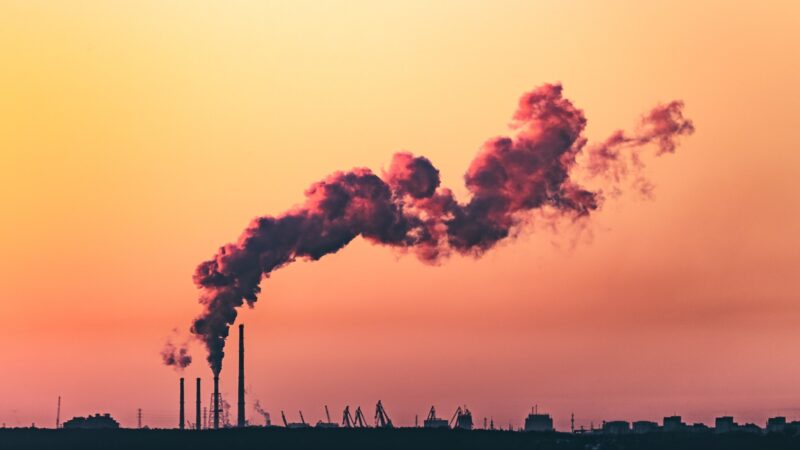
As the world grapples with the urgent need to combat climate change, discussions surrounding CO2 emissions and their impact on the global economy has taken centre stage. One contentious issue that has emerged is the concept of CO2 import tariffs. Such tariffs would aim to address the soaring demand of exporting carbon emissions to countries like China and India while seemingly reducing emissions domestically. However, I will proceed to argue that this approach harms the British economy and businesses alike, creating an illusion of progression in a desperate ploy for Western nations to ‘feed their image‘ on the global stage, this issue has also exacerbated the case to accelerate the implementation of CO2 import tariffs – levelling the playing field for sustainable, British industrial goods.
The Mirage of Reduced Emissions
The introduction of CO2 import tariffs, scheduled for 2026, is undoubtedly a step in the right direction, however, there is a growing consensus that these tariffs should be implemented sooner rather than later, with more stringent fees. The primary reason for this urgency is the alarming trend of British businesses struggling to compete with offshore prices, due to their minimal to no CO2 regulations in countries like China and India.
Statistics will tell the same story: Over the past decade, European nations have made significant strides in reducing their CO2 emissions. For instance, the European Union’s emissions fell by 24% between 1990 and 2019. However, as a result of these reductions, imports from Asian nations, particularly China, have surged. In 2019, the UK alone imported goods worth £49.5 billion from China, a significant portion of which was produced in industries with higher CO2 emissions. This shift in emissions from the West to the East raises critical questions about the effectiveness of domestic emission reduction efforts.
Yes, it is obvious Western nations have made a conscious effort to drastically manage C02 emissions, however it cannot be denied that this effort has a little to no effect on global emission rates. Since 2005 for the US and 1990 for Europe, CO2 emissions have operated at a downward tangent, however at the same time both China and India have increased their emissions year on year – with no reduction.
Levelling the Playing Field
The argument in favour of accelerating CO2 import tariffs rests on the premise of creating a level playing field for sustainable goods. British companies that have had to adhere to stringent environmental regulations have faced a significant competitive disadvantage when competing against products manufactured in countries with laxed emission expectations. This not only harms domestic businesses, but also undermines the goals of reducing global emissions, thus the only identifiable solution would be to either reduce our own emission regulations, or introduce a boarder tariff, pinpointed at nations with subnormal CO2 rates.
Through imposing these higher import tariffs on goods produced in extreme CO2-emitting countries, the UK can incentivize foreign manufacturers to adopt cleaner manufacturing practices, actively reducing global emission rates – rather than feeding our emissions elsewhere. Such tariffs would reflect the true environmental cost of the imported goods, reducing the price advantage enjoyed by high-emission industries abroad. This, in turn, would encourage British consumers to choose more sustainable options, fostering a transition towards cleaner and greener products. But that isn’t the only benefit! As a result, one would expect us to become more self-sufficient, and as a nation be less reliant overseas and more focused on our own industrial goods.
Addressing Arguments Against CO2 Import Tariffs
Some argue that Western nations have enjoyed an unfair advantage for centuries and that it is now their responsibility to bear the economic costs of climate change. While historical inequalities can indeed be argued, I would contend that any attempts to do so would be in vain, combined with a lack of understanding that if tomorrow we relaxed all of our climate regulations (which is a lot), then our economic situation would soar higher – deceitfully so – than fellow European nations.
Picture a scenario where the UK could potentially usher in a wave of economic benefits – via little to no climate regulations. Industries seeking lower production costs might see the UK as a more attractive destination, enhancing our global competitiveness. Sectors with high energy consumption, like manufacturing and heavy industry, would find it financially advantageous to operate in a less regulated environment, resulting in greater job creation. Does that sound familiar? Because this is precisely how China and co have operated over the last 20 years, summarizing why their economy has taken such a colossal leap.
Arguing that because of historical inequalities we should just expect Western nations to continue to lose business and incur high costs for the sake of climate change, and only to see reduced emissions move elsewhere, simply ignores the interconnectedness of our global economy. The environmental damage caused by unchecked emissions in one part of the world ultimately affects us all. By exporting emissions to countries with fewer regulations, we are merely shifting the problem, not solving it. If global emissions continue to rise, while our own emissions head towards net zero, it begs the question: what is the point in all of this? Why persist in regulating our businesses to the brink of collapse, relinquishing our capacity to sustain our domestic market, and fostering an import-dependent culture, all while our endeavours seem to yield no significant results?
Conclusion
To conclude, it is undeniable that CO2 import tariffs represent a crucial tool in addressing the harmful practice of exporting emissions to countries with non-existent regulations. While there is a similar scheme set to be introduced in 2026, there is a compelling case for their acceleration and strengthening of this. The fact of the matter is that European nations’ reduction in CO2 emissions has only led to a surge in imports from high-emitting countries, highlighting the need for immediate action and showcasing to other nations that the only way to grow their economy is to mass produce (with high CO2 costs) for the sake of us Western nations to ‘look good on the global stage’.
These tariffs are not about punishing other nations, but rather about creating a level playing field for sustainable and British goods. They will encourage cleaner production practices globally and drive the transition to a more sustainable and equitable global economy.