The recent defections of Nadhim Zahawi, Robert Jenrick, and Suella Braverman from the Tories to Reform have caused quite a stir – among both supporters and opponents – yet seemingly for the wrong reasons.
In theory, a political start-up winning the endorsement of a former Chancellor sounds like great news. It certainly looks good on paper. The support of a former high-ranking official potentially brings much-needed insider knowledge and some personal clout to the table.
Unfortunately, this endorsement isn’t just good on paper – it’s only good on paper. Despite it being his defining credential, Nadhim Zahawi was Chancellor for barely two months before being shuffled away under Liz Truss – probably for the best, all things considered.
Nothing of note was achieved during his brief internship at the Treasury. Zahawi’s tenure reminds us of a period of politics rather than any policy – specifically, the end of the last Conservative government; the unpopularity of which continues to contaminate the party’s standing with the public years later.
If Zahawi is known for anything of substance, it’s for being Vaccines minister; at best, some may recall him as a vaguely competent manager of the rollout, while others regard him as a sinister bio-authoritarian technocrat – most notably, the Reform voters who kept the party afloat during Lockdown, when it was jostling for third place with the Liberal Democrats.
Of course, he wasn’t just any Tory MP. Zahawi was among the core Cameron-era intake. When his defection was announced, commentators were quick to note his socially liberal positions, from his support for immigration – including mass amnesty for illegals – to his past support for progressive mainstays like DEI and BLM.
Moreover, his past attacks on Nigel Farage – such as comparing the Reform leader to Joseph Goebbels – and accusations of an unsuccessful bid for a Tory peerage a few months prior have all understandably created trouble for the supposed convert.
This all might sound a bit harsh. People do have Damascene conversions. However, Zahawi’s track record shows that authenticity is really not his strongest point. The day after his promotion to Chancellor under Boris Johnson – at the height of Partygate, no less – Zahawi publicly called for Johnson’s resignation. Only 48 hours earlier, he had agreed to serve in his government!
When Boris finally resigned, and Truss inevitably crashed and burned, Zahawi called for Johnson’s return to power – that is, only after support for his own leadership bid failed to materialise. Over the course of a month, Zahawi went from Boris loyalist to anti-Boris conspirator to Boris restorationist, and while people took wry enjoyment in his shamelessly serpentine manoeuvres at the time, it begs a question of loyalty now that he’s defected to Reform.
By contrast, Jenrick has been received more warmly by Reformers, although it’s hardly a match made in Heaven. Like Zahawi, he wasn’t just some Tory apparatchik. Jenrick won his Newark seat in a 2014 by-election at a time when UKIP was on-the-up and the Conservatives were under siege. Earlier in the year, UKIP beat the Tories to second place in the Wythenshawe and Sale East by-election. Later in the year, it would gain seats in the Commons following by-election victories in Clacton and Rochester.
As such, Jenrick’s election to Parliament was about more than filling space on the green benches; it was explicitly about refuting the idea that the Conservatives needed to move rightward on immigration, EU membership, political correctness, etc. – taking the form of strategic ignorance than anything overtly ideological. People don’t really want less immigration, so you can afford to ignore it; just marginally improve their living standards and they’ll stop voting for populists. Sound familiar?
A triumph for full-fat Cameronism over UKIP-lite, Jenrick was hailed by the kind of progressive interlopers who now view him as the second coming of Hermann Göring. Thereafter, Jenrick was identified with the centrist wing of the party. What little he did say about immigration was vague but ultimately liberal, and that was pretty much of the end of things until a few years ago.
The official narrative around Jenrick’s conversion is that his time at the Home Office was so gruelling that it pushed him rightward. This is certainly plausible. Jenrick’s tenure was mostly defined by low-grade cost-cutting measures and monitoring the situation. His most hardline decision was arguably the removal of a Mickey Mouse mural in a migrant detention centre. Such a record just as much indicates a Home Office strangling more ambitious proposals as a minister being insufficiently opposed to migration, so it’s hardly a slam-dunk example of ideological inauthenticity.
Nevertheless, Jenrick’s conversion was impeccably well-timed and rather recent. Dropped as Housing Secretary, Jenrick was appointed as Minister for Immigration in 2022 by then Prime Minister Rishi Sunak because he wasn’t particularly right-wing; allegedly, Sunak intended Jenrick to act as a counterweight to then Home Secretary Suella Braverman… who has also defected to Reform!
Out of the Tory Trio that have defected this month, Braverman’s is perhaps the easiest and toughest to square. Her credentials are far stronger than Jenrick’s and much stronger than Zahawi’s. The European Research Group’s former chairman does seem to have genuine socially conservative convictions, and is something of a ‘Deepa Kaur‘-esque figure of both hatred and ridicule for progressives.
Many will inevitably point to her track record as Home Secretary – and specifically, her inability to get the migration numbers down and presiding over the Afghan cover-up – but this (much like Jenrick’s record as immigration minister) is a question of authenticity rather than efficacy. matters, and Braverman needs to be criticised for this before being given any portfolio of any kind, but is not the central focus here. The point being is that she can’t be faulted on rhetoric; a vice in other contexts but technically a virtue here.
Her undeniable “uselessness” as Home Secretary aside, and resolve most likely born from conviction, it’s believable that she feels at home in Reform. The fact she didn’t run in the 2024 Conservative leadership race suggests sincere alienation from her former party, and the fact that pretty much everyone saw this coming down the pipe, are surely worth something even to sceptics.
Critics will continue to use the fact these people were Conservative MPs against them – including the Conservative Party itself, it seems – but this isn’t really the issue. Danny Kruger was a Tory MP, and everyone sees him as a major asset to Reform, and rightfully so; even Dominic Cummings had nice things to say about him, and he scarcely says nice things about anyone.
Douglas Carswell and Mark Reckless, winners of the by-elections in Clacton and Rochester, were Tory defectors. Much of UKIP’s presence in the European Parliament was comprised of former Conservative MEPs alienated by the party’s embrace of Europhilia, including Roger Helmer – former Conservative MEP for the East Midlands and Jenrick’s rival in the Newark by-election of 2014.
If not assets, other former Tories have proven inoffensive enough. Lee Anderson has long since shaken his association with his old party – indeed, he’s done it once before. Jake Berry was obscure enough to get away with defecting. Nadine Dorries – arguably the worst defection thus far, courtesy her contribution to Online Safety Act – is made tolerable only by the likelihood that she won’t have any real power.
The simple fact of the matter is that Reform was always bound to take some Tory flotsam on board. When your modus operandi for the next decade is to supplant and replace the Tories as the main right-leaning party in Britain, it’s pretty much a given.
Rather, the problem is the reliability of Reform’s converts. To have lived a life of sin is less problematic than never converting at all; this is true of religion and it is true of politics. Farage is headed for the belly of the beast; the antibodies of the regime are going to be working overtime to make his time in Number 10 as unfruitful and frustrating as possible. If the Blob is resistant to Keir Starmer, of all people, it’s sure to have an existential hatred of Mr Brexit. The next election is scheduled for 2029, and we’re already hearing murmurs from Whitehall about how to stop Reform from within.
Now more than ever, Farage needs true believers around him, and while Brexit Braverman’s defection is intuitive, I doubt he’ll be able to rely on “The Boy from Baghdad” when he inevitably comes under fire.
The jury’s still out on Bobby J.
As we’ve seen in the United States – especially during the first Trump administration, but increasingly during the second – the recycling of staffers, advisers, and appointees can destabilise and inhibit the leader from the next layer down. Given that Reform’s success verifiably hinges on Farage’s personal capital, meaning Reform’s success in Whitehall will hinge upon Farage’s personal ability to Do Things.
One might say this is true of all governments, not merely those controlled by populists, and while this is true, it’s especially true of one plausibly (not merely technically) campaigning on the expectation of real, fundamental change; change that, at times, may wholly necessary but still deeply unpopular. The failure to match voter expectations is politics as usual, but Reform is promising exactly the opposite. Failure to translate executive will into tangible results will not only be used as ammunition by rival parties, but by the establishment (from all parties and none) and reactionaries desperately seeking to retrench it.
-
Nature vs Nurture: The Failing of Black Caribbean Pupils in Education
According to the race report published last year, 63% of Black caribbean households are single parent households, as opposed to the black african community who is at 43%, the UK’s rate is 14.7%. The culture for the black community in the UK is quite similar to the US which also has problems with black on black crime, low literacy rates and father absence. The larger question that has raged between left and right for centuries is nature or nurture? How much control does an ethnic minority have over their fate?
What we are discussing is not an issue exclusive to the black community. “Redneck culture” , a term used by Thomas Sowell to describe a subculture prevalent in ghettos, encourages a way of life and mentality that is not conducive to the success of any community. A quote from his book White Liberals and Black Rednecks used to describe the southern white population follows: “ proneness to violence, neglect of education, sexual promiscuity… reckless searches for excitement, lively music and dance etc” This is only a short sample from a long list of cultural behaviours that without knowing the topic of focus, would be thought exclusive to the black community.
What the leftist intelligentsia often leave out of conversations about race are the effects of culture and values within a community. Not every ill can be attributed to the supposed “effects of capitalism”. The left’s obsession with proving that racism causes inequality has meant that many problems that could be solved independent of the state, are used as incentives to garner the black vote.
With the data available by comparing the different ethnic communities in the UK we should be able to see the effect that values have on a community, which largely shows that the Black African community does much better in education and has lower rates of expulsion for pupils alongside better mental health. This is especially outstanding as the things mentioned above are named as social behavioral problems, arising from single parenthood. As the lack of a paternal and/or maternal influence are proven to negatively affect emotional control for example higher levels of aggression. Could this be why Caribbean pupils are twice as likely to get temporarily excluded at 10.2% compared to 4.2%. They also have the highest rates of detention under the mental health act.
The black community in Britain faces a large issue of knife crime where between 2017 and 2020 black people aged 15-17 made up 47% of homicide victims. Sadiq Khan even predicts a rise in violent crime in London due to the cost of living crisis.
Aside from behavioral problems, Caribbean pupils are also far more likely than African students to do worse in education. Which should be the top priority for growth in any community as it leads to higher paid jobs. Although black pupils as a whole are more likely to go to university than white pupils. Black Caribbean students are the most likely to go into high tariff universities. Could this possibly be because there is a lack of educational importance in the Caribbean community, which means that African pupils progress further? 10.9% of black caribbean compared to 17.3% of African pupils gain 3 A’s at A Level.
Now immigrants do tend to do better in education, but not all immigrants do equally well. 42% of the Chinese population gained 3 A’s and 33.2% of Indians followed by 26% of white students. Which indicates that their fate is not fixed but contrary, and that immigrant children often outperform white students.
What the black community has is not primarily an issue of race but of culture, which requires steady homes and values to fix, that which conservatism provides.
-
The Conservatives Used to be the Party of Government and Ideas – Now They No Longer Are | Henry George
We are being treated to a clapping seal show presented as the Conservative leadership contest. The only candidate likely to alter Britain’s course into the iceberg of national decline and total senescence was Kemi Badenoch, so of course the MPs ejected her from the contest before the final three. For a moment it looked like it would come down to a face-off between Penny “Tory Blair” Mordaunt and Rishi “Green Card” Sunak, but instead we get Sunak vs Liz “Thatcher LARP” Truss. And of course, we are now witnessing the virus of zombie Thatcherism having colonised the brains of our prospective new prime minister. Each desperately tries to out-Thatcher the other, displaying the degeneration of the Conservative mindscape into a derivative pile of philosophical junk. It used to be that the Tories actually had ideas about how to govern and how to use the state to do this. Not anymore.
The Situation
Let’s survey the devastation of British national life. Inflation is at 9%, the highest for forty years. Energy prices are already a disaster, and are set to become truly catastrophic in the autumn and next winter. Productivity, bumping along for decades like a sea slug on the ocean floor, is falling into the Mariana Trench. Our levels of private debt are rocketing into the stratosphere. Our public debt is in orbit after the Covid-19 spend binge. Poverty rates are climbing and set to go even higher. The consequences in learning loss from Covid school closures for hundreds of thousands of children is an absolute disaster. A million immigrants settled here last year. Five million people have simply dropped out of the workforce and now subsist on benefits. Thousands of children have been abused, trafficked, raped, and even killed by grooming gangs. We lag behind other European nations for going back into the office. Quality of service from companies in the private sector and public services in the state sector has thudded face-first into the earth as a result. Our sainted health service is performing the worst it ever has, and is a black-hole of funding. The organs of the state have ceased to function: passport and driving licences are apparently a luxury rather than a necessity, while the main goal seems to be implementing ever more diversity and gender quotas. Our state capacity is therefore that of a poor south European country without the compensation of a pleasant climate.
The Solution?
And what is the answer presented to all of this? Why, tax cuts of course! This isn’t the sum total of either finalists’ policy proposals, but these are the prescriptions to our economic and social dis-ease that are being touted most vociferously by Liz Truss, the likely winner. And why would they not be? It’s always an attractive piece of political casuistry to tell people you’ll take less of their money one way while they’ll go on losing it in so many other ways. Given the British tax burden is the highest it’s been since the Second World War, this route to party popularity must seem like too good a golden road to electoral survival to miss. Never mind that the economic rationale for cutting taxes isn’t … completely watertight. It’s a sign of our political disconnect from economic reality that Sunak’s arguments against cutting all the taxes all the time has gone down like a lead-lined lifejacket with his prospective party voters. No, we must all hail our saviour Truss for her faith in the Laffer curve, an economic truism worked out on the back of a napkin and further distorted by politics towards the simplistic formula tax cuts always = higher tax revenue. Never mind that the ideology she adheres to represents the dissolution of social ties and the proletarianization of the middle class. Truss is a revolutionary in the mould of her hero Cromwell, a man who committed regicide. Yay, conservatism!
This tax-cut obsession underpins a religious vision where the small state is the worldly heaven towards which we must sacrifice and strain our sinews, an eternal truth applicable to all times and circumstances. The goal is to further liberate the individual from all bonds and constraints, enabling them to achieve this worldview’s highest good of maximum autonomy, never mind the social and cultural dissolution and chaos that it unleashes. Of course, since Thatcher’s time Conservatism as a party phenomenon has been seen as economically liberal, with nods towards some sort of cultural conservatism. This always amounts to little more than a rhetorical sleight-of-hand to distract from the economic preferences of the party elite, who themselves find the social conservatism of their members and those voters in the Red Wall embarrassing and morally retrograde. The Conservative vision of political-economy, culture and society is as impoverished as those it rules without governing are fast becoming.
Out of Ideas
What makes this all the worse is that when J.S. Mill epitomised the smug, self-congratulatory liberal style by calling the Conservatives “the stupidest party,” this was not actually true. But now the leadership candidates’ vague gestures at imitation Thatcherism looks set to prove Mill right. And yet it wasn’t always like this, and does not have to be like this. E.H.H. Green, in his magisterial historical survey, Ideologies of Conservatism, demonstrates that while the Conservative party may indeed not be as philosophical in a formal sense as the left, to say that Conservatives have always been an intellectually barren party is simply wrong.
As Green writes, “Study of Conservative intra-party debate throughout the party’s history, and especially over the course of the ‘Conservative century’, reveals that the controversy over Conservative ideas in the last quarter of the twentieth century was not unique in terms of either its nature or intensity.” The Conservatives at the century’s beginning debated tariff reform, social reform, land reform, industrial and agricultural productivity, Ireland and Empire.
Intra-party debate continued up through the 20th century, carried out in books, public and private party pamphlets and papers, speeches, articles and newspaper columns, as well as two book clubs, along with the Ashridge college of political philosophy. As Green rightly argues, “it may be that the Conservatives produce fewer ‘great texts’ (although they produce and refer to more than is frequently assumed), but if one sets aside the formal, ‘canonical’ notion of the forms of expression of political thought and examines speeches, policymaking discussions, exchanges of views and opinions in correspondence, and the construction of and response to legislation, the Conservatives’ engagement with ideas is clear, rich, varied, and extensive. Politics is about argument, and arguments are about ideas.”
This intellectual ferment was driven both by an innate interest in ideas shown by significant minority, and in reaction to changing events which demanded empirical observation and adaptation. This stemmed from a sense that to govern a great nation was a weighty and serious matter, fraught with danger and risk, one’s greatness not to be taken for granted or put at risk for ideological whim or purity. Leaders of the party actually thought things through in some depth. Even Prime Ministers engaged with the questions of the day with a depth that is incomprehensible in our time. Harold Macmillan wrote books on political-economy that reduce many such contemporary efforts to toilet paper status.
Thatcherism came from the more liberal side of the Conservative tent, but as Green wrote, it grew out of a scene rich in debate and discussion and had intellectual firepower behind it, whether one agrees with the substance or not. The network of thinktanks discussed in Richard Cockett’s book Thinking the Unthinkable communicated ideas from liberal thinkers like Hayek and developed policies from them. One can see these organisations as following in the wake of earlier arguments and institutions, seeing them as an example of what could be achieved and what to achieve it for. Now the Conservatives either serve up stale neoliberal centrism or cosplay Thatcherism.
Another Way
As Aris Roussinos recently argued, the cramped vision that the Conservative party now offers is far from the full picture, and does not have to be. A series of Conservative ministers and Prime Ministers gave a more expansive view of what constitutes the Conservative vision of the state, political-economy and their relation to society (which does exist and in which we live). As Roussinos writes, figures like Anthony Eden, Harold Macmillan, R.A. “Rab” Butler and others argued affirmatively for the use of the state to set the course for economic action, and against unbridled, brutal laissez-faire capitalism. A strong state was not, in their view, inimical to the Conservative tradition, and was in fact integral to insuring the social, political and economic conditions that enabled the good life for families and communities.
This attempt to chart a “middle way” between the Scylla and Charybdis of totalising socialism and atomising laissez-faire capitalism is one that sits well within the Conservative tradition, among whose political ancestors we can include the true One Nation philosophy that grew out of Benjamin Disraeli. His main effort was to reconcile and unite the “Two nations; between whom there is no intercourse and no sympathy; who are as ignorant of each other’s habits, thoughts, and feelings, as if they were dwellers in different zones, or inhabitants of different planets; who are formed by a different breeding, are fed by a different food, are ordered by different manners, and are not governed by the same laws . . . . THE RICH AND THE POOR.”
As I’ve written before, Disraeli rightly saw that what at the time was called “Manchester Liberalism,” of economic upheaval under the guise of prosperity and social turmoil presented as progress was inimical to social stability and the good life. Disraeli saw and put into words as no-one else could that “The great body of the people of this country are Conservative. I use the word in its purest and loftiest sense. I mean that the people of England, and especially the working classes of England, are proud of belonging to a great country, and wish to maintain its greatness.”
Rachel Wolf, in arguing that what is being offered now by the leadership candidates is the polar opposite of what won the party its 80-seat majority, echoes Disraeli when he declared that “The Tory party is only in its proper position when it represents popular principles. Then it is truly irresistible”. Disraeli saw rightly saw liberalism as a liquefier of social solidarity, “composed purely of wealth and toil, based on a spirit of rapacious covetousness.” As he wrote in his wonderfully scathing way, “Liberal opinions are the opinions of those who would be free from a certain dependence and duty which are deemed necessary for the general or popular welfare. Liberal opinions are very convenient opinions for the rich and powerful.” For Disraeli, the point of governing, and why Conservatism must actually govern through the state, was to “secure the social welfare of the PEOPLE.”
The Edwardian Bridge
Between Disraeli’s vision and that of Macmillan and his generation is a Conservatism of the early 20th century that arguably links the two. Green traces the development of a British Conservatism inflected by the Idealist school of philosophy espoused by T.H. Green at Balliol. The Historical school of economists grew from this scene. The group “first came to prominence in Britain in the 1880s, and from that point on developed a sustained critique of Classical economics and what it saw as its vulgarized derivatives, Manchesterism [laissez-faire liberalism] and Socialism.” The Historical school was against free trade and for protection where needed, saw nations, unions, trusts and groups in general as more important for political-economy than the isolated, supposedly rational individual of Smith and Ricardo, and supported state intervention to create the conditions for economic prosperity through industrial productivity and thereby ease social discontent and prevent unrest.
Conservative figures like Alfred Milner, Leopold Amery, J.W. Hills, and Arthur Steel-Maitland also came from this milieu, influencing more in the party. All were in favour of using the state for social and economic reform for the common good. Through the minor figure Arthur Boutwood, E.H.H. Green argues that these Conservatives saw the individual as an ethical being whose aim was the realisation of his potential, with self-realisation the sum of life. [HG2] The role of the individual and nation were inseparable: individual self-realisation was only possible through society, as citizens of the nation into which we are born, and which provides our social, cultural, political and economic context. The potential of the individual citizen and the nation were seen as realised by each other. Citizenship was “freedom for duty,” and therefore commitment to the common good.
As Green writes, “Boutwood argued that true freedom could only come through co-operative acts that were born out of a recognition and realization of mutual needs and goals.” According to Green, Boutwood saw the relationship between the individual and the nation as one where the individual and nation had a duty to each other, and if the nation “’be not effectually and equitably serviceable, it should be made so’.” The state was to enable this, and “to achieve its ‘moral conception’ by … ‘work that sustains and fosters [the nation’s] life, that builds up its people into serviceable manhood’”, to create the conditions for individual, communal and national opportunity. In other words, to govern, and to reform where needed for the reciprocal common good.
Boutwood was, again, a minor figure, but one whose writing encapsulated a view of society and political economy that galvanised many more significant men of the time, including eminent aristocratic party members and the Historical economists. The need for politicians and economists to lay the ground for individual and national prosperity and stability was best expressed by H.S. Fox when he wrote “’The State may become social reformer without becoming Socialist, but if the State does not become social reformer it will inevitably become Socialist’.” We face similar circumstances today, and it was because of this that the Historical school and more Conservatives than one would think were in favour of social reforms including pensions and workers rights and protections. As Green writes, ‘By 1914 [the Unionist Social Reform Committee] had proposed an extension of old-age pension rights, argued for minimum wages in certain trades, sponsored several schemes for working-class housing, and was close to presenting a blueprint for a national health service.”
The central aim of this kind of Conservatism, “was to provide the basis for a socially and politically integrative strategy that could overcome tensions and divisions within Britain.” To achieve this required cultivating national unity, “which in turn required acknowledging that the nation was … an organic entity. It was here that a positive role for the State was essential, in that the State was to ensure that no particular section of society was to be systematically undervalued or over-privileged. In practical terms this meant … social reform in the domestic sphere to alleviate the privations of the poorer classes, but carried through without recourse to class-divisive rhetoric or actions.”
Conclusion
There is a Conservative view of the state that runs through the true One Nation tradition descended from Disraeli, which underlay the worldview and policies of Edwardian Conservatism, Macmillan’s post-war Conservatism, and was buried by Thatcherism. We obviously can’t, nor should we, replicate exactly these kinds of Conservatism for today. But we must reignite the intellectual fire that galvanised Conservatism up to Thatcher’s time, and look again at the approach of the figures above towards the use of the state in service to our political, social, economic, and national life. The country is facing a range of problems that could very well prove disastrous or even catastrophic. These will not be solved or ameliorated by pursuing small-state dogma, but by the Conservatives learning to govern again. Whether that can be done remains to be seen.
-
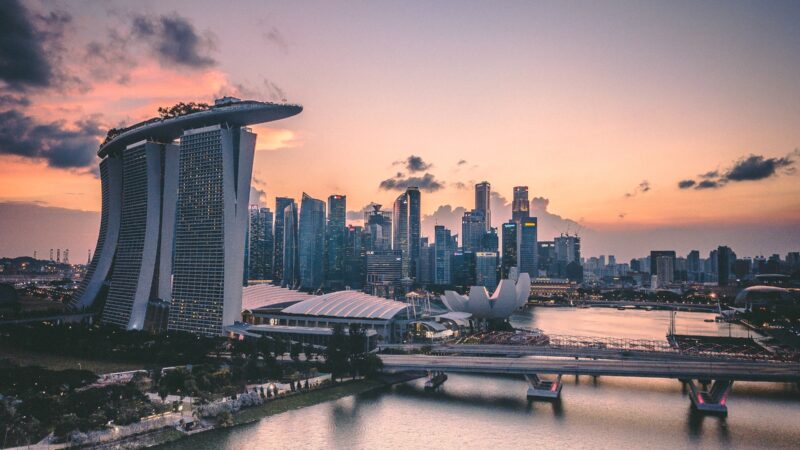
The Wire and Singapore
The small island nation of Singapore is like the American TV program, The Wire. I understand that is probably one of the weirdest opening sentences to an article about philosophy and global politics, but hear me out.
Co-creator of The Wire, David Simon, once stated the reason for the show’s success was its ability to mirror every conceivable political bias of the viewership. This was enabled by the many different themes and issues exhibited throughout the show. If you are against the War on Drugs, you will see evidence of its failings. If you support it, you will see evidence it should continue. If you believe that police failings are because of cultural or economic reasons, you will see those perspectives reflected too.
In short, within the entire series, you will see nearly every modern political issue at play as understood by every ‘side’ of said issue. What remains interesting is that, as noted by Simon, the show maintains an ability to “validate” and consequently reinforce the beliefs of the viewers.
As such, the city of Baltimore continues to hold a light to America-at-large and its ongoing issues, even if it aired 21 years ago, finishing just before the election of Barack Obama in 2008. Whether it’s urban decay, corruption, or the failure of the American Dream, what we see in the show are things that existed in the 1960’s and still exist today in this post-industrial broken city.
You can follow this train of thought into the world of global politics, which is not as far away from modern media as I would like to admit. Specifically, we have seen a similar situation emerge out of the success story that is Singapore.
Singapore is like a mirror to any political persuasion that one might have, from which also can “validate” one’s own personal politics. The only real difference is that The Wire (and by extension the city of Baltimore, I say this because the city itself is largely the main character for the entire show) are used negatively, while Singapore is used positively.
If you want to see a thriving multi-ethnic, multicultural, post-colonial state, then you can look to Singapore. If you want to see somewhere that champions free-market capitalism, then you can see it there. If you want to see somewhere with a right-wing government that places a strong emphasis on law and order, not to mention the death penalty, it’s right there between Johor and the Riau Islands.
It remains fascinating to me that a tiny island, one which most people could never find on a map, has sparked such a massive debate on what they ‘see’ when they think of Singapore.
A nation with a population comparable to Lebanon or Palestine, yet more than a hundred leagues above such countries. A right-wing free-market paradise with the best public housing in the world. Those who see its publicly-funded universal healthcare system, one of the most efficient in the world, argue to the contrary. A super politically conservative nation that’s current president is an ethnic minority Muslim woman, racial success story, model minority, etc, etc.
Is Singapore perfect? Of course not. Is Singapore used to reflect general political beliefs about the world? Well, yes. Are a lot of these views correct? Yes and no.
Politically, socially, economically, a lot of different political views and philosophies are validated by the existence of Singapore. Fundamentally, Singapore and Baltimore have a comparable effect on the politically-minded.
Do people get murdered and addicted to drugs in both places? Yes. Are both places being led by an ethnic minority leader? Yes. How we view subjects often depends on the viewer itself, as much as the subject matter in play.
Despite this, Singapore has become a symbol of success whilst Baltimore has become a symbol of failure. Singapore is a model whilst Baltimore is a failure, and nobody wants to see their political beliefs reflected or “invalidated” by the latter.
What is revealing is how two completely different places are so similar, while being so completely poles apart. Everyone can infer whatever they want from either place or still be generally, albeit not exactly, correct.
In conclusion, I think that David Simon is largely correct about this idea of how we as viewers of a thing can be so vastly different, yet so widely validated by its existence. Maybe, it’s more revealing for us, as viewers, to look at places or thematic issues within the greater context of The Discourse, whether political or pop culture, and realize we can all be somewhat right, while also being largely wrong.
Enjoying The Mallard? Consider subscribing to our monthly magazine.