“Hero-worship exists, has existed, and will forever exist, universally, among mankind.” – Thomas Carlyle, ‘On Heroes, Hero-Worship, and the Heroic in History’, 1841.
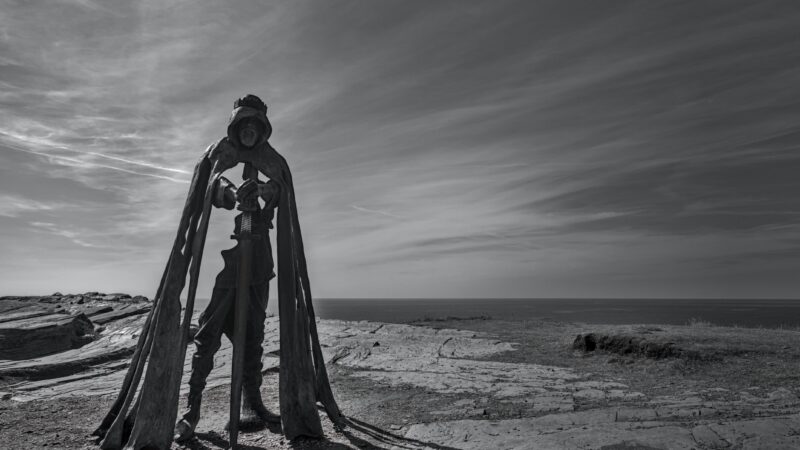
I often read history through the lens of ‘Great Men’*. The term ‘Great Men’ refers to ‘Great Man Theory’. Originating from Thomas Carlyle’s lectures on heroism in 1840, later being published as ‘On Heroes, Hero-Worship, and the Heroic in History’ in 1841, the theory alleges that history is dictated by those men who possess a remarkable ability to inspire, lead, operate, and execute. These men often find themselves climbing the ladders of power with haste, winning decisive battles or reinvigorating policy and therefore dictating the future of their people for generations to come. Furthermore, these men are rare to come by.
Most notably, Great Men most often rise to power after periods of struggle and disdain. This is no coincidence, of course, as it is during these times when those seeking power find the cracks to reach it. Napoleon Bonaparte, Julius Caesar, and Caesar Augustus all rose to power sometime after periods of national crisis, and afterwards pursued a relentless set of reforms. It makes one wonder, as the United Kingdom struggles and toddles along with little direction, how long it will be before another Great Man makes our nation his own. I am not going to write yet another list of everything that is wrong in the United Kingdom in 2023, as this has become rather cliché, but it is worth saying that in such bleak and despairing times, people will seek a Great Man to worship.
Yet, if history is so full of Great Men, then where are the Great Men of today? Some present the argument that history is written and read through the lens of nostalgia, and that perhaps these Great Men of the past were not vastly different to the leaders we have today. While nostalgia will always tilt perceptions of history to some degree, it would be unfair to discredit the Great Men of history due to it. Or perhaps, the leaders of today simply do not have as much opportunity to prove their ‘greatness’. While Bonaparte, Caesar, and Augustus could ride into battle on horseback, wielding swords and witnessing stunning victories before their own eyes, the leaders of today can only really prove their greatness via oratory and data. However, this isn’t to say that a leader cannot be ‘great’ post 19th century. Winston Churchill may not have rode into battle on horseback, but he can be considered a Great Man nonetheless.
However, the greater point here is that modern democracy simply isn’t built to elect Great Men. It is impossible for the electorate to understand the character of candidates to any considerable degree if information is only presented to them via snappy slogans, 60-minute debates on Channel 4, and vague five-point policy plans. Not only do we rarely understand what it is the candidate wants to do, but we know nearly nothing about the candidates themselves. A 30-minute interview with Andrew Neil, however great of an interviewer he may be, will not accurately inform us of the deeper character of the interviewee. If one wishes to elect Great Men, you must know them personally, or at least be aware of their faults and goods to some deeper level. The modern electorate simply cannot elect Great Men, and not for a fault of their own. You could call it a factory for mediocrity.
Compare this to older processes of election, and the story is different. Richard D Brown talks of the system of election soon after the United States was birthed in his article titled ‘Where Have All the Great Men Gone?’, and says:
“The key process of nominating candidates was dominated by layers of local, state, and national elites. Candidates were selected by their peers, people who had witnessed them in action for years and who knew first-hand their strengths and weaknesses. Whatever the office in question, relatively homogeneous groups of incumbents and their associates selected candidates from among their own number. While the system was open to new men, and choices required approval at the polls, it had a distinctly oligarchic flavor. High esteem among the peer group was a prerequisite for major elective offices.”
The likes of George Washington and Thomas Jefferson were elected because the electorate knew them. The electorate trusted them. They assumed the presidency because those voting for them could trust that they had the guts, the character, and the bottle to lead this newly born nation. Furthermore, as Brown later says, these men were elected on the basis of “private, personal virtue as a prerequisite to public virtue”, and on the basis of possessing “superior wisdom, energy, initiative, and moral stature”. One could say that this system intended to elect Great Men. Moreover, this certainly is not an advocacy for the implementation of the electoral system of the early years of the United States. Instead, it tells us that our current electoral system is flawed, and that we should seek to implement electoral systems with the potential to fight off mediocrity. Electoral systems featuring some form of meritocracy and aristocracy appear to do this best.
Moreover, it was said earlier that a modern leader cannot ride into battle on horseback. Therefore, how do we identify Great Men in the modern world? Such a man should not be judged by the endless quest for progress, nor should they be wholly judged by however much of a percent our GDP rises by each quarter. If we are to identify Great Men, we need to search for the correct metrics to find them. This requires hefty research, and it wouldn’t be proper of me to claim to know how to identify Great Men in the modern world in this short article. Yet, having the capability to identify Great Men is central to moving past mediocrity.
However, as a final point, it is worth noting that the Great Men of history often have common personality traits. We have already talked of energy and charisma, but initiative, principle, and confidence are personality traits often found, and these traits should be a starting point when attempting to identify a Great Man in the modern world. Moreover, these personality traits remain massively important. While a Great Man of today may not have access to swords, bayonets, and rifles, reform and reinvigoration remains as important as it ever has. Only a master statesman is capable of successfully reforming and reinvigorating a nation. The likes of Bonaparte, Caesar and Augustus all had the vigour to do just that, and all three understood that politics is about winning.
*Today, ‘Great Men’ are sometimes referred to as ‘Big Beasts’, and the purpose behind this is to include great female leaders under the term. While I rarely like to modernise language (and haven’t done so in the article above), I do believe it is worth writing this note here, for there have been many great female leaders of whom possessed many of the same traits as Great Men.
-
The Importance of National Storytelling
I’m warming myself by the fire where pork shish-kebabs crackle, as I gulp down sweet homemade wine with cured belly fat and black village-bread. We are at a friend’s dacha about 150 miles southeast of Moscow. As we drink the talk gets more political. Eventually a bearded armchair expert starts explaining a theory involving different ethnic groups having innate biological proclivities. He explained Englishmen were ‘sailors’, they live on an island, and they sailed around the world and settled new lands. Jews were ‘traders’ and therefore became widespread but remained on the outside. Russians were the ‘forest men’, who conquered the Eurasian steppes, uniting Slav with Turk in a forest-steppe continuum – or something like that. I didn’t realise until much later that this was a bastardised layman’s understanding of a genuine, developed school of thought now popular in Russia and beyond.
The once-obscure theories of Lev Gumilyov, the Gulag-surviving Soviet social scientist and son of influential poets, are now deeply embedded in the Russian mainstream. Gumilyov conflated nationality and ethnicity into ‘ethnos’ – a universal element of history that makes its foundation. He believed that each ethnos acquired ‘behaviour stereotypes’ in its early stages of development or ‘ethnogenesis’ (presumably what my drunk acquaintance was referring to), connected to geography but also to another concept – passionarity. Passionarity can loosely be defined as an intrinsic motivation towards purposeful activity. Putin has described it as ‘the will of a nation’; its ‘inner energy’. This became the ontological framework for Eurasianism which, part-philosophy part-ideology, is newest part of the story that Russia tells itself. In practice, Eurasianists believe that the post-Soviet states of the ‘near abroad’ are Russia’s natural allies, and not the Slavs or others to their West. They believe Russia and the states that surround it make up a unique, ‘Eurasian’ civilisation united by a ‘Tatar-Mongolic’ heritage, making up the heartland, destined to be in constant battle with the outer rimland.
This might sound like (and likely is) wishful ahistorical nonsense, but there are worse examples. Hungary is an observer state of the Turkic Council, and every year hosts the ‘Great Kurultay’ event, where participants from across the Turkic states and Turkic regions of Russia gather to ride horses and dress like Genghis Khan. The debates over Hungarian pre-history are as confusing and they are endless but basically, they also involve a lot of Eastern-European Turkophilia and dubious historiography. The Turks themselves are split between being a reincarnation of an ancient nomadic people in the body of a Kemalist republic or the rebirth of Islamic power rising from the Ottoman ashes. We might find all this story telling strange, but what stories do we tell ourselves today? What is the level of our ‘inner energy’?
One of the stories we tell ourselves is that ‘the West’ exists as a civilisational bloc due to a shared European and Christian culture, but how true is this now? Our leaders almost never define us in this way. We are instead liberal, democratic nations united by ‘shared values’. The power of ‘the West’ is invoked only when we are being convinced of virtues of the latest war. In this values-based understanding, Taiwan is just as much a part of the West as Israel and Japan are. When that loose definition can’t be convincingly stretched enough (thinking for example of our good friends Saudi Arabia), then we simply become ‘the international community’. All of this is collapsing in front of us, as forgotten civilisations re-emerge with powerful narratives. The West’s old stories do not even convince any more, let alone inspire.
If we look under the hood of this artificial construct of the modern West, we see that it’s held together by little other than the political, economic, and military ties of the globalist regime. I shouldn’t have to say that this does not diminish the magnitude of the West’s contribution to art and science, but a culture must be lived to exist. When it ceases to be, it becomes mere history. We must look at the reality of what today’s West is and not just where it came from. We can divide the modern West into roughly three parts (if we exclude for now the strange parallel Western world that is South America) and they are the Anglo-Saxon countries, the ex-communist states, and the rest of continental Europe. Let’s look at them one by one.
The nations that spent decades under communism are undergoing what can only be described as a cultural renaissance. Hungary and Poland are notable examples, but the pattern is at play across the former Warsaw Pact countries. Being frozen off from the rest of the West for all those decades has unexpectedly left these societies uninfected by the viruses of cultural guilt, atheism, mass immigration, degenerate pop culture and third wave feminism, just to name a few. In fact, the repression of national cultures, religion and traditional family life has led people to embrace and guard those aspects of their identity and lifestyle with a militant zeal. I am aware that most of these countries suffer chronic demographic issues of some kind, but unfortunately most of the world are now victims to a similar fate, so let’s park that for now.
These countries suffered occupation and oppression from many empires across the past centuries, all engaging in national struggles, only to engage in new ones as the red yoke fell. They are therefore not short of stories to tell themselves. The revival of Christianity in these lands only adds to the spiritual rebirth that is evidently sweeping this part of the world. Gone are its Orwellian regimes and rigid state ideologies, very obviously authoritarian, offensively so to our Western sensibilities. Yet the Brave New World-style totalitarian society that we now live in is less obvious, most of us refusing to see it despite it being all around us. It may well be the case that the future will see a new Iron Curtain, where EUSSR citizens try to escape to the sunlit uplands of Eastern Europe. This is what the direction of travel indicates.
Next up is the rest of continental Europe. For all its faults and afflictions, countries like France, Italy, Germany, the Netherlands and even Sweden, are in better positions to get out of the mess they find themselves in than, say, the UK (which finds itself in a near-identical mess). It turns out that the European system of proportional representation and regionalism is a far better bulwark against globalist top-down policies than the much revered Westminster system of government, as the success of Meloni, Wilders and other patriotic populists shows. Here, the inferior status of the English-language along with inherent protectionist tendencies have acted as shields from the extremes of financialised progressivism. Not having the world’s lingua franca as your native tongue adds a filter between national cultures and the globalist monoculture.
Despite most European capitals being marked with giant conquering rainbow flags, thousands of non-metropolitan regions maintain the standards and traditions of their forebears. Culture is preserved on the local level, with much disdain and distrust directed towards the centre. An understanding that traditional way of life relies on a healthy nation, rather than on liberal democratic values, is pervasive and comes naturally. Folk music, national dress, culinary customs, community events, religious occasions and even superstitious traditions are more prevalent and taken more seriously on the continent. These countries are locked in a tug-of-war between the chauvinist East and the emasculated West. Preserving these rich cultures by reclaiming the nation-state seems like a motivating purposeful activity and compelling story.
So, what do you do when you are a country made up of four nations? What if your language is not a delicate national treasure but the universalist tongue of billions? What if your country was set up by people from one part of the world, but is now populated by people from a different part? These are just some of the identity crisis challenges that face the Anglo-Saxon world today. What stories can these countries tell themselves about their place in history and their destiny as a people, outside of materialist comparisons? GDP rankings aren’t the stuff that give you goosebumps. Christian heritage holds these societies together, but actual belief in Christianity is largely missing. Other non-religious ‘values’, like ‘tolerance’ and ‘belief in the rule of law’ are as perverted as they are meaningless. Even Ireland with its unique story was until recently one of the most cohesive, vibrant, and successful of the English-speaking countries, but has now followed its cousin-countries down a road of ruinous self-flagellation.
The United States likes to tell itself that its constitutional system is so perfect that it has been able to melt the peoples of the world into a nation based on life, liberty, and the pursuit of happiness. It’s the official narrative. Like many official narratives, not only are they instantly challenged by people’s reality, but they are fundamentally untrue. The country was founded by settlers from a very small triangle of the world roughly covering England and Holland. Its system has worked only insofar as the White Anglo-Saxon Protestant culture has dominated. As we are realising to our horror today, our social order is not based on what laws we have, but on how ordinary people behave. Yes, it is illegal to commit rape and murder, but that fact is not the only thing stopping me from doing those things. Somehow, I also don’t want to.
America seriously struggled with integrating first German then Irish and Italian immigrants, due to what were then considered as huge differences in culture. In time, the shared aspects of European culture proved to be enough of a basis to integrate these masses of people into a new nation. Yet it was the efforts of a handful of Ashkenazi Jews in the early 20th century that would cement the homogenous American identity and bring it to life. Through the studio system, the barons of Hollywood’s golden era created folklore for a virgin country, projecting an Anglo good life and WASP values across the land and world. The American dream was not about getting rich but raising strong God-fearing families behind a white picket fence.
This America has long been lost and its 21st century replacement is on a trajectory to become part of Latin America. Like Brazil now, it’s set to become a country where the south is populated largely by White European evangelical Christians while its coastal cities are made up of wealthy gated communities and skyscrapers, separating the liberal elites from the mixed favelas and shanty towns. Adopting Spanish as a national language also adds to this analogy. Part of this region’s problem is that, with Europeans, Africans and natives mixed throughout the arbitrary post-colonial borders, it lacks convincing stories to tell itself. This is probably behind the Latin American habit of entering abusive relationships with radical ideologies.
This leaves us with the rest of the English-speaking countries, the British Isles, and their offspring. The British identity formed with the union of kingdoms and came into its own with the growth of empire. The Scots, Irish, English, and Welsh spread out from their small corner of the globe and settled its far-flung frontiers, producing developed and orderly societies. Far from diminishing the British identity, the loss of empire should have been an opportunity, a released burden, from having to govern large masses of alien people. The British world, with its shared state structures, language, and history, should have been a proudly embraced inheritance, ensuring the culture of these small islands lives on across the world. Instead, America took our place as the mother country, and along with the other realms we have all become part of the American world. Yet the American dream is now clearly a nightmare.
Interest in increasing ties between these extremely similar countries was revived during the Brexit campaign, with the idea of CANZUK, a proposed political alliance between Canada, Australia, New Zealand, and the UK being one of the more promising projects. Its proponents argue that it makes sense for countries with similar economic, political, and legal systems to increase cooperation. Yet these systems have brought the same ills to all these countries. All these countries have had decades of mass immigration and state multiculturalism. All these countries engaged in inexcusable tyranny and criminal negligence during the covid years. All these countries are fully signed on to serving the military-industrial complex and the agenda behind the climate scam. All these countries are losing their identities far quicker than anywhere in Europe or even than America. Is there a common cause of this? It seems more likely than not that a once shared-cultural space left us victim to the same cultural decline, and the extreme liberalism of today’s CANZUK nations (even in comparison to ‘progressive’ European countries) suggests there’s something running through all that ties us together and has sent us all down the same wrong paths. It therefore seems unlikely that further integrating these countries in their present states would make anything better. There’s been such a demographic shift, an erosion of national sentiment and a detachment from the traditional culture of the British Isles, that the populations of these countries would reject this.
Another trait shared by these countries is the seeming inability to think outside of modern ideologies; leftism, capitalism, socialism, liberalism, secularism, nationalism, etc. These all take different objects of study, be it class, the individual, the nation, and increasingly in our post-modern world, race, sexual identities, and other perceived oppressed characteristics. What lies outside all these largely Western constructs is traditionalism. Traditionalism isn’t an ideology but rather a school of thought. It’s of course entangled with right wing politics, but it is a separate prospect. Time to the traditionalist is not linear but cyclical. We’re not going somewhere in the future but instead always coming back to a past. It’s seeing the immaterial in the material. The inherent virtue of tradition and moral good of beauty. It is possible to embrace this mindset without believing in God, but it’s easier when you do. Either way, it requires a breaking out of our utilitarian conditioning. Shun the bugman world!
There is a clear difference between the health and overall robustness of modern British and Turkish cultures, to give an example. This can be demonstrated in how cultures collide. In Turkey, the native culture reigns supreme, forcing all forms of art and entertainment to conform to local tastes or bend itself in some way. Netflix and Disney plus can’t just dish out subtitled versions of their usual fare, they must create locally produced, Turkish-oriented content or they won’t survive. Likewise, foreign music is a rarity on the airwaves, with outside genres being morphed and orientalised out of recognition before taking final form. International fast-food chains perform well but will never outcompete the legion of local takeaways with their motorcycle delivery armies. Even then, country-specific modifications are common. The point is, this is a robust culture that absorbs and bounces away outside elements. Modernity is only accepted once it has been infused with tradition, or domesticised.
Unfortunately, modern British culture does not absorb and shape incoming elements but rather accepts and is taken over by them. Such is the dogmatic nature of the near-official state ideology of Diversity, Equality, and Inclusion, that the concept of a supreme, native culture is a thoughtcrime. If you told a Turk that Britain’s national dish was something called ‘Chicken Tikka Masala’ he would look at you with a mix of bemusement and disdain. Multiculturalism does not have to mean accepting foreign cultures as they are and putting them on a pedestal, but in the absence of a muscular home-culture this becomes a fait accompli. Britain, a country that just a few decades ago was a net cultural exporter, has undeniably lost its mojo. The reasons for this are likely to do with our modern economic system and the various cultural and sexual revolutions visited upon it in this period. Adding many millions of immigrants from the most incompatible parts of the world to the population in a short timeframe has undoubtedly contributed to the decline in shared identity, but it is not the root cause. Few offer a compelling way forward. Traditionalism offers a way to relook and renew.
There is something universalist in this perspective that deserves appreciation. Traditionalism has a ‘to each their own’ attitude that is especially attractive those of us who are sympathetic to non-interventionism and realism in international relations. At present, we ‘the West’, have not given up our position of the constant moral lecturer of the world. This position becomes ever more absurd as the reality of our corruption and social decay is further exposed. We lament the imprisonment of Alexei Navalny and other political dissidents in Russia yet have nothing to say about the imprisonment of Julian Assange or the death of David Kelly. We condemn the primitive corruption of local officials in the third world yet have nothing to say about the institutionalised corruption of our military and pharmaceutical industries and their revolving door self-regulating agencies. We scare ourselves with stories of China’s ‘social credit system’ while living in a comparable digital dystopia ourselves. We invade countries on false pretences, only to bait-and-switch into a Darwinian superiority battle of civilisations.
Our reaction to spending trillions of dollars, two decades and thousands of lives to replace the Taliban with the Taliban, is to Twitter shame Afghanistan for being culturally backward. It is therefore no surprise that Israel has done its own bait-and-switch, abandoning its anti-Hamas line in favour of posting pictures of gay IDF soldiers kissing, therefore demonstrating its cultural superiority compared to the backward homophobic Arabs. All this hypocritical and psychopathic nonsense is thrown out when you view the world through the traditionalist lens. It accepts the world as it should be; differing realms with their own ways of life. The world will not end if we simply let the Arabs be Arab and let China be China. The important thing is that we let Britain be Britain. We should own the right to be ourselves and drop the self-imposed burden of trying to change others. Live and let live – at the moment we do neither.
As far as cultural inheritances go, these islands are luckier than most. The rich tapestry of clans, tongues and kingdoms are genuinely ‘diverse’, and when you drive out of the big cities their beauty is on full display. This is a great lot to work with. As modern urban life becomes increasingly unbearable, it will be to the countryside and villages where people will escape and try to reconnect with the eternal. In the last few years especially, people of individual, independent, conservative, and alternative persuasions have (ironically) used the power of the internet to become part of a revival of traditional ways of eating and living. These people are entitled to (and do) make their own meanings and tell their own stories, but a nation is like an organism and relies on all its constituent parts to function properly. For this, we need grand narratives not of a brighter material future, but of a deep, spiritual, and eternal connection to the land and the people we share it with. It doesn’t particularly matter what stories we tell, but we need to think of some new ones because the old ones don’t work anymore. It will not make me popular to observe that the Second World War, for whatever reason, is no longer the unifying national myth that it once was (at least for Britain). Even countries like Russia, which treats the Second World War as a sort of national religion, needs other tales and stories to tell itself in addition to that. We need big narratives about who we are, where we’ve come from and where we’re going. Celebrating St George’s Day and Margaret Thatcher isn’t going to cut it. We are faced with a fundamentally different country at a critical time in its history.
Britain is a nation with extraordinary prospects that are being wasted because there is no vision. It has, to use Gumilyov’s terminology, low passionarity. Many British people to do not feel that group-specific inner biocosmic force inside of them, and that is a failure of culture over anything. My few childhood years spent in an Irish primary school imbued me with more of an appreciation and affection for that island and its culture than I ever got from a lifetime of secondary and higher education in the UK. The stories of my parents and grandparents, who as immigrants are more inclined to engage in cultural propaganda, instilled in me a visceral feeling of belonging and connection with my ancestors, and their cultures and histories. Yet I only truly connected with the traditionalist mindset after a long process of consciously deprogramming myself from the globohomo monoculture. I now experience a complete synthesis of my various identities, without succumbing to shallow partisanship. I see the beauty in and take strength from them all. The stories and traditions sustain me every day. These bedrocks of any culture need serious replenishing in our country. Our future depends on it. It won’t be an easy task and there are no overnight fixes. The many decades and multiple generations it took for the long march through the institutions to bring us to our current state can only be counteracted through an equally long period of renewal. As the cultural Marxists attacked the family and hijacked education, watching the consequences ripple through to the rest of society, so too must we rebuild the family and reclaim education over a long period of time. If this is viewed as a political project with goal posts, we will be doomed to fail. Instead, this should be viewed as an unending, cyclic process of passing on and telling stories to inspire meaning and bravery. So, reject modernity, embrace tradition!
-
Zero Seats isn’t Over
Keep going. The target isn’t eliminated yet. There is more to do. There is more you must do.
You have felt mush. You must keep pushing. The target must not be allowed time to recover. It is not enough that they’re tired, meandering, and feel like they’re under a slow but inevitable gravitational pull toward irrelevancy. Where they are making mistakes, they must be helped along, not just left uninterrupted.
Waiting for the next general election for the double tap isn’t enough. You must be more ambitious and more aggressive. The work must be put in now. The fight isn’t won in the ring, it’s won long before you dance under the lights.
Certainly, the opportunity for zero seats is still open. Is it possible before the next general election?
The target’s prospects are dim. There are two things a party needs to keep going and they have neither: an offer which enough of the right people want, or an ability to inspire any confidence.
If you have one, preferably both, of these, everything else (people, enthusiasm, money, effect) comes easier.
Sundries
Let’s get two small things out of the way first. Money and supporters.
Money. They’re broke.
Donors ran while their rivals raised 15 times more in large donations. They had to cut spending on cut spending on social media advertising because they ran out of money. They’ve been in trouble for a long time, even firing cleaning and security staff ahead of the campaign to make savings. Now the target is squeezing its leadership candidates. What a convenient way of weeding out the biggest of the timewasters.
Conference this year is looking ropey. Businesses don’t see any reason to go and spend lots of money for a stall or to sponsor an event or two, apparently. Previous years have earned up to £2m profit. Pretty meagre to begin with, but better than an imminent zero. Nobody to influence. That’s long before you consider what the content of Conference will be about. Nothing motivating. This will mean less money.
Money is a real problem. They never had a lot of people dedicated to the political work, or to the grind of knocking on doors, delivering leaflets, etc. and settled for a good chunk of their supporters quietly paying membership fees and other donations, which allowed them to make up for the small number of activists compared to their competitors.
Supporters. What supporters?
One estimate puts the target’s membership numbers at 172,000 as of July 2022. Do you think it has gone up or down since then? You can assume some boost ahead of the leadership election. The results of that vote will produce a number for totals and turnout. Now is a good time to buy low, perhaps, but are the signs particularly good?
Signs from the General Election and associated polling. Certainly, the winners didn’t receive very many votes in absolute – the lowest of any winning party since the 1880s, apparently. Goodness. Well, what does that mean for everyone else? They received even fewer votes. (For a particular newer party this may not mean the same thing – perhaps it’s best judged against other new entries/debuts over the years like the Brexit Party or UKIP more recently, or even going back in further psephological history to the birth of the Labour Party, perhaps).
And of this much reduced voter support, how long will that last? In the +70-age bracket, 46%. For the 60-69 range, 33%. For 50-59, 24%, much lower than the winner’s 34%.
Assuming things stay approximately the same, with the, er, normal circle of life, one projection has the target’s vote share in total declining at a rate of 2% per year. From 2025 to 2029 that would be a reduction of 24% to 16%.
Things never stay approximately the same, though, and why take the chance?
There’s no need to be nasty. Instead, be persistently, relentlessly, merely matter of fact. The target must be made to feel like it is neither hot or cold, just straightforward inevitability that it is empty and pointless. It has no energy and looks a lot like UKIP did after Nigel Farage left it all those years ago.
What is the point of you? What are you even doing? Just give it up and try again aligned with people who might actually take you somewhere.
Leadership election
Their leadership election is certainly reminiscent of those early post-Farage death throes.
This whole thing is set to be one big example of why zero seats is not over yet.
They haven’t even technically gotten rid of the “old” disgraced leader yet. And he’s going to hang around all the way until November? Past the reopening of parliament, the budget, conference season, and whatever unforeseen opportunities and scandals and events of importance might happen in the meantime?
Losing the election and the vast reduction of their MPs was bad enough. In the winner-takes-all system the UK has they might as well have had zero seats. Now they won’t have any coordinated response to anything until November? Isn’t that going to look an awful lot more like zero seats in functionality and practice?
And who have they got? The same old ding-dongs who got them there in the first place.
Many are flexing what little they have for the pony show, it seems. The pattern from the 2019 leadership race is so far re-emerging. Never mind the “front runners”, a series of true nobodies are also taking the chance to float their names. How pointless. There are so few of you that you’ll all almost certainly get a job as a shadow this or that anyway, without having to raise your profile.
And indeed, there are very, very few of you. With only 121 MPs the biggest contenders may well only just scrape together the 10 or so nominations (including themselves) needed to proceed. This is weenie. Why is nobody treating them as weenie? Treat them as weenie. They’re weenie.
Who have they got who can take on the Prime Minister (even if he is Keir Starmer) or Nigel Farage?
They’re not just weenie, they’re totally without any creativity. These people are so empty I reckon I could write every single one of their leadership pitches without having actually seen a single one of them. I’d much rather inflict that slovenly indignity on you, duckies. Does the following sound at all familiar?
“Hi, my name is Blah Blahson, and I’m standing to lead the target.
We need to be honest about where we went wrong. We didn’t listen. We broke all of our promises. We did in fact do too much of [insert random thing that was never the real issue, but something on the side or a symptom like divisiveness and infighting]. I will put an end to all that and start the difficult task of earning back your trust in time for the next election.
Here’s a bit about me and how I grew up to make me seem more relatable or sympathetic or something. Economy. Aspiration. Your dreams.
I want to be a tough ole grind-stoning cliché, cliché, cliché. I am proud of my record as [insert not totally unimpressive but generally not uncommon non-political working background here] + of my record as [insert whatever non-detailed and highly questionable ministerial gubbins they want to puff themselves up with]. I am a true conservative blah blah blah, and that is why I believe I am the right person to deserve your trust and lead us back to glory.
Next time, we’re going to be totally honest. I’m a no-BS kind of politician. It’s time for us all to unite. That’s what real leadership means to me.
That is why I am but humbly putting myself forward for leadership of the target, and I ask for your support.”
What do you reckon? That’s about right, isn’t it? Good grief.
November’s a good while away. You can expect a few relaunches of the same leadership campaign. As in, from the same politician. They’ll either fail to hit the mark or they’ll just be doing it again and again on some excuse to try to get more media attention.
And you know what? They’ll probably go through at least two leaders before the next election. And it’ll be from the same pool of MPs. People are going to get really sick of seeing the same unimpressive bunch over and over again. This is only going to be worse if, because there are so few MPs, shadow ministers are going to have to hold multiple briefs and work multiple appearances. It’ll get worse. Do you think these people have enough capacity for the mental arsenal on multiple briefs? What will this mean for their ability to cut through, to work detail, and nuance, and out-fox civil servant-resourced ministers?
All of this will perpetuate the idea that they’re disorganised and pointless. Weak.
Keep pushing on all of this. Keep pushing zero seats. It’s not over.
The target won’t reorganise
The target’s MPs don’t have it in them. There are a few reasons.
First, they’re scrabbling and struggling to keep their heads above zero seats as it is. What does this mean for reorganisation? At the best of times, MPs are looking to pick party leaders who will win them their seat, secure their seat, increate their majority, etc. First and foremost. The strongest incentive is for them personally, above anything else first, to be in office. (This is not the same as them being in power, but they think it is). It’s just that this means their own job, money, perceived prestige, pomp, etc., it’s at least somewhere in the correct 180° arc that you need to be in officer (power) to actually do anything, and that once you get some office (power) the correct thing to do politically is to keep getting more and more and more of it. The problem for the target is that they are desperate, which has its own ick, but this will also make them short-termist and wrong about what they need to do.
Second, the target has the same problem that the dying days of the Gordon Brown Labour Party had, and the first few post-2010 years. Same old people. The ideal best thing they could have done would have been to fire probably almost all of their sitting MPs and brought in a much fresher (not necessarily younger, though that might not have hurt) and energetic bunch. Even if it was naivety they’d at least sound enthusiastic and eager about whatever ideas they’d cooked up while they were dreaming of being MPs. And they wouldn’t be coming with the same dismal tainted track records. Instead, you’ve just got a bunch of blockers hanging around.
Third, the target doesn’t have anyone willing, let alone capable, of reorganising themselves. They might be making some of the right noises (see the accurate leadership pitch above) but they’ll almost certainly all be missing the point. They’ll be doing it on purpose. What’s the pitch otherwise? Here’s all these truthful reasons about why the target is awful but this time the same people will sort it out despite not understanding what was wrong before? If they understood, why didn’t they do something about it? If they didn’t understand, why humour them now? They should resign, but they won’t. Where else have they got to go? There is nothing so “ex” as an “ex-MP”. Maybe they genuinely, deludedly think that they can turn things around? Does it matter? They’re not going to go. It’s why the target is going to stay in a terrible spot.
Zero Seats is right there. Keep pushing it.
They won’t learn the right lessons
A related, but distinct-enough separate point. They won’t reorganise because they won’t learn the right lessons.
The incentives aren’t set up that way. It would mean admitting they were wrong. If they were wrong, why keep them around? Why not just start fresh with some people who were right?
They’re locked into failing to learn the lessons of the 2019 voter realignment. Reform will probably keep at it. This also incentivises them not to change. You can’t really mimic another party. At a certain point your remaining supporters leave, the ones who left will stick with the real deal, and those tempted will also just go to the real deal.
The same applies to the wets. Why not just go with the absolutely soaking in the form of the Lib Dems? Holiday-fun Ed Davey is already promising to come and kill you, at your house, in real life, and wear your dresses and makeup like the ancient Irish did, from the left.
The target is almost entirely ersatz, at best. Will that inspire at Conference?
You’ve known how empty they are for a while. It seems just as likely that they didn’t win because they were totally without plans (except for banning people from buying cigarettes or something? Who knows?) – not because they weren’t left or right enough or didn’t do anything or deliver on promises.
Beyond substance, do they even have the form for a good pitch? More on that next.
They sit out of the Pareto distribution
A lot of you were hoping for a genuine zero seats. Some of you thought sub-hundred would create the same effect.
You’re all too soft. I wanted to see one seat. Just one. Just one only lonely solely wholly put upon target MP in the whole of the country. Rishi Sunak. Could you imagine that humiliation? And then the humiliation of all the other decisions he would have had to make after that?
Anyway, a lot of you were disappointed that the target retained over one hundred seats. You suspect that this might be enough to keep them alive. Maybe, but also maybe not.
It’s still not a strong position to be in. They’re not clearly in one side of the niche of the pareto distribution or the other, are they? Genuine question.
For the uninitiated, the Pareto distribution is also known as the 80/20 rule. This is approximately that 80% of any phenomenon, market, etc. is due to 20% of the factors/actors involved. It’s never an exact 80/20 ratio, but one example might be that 80% of groceries are sold by 20% of all the grocery providers around. In other words, a small number of individual actors do most, but not all, of the business, and that remaining portion is likely done by many much smaller competitors.
In business in particular, this is important, because you either have the size and scale to do a large amount of generic mass market business, or you go smaller and niche and specialise. Think the difference between a mass market M&S suit versus Savile Row. Each has their place doing a particular sort of thing.
In the political case, does the target neatly sit in the big party or small party category? Too small to have a crack at the 80% market share, but too big to really be niche like the Green Party or Plaid Cymru or whoever?
Reform might have the opposite problem – are they genuinely going to try to break into and have a crack at being on the big boy side of that Pareto distribution? Or is it enough to function as a glorified pressure group like UKIP did (hey, not knocking it, it worked) without the full “mainstream” breakthrough?
The target is sitting very awkwardly right now.
What’s next?
Well, really, continue the Zero Seats campaign.
It’s not over. Slog it out. You didn’t think politics was going to be all excitement and meme wars, did you? Politics is a strong and slow boring of hard boards.
The way forward: take their oldies.
The target is pretty much only supported by old people now. As mentioned above, all other things remaining the same, this would see their vote share dwindling at a rate of about 2% per year. But all other things will not remain the same. There will be more oldies along in a minute. The target might start doing good politics and start making a meagre recovery.
No!
I don’t care if it’s Reform UK or the Lib Dems or the Greens or whoever or all of them. Start coming out with plausible policies, announcements, attacks, aimed at splitting off the oldies from the target.
Come on. Zero Seats!
-
Making Plans Without Nigel
Nigel Farage’s rise to prominence came in the wake of the utter implosion and failure of the BNP. After what seemed to be promising growth for this nationalist vehicle it effectively self-sabotaged to the point of complete unviability. Years of activism and goodwill pissed away. This is a subject deserving of attention in and of itself but will wait for another time. Enter UKIP, a party that although libertarian had the glimmer of nationalism in its eye with it’s main goal being leaving the EU. They had been rolling along in the background of British politics but were never really given any mainstream attention. The BNP was a eurosceptic party so the voter base could transfer over nicely to UKIP, although UKIP itself barred BNP members from joining for pragmatic optic reasons. Nigel essentially served as the frontman of the “fruitcakes and loonies” and his gift for public speaking and particularly his keeping alive of the immigration question attracted disenfranchised nationalists.
After this point, politics in the UK was overtaken by the Scottish independence debate as well as the question of Brexit. The latter obviously being achieved but poorly implemented. Glossing over this part of recent history to the meat of it; Nigel essentially forced the Tories to do something they were otherwise unwilling to do, leave the EU. Whether it was arrogance or fear that drove them to it we will never really know. What has transpired since then is a complete revelation to a great mass of people of the complete duplicitous nature of the Tory party. Nigel moved from UKIP to a new vehicle, the Brexit Party, in order to pressure the Tories into delivering a no-deal Brexit over accepting some Europe favouring deal. Post-Brexit the party has become Reform.
It was immediately clear that the Tories never wanted Brexit, indeed many of the things they publicly say they want or will do never come to fruition. It’s a party of saying one thing and doing the opposite. Nigel’s presence in British politics has been key in revealing this. When the last general election came up Reform made the decision to stand down in order to not split the vote and lose to Labour (who would have most certainly delivered a worse Brexit deal) ensuring another period of Conservative government. This is where the most recent criticism of Nigel begins in earnest.
Nigel is (dis)credited with “saving” the Tories. This is frankly preposterous. What has transpired over these last few years is a complete exposure of the true nature of this “conservative” institution. Reluctant Brexit deal, shambolic lockdown and further inability to reduce immigration. As we come toward the end of this 13+ year period of Tory rule what have they actually achieved for their voters? Nothing. Well not nothing, they’ve actually massively increased immigration.
If Reform had taken the decision to split the vote then potentially a Labour government would have been in charge of the exit deal and over lockdown. This would have given yet another excuse for Tory diehards, and the party itself, to say they would have behaved differently. Thankfully we don’t live in that reality, they’ve shown their true colours once again. Nigel has played the long game and come out of top. Are you really going to vote for a Conservative party that continue the same people that have been in power for 13 years?
As we are approaching what looks like a massive Labour win we have to remember what got us into this mess. Nigel has given the Tories enough rope to hang themselves with, the stool just needs a kick. Under a potential future Labour government we need to remember that, we can’t let the Conservatives sneak back in under the false bravado and empty talk the likes of which Suella Braverman has been deploying in recent weeks.
Rumours of Nigel as the next Conservative leader, after his appearance at the Tory conference, have been quashed by the man himself. He can’t envisage leading a party that stands for nothing and ultimately does nothing. I can only see his leadership happening if the party is completely gutted and that seems extremely unlikely at this point in time.
Nigel is not leading Reform at the moment, that task unfortunately falls on Richard Tice. A particularly boring man, a charisma vacuum, a damp rag to borrow a phrase from Nigel. If that party is to go anywhere it needs its old helmsman. I can’t think of a better place and time for Mr Farage to step back into a leadership position.
Where does that leave nationalists? Well firstly after being very kindly carried on Nigel’s back for over a decade it’s time for us to forge our own path. There is currently not a suitable vehicle for nationalism in the UK so it seems to be falling to independent candidates. I am currently only aware of one candidate that is stepping forward in the next election, Steve Laws, and would encourage every British nationalist to get behind him in this brave endeavour. The next decade is going to be critical for nationalism we simply have to get a party together, or commandeer one, and start winning seats locally and nationally. UKIP made an attempt to transform into a more nationalistic party, albeit in the vein of Tommy Robinson’s anti-Islam/counter Jihad. Although given what has happened recently, a staunchly Zionist party being the only vehicle for nationalism could have been a disaster. As I’ve said previously, we should exhibit caution when taking sides in the Israel-Hamas War. A fresh start waits on the horizon.
Mr Farage is not a gatekeeper, recently he said he believes a party will come along that makes him look quite tame. That’s us, we’re waiting in the wings but held back by our nature of being disparate and largely anonymous. Funding is also another great issue but there are plenty of content creators that surely, if they cared, could set aside some of their patron money towards the founding or funding of something tangible. Can funding be courted by actually engaging in active British politics? Potentially. The BNP had substantial membership and funds so there is certainly money out there to be had if only we could present ourselves more concretely to the British public. The Right in recent years has concerned itself with debate club topics of history and religion. These are naturally important but we can’t lose track of the ballot box if you genuinely feel that it is possible to gain ground electorally, which I do.
Nigel has expressed for years his desire to retire out of the political limelight, he was never masquerading as a saviour for our demographic woes, he just wanted Britain to leave the EU. That has been achieved, albeit imperfectly, so the future of Reform is uncertain but if it can pressure the Conservative party into genuine change then he will have done us another great service. The priority is stopping the endless tide of immigration into this country, finally carrying out the will of the British people after all these years.
As stated, the next decade will be incredibly important for nationalism in the UK, any advocacy for lowering, if not outright stopping immigration, should be pursued as our top priority. Find a vehicle that suits you and begin supporting it, either from the sidelines or involving yourself if you feel able to. The difficulty with our brand of nationalism, one that advocates for the native White British population, is that it will make you a persona non grata in many walks of life. That will change, but for now it is understandably a risk many cannot take. These issues will be hashed out in the coming years, as more speak out and as the imported problems of immigration can no longer be hidden or obfuscated the less taboo the subject will become. Indeed, given the current events in the middle east are reverberating back to our shores many are seeing the current & future demographic problem writ large.
Fundamentally, we are walking on a similar but distinct path from Nigel, we can no longer expect him to be something he isn’t. That is delusional for us and unfair, ultimately, on him. By doing that, we risk fostering resentment and poisoning what have ultimately been positive developments for nationalism when we otherwise would have been scattered and homeless. I doubt we’ll immediately separate fully from his political influence but now is our time to step into the limelight.
Nigel Farage’s significance to British nationalism today will not be forgotten, like Enoch Powell before him, it is foundational for many. Here’s to ARE Nige! Always and forever!