
How the British Mentality is Being Taken Advantage of
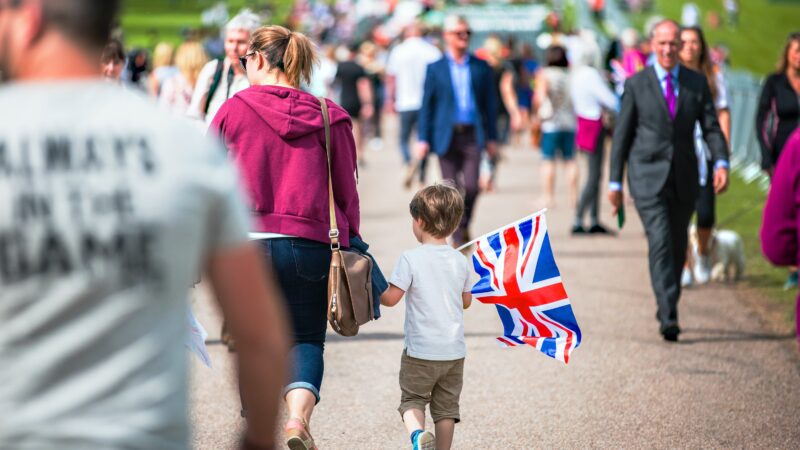
Having travelled to the United Kingdom on many occasions and having interacted with British people all around Europe from Leeds to Tallinn, I can safely claim that the folk of those fair isles have one of the friendliest dispositions I’ve encountered on my many travels. This is a bold statement and may very well sound strange to any UK native. However, I’ve failed to find such a friendly, helpful and hospitable demeanour anywhere else. By now, I’ve lost count of how many pints I’ve been offered, whether by a good friend in an ice rink in Nottingham or a complete stranger in a small pub in Attercliffe.
Such a mentality is a credit to any people, but to avoid this essay sounding like too much of an adulation of the British, I have to point out that I’ve seen this jovial mentality evolve into a double-edged sword. My observation and subsequent thesis is that the British people are being taken advantage of in a frankly horrid way and mostly through no fault of their own. The stereotypical friendly attitude of the British towards their fellow man is being used insidiously to destroy the very society that created it, and by Britain’s own ruling class, no less.
What do I mean by this exactly? The way I see it, British friendliness has created not only complacency, but rather powerlessness in the face of people and ideologies that have no qualms asserting themselves, often violently. As an outsider, a foreign observer, I’ve witnessed this phenomenon repeated in several cases which I’d like to bring out here. Firstly, I’d touch on immigration and its consequences. When the arch-enemy of Britain, Tony Blair, figuratively threw open the floodgates, Britain has been the destination of wholly unprecedented numbers of immigrants from all around the world, especially from the third world. The consequences of this population shift have been equally unprecedented.
As many will know, mass immigration exacerbates already existing economic issues. Much like other Western countries, Britain is facing a housing crisis and wage stagnation. Furthermore, the public services of the country are under increased duress. Yet, immigration has not been slowed; quite the contrary in fact. In addition to economic woes, increased criminality, which at its worst has manifested itself in horrific instances of systemic physical and sexual violence, has already become commonplace to the extent that few are even shocked. As if all this wasn’t enough, the native British are being actively displaced within their own communities. London is an already infamous example of this, with White Britons already a minority within the city.
Introducing an ethnic component into immigration discourse has, in my opinion, been viewed with suspicion by the British public at large. This has, however, created a situation where a question of fundamental nature is rarely asked, namely: What is the use of (British) communities, when they are no longer inhabited by the British? Do those communities even exist then? A stroll through major cities shows an emergence of new communities created by people who, in their large numbers, have neither the need nor the will to become part of Britain. The ubiquitous religious centres and assorted ethnic food peddlers are just a symbol of a much more assertive culture against which the natives seem to be mentally powerless.
Another wholly wicked social phenomenon which has for some time already but which rose to the forefront again against the backdrop of the global “anti-racism” movement, is the self-flagellatory attitude towards British history and heritage. This attitude, espoused by the cultural and political elites will, in the long run, have the inevitable consequence of eliminating the last sheds of pride the British people have towards themselves and their past achievements. A heroic representation of a Victoria Cross recipient in Kabul must now have a plaque explicitly condemning the irredeemable evils of empire and military heroism. The statue of a well-known and respected local philanthropist is mercilessly torn down due to his connections to the slave trade. Britain’s most famous wartime PM is continuously vilified and demonised as a symbol of racism. To someone like me, who hails from a country that still largely values its historical heritage, this ultra-revisionism seems to be nothing more than a violent attempt to erase the historical achievements and links that still provide Britons with pride and legitimacy as a distinct people.
What then of the political class that facilitated these destructive social changes? The children of Thatcherite neoliberalism and Blair’s New Labour have combined to create a seemingly perfect storm which from one side creates economic deprivations and from the other destroys social cohesion. It seems to hardly matter which one of the nominally different parties is in power. My observations of British politics always lead me to a similar conclusion: the people of Britain are still confined to a binary choice which, at the end of the day, doesn’t make much of a difference. I admit, much of this is due to the structural shortcomings of the Westminster parliamentary system. However, despite the electoral process heavily favouring large established parties, there is another, more spiritual factor at work and this brings me back to my original thesis.
The British people are not sheep. At least I believe they are still very much capable of independent thought and are aware of their unenviable situation. The issue lies, however, in the expression of this independent thought. Instead of a roaring fire, it is rather a small ember which manifests itself mostly as quiet grumbling over a pint and the occasional protest. The glory days of the Miners’ strike seem to be long gone. This inability or unwillingness to mobilise discontent is, I believe, the unintended and unfortunate consequence of the British national psyche.
In addition to being friendly and agreeable at heart, which hampers reaction to even objectively negative developments, I’ve noticed among the Britons an exceptionally strong yearning for stability and respect for the status quo. An average Briton will often do his utmost to not cause a fuss. The British are clearly not content with their situation, far from it, but any fundamental and lasting change would require disrupting the status quo, rocking the boat so to speak and thus causing the dreaded fuss. Since the vast majority of Britons seem unwilling to do this, they are shamelessly taken advantage of by people who have no qualms about pushing their destructive social and economic agenda, disrupting the status quo clearly for the worse.
Let me be clear, this isn’t the fault of the British people at large. A national psyche is something that can be seldom changed. I would even consider Brexit to be largely within its confines. While it most definitely caused a fuss, tapping into the remaining sovereigntist spirit of the people, it has failed to address some of the more fundamental issues I touched upon earlier in this essay. Brexit seems more and more to have been a managed release of pressure, before the people were pushed too far.
When will the British be pushed over the edge then? To conclude, I’d like to hearken back to Kipling’s poem “The Beginnings”. It has, in my view, a very prophetic message.
It was not part of their blood,
It came to them very late
With long arrears to make good
When the English began to hate.
This verse captures the essence of my thesis. I do believe the British will someday react against those who have wronged them. This will most likely, and unfortunately, come at the expense of their inherent friendliness and hospitality, I fear. Perhaps a final loss of innocence is the last tool at their disposal. As someone who has enjoyed it on many occasions, I’m sad to see it go. But just as the Empire, maybe the old British mentality has its own epoch, which is regrettably coming to an end.





The Moment of Decision
In the throes of the culture wars, it’s easy to get acclimated to the situation after some time has passed. It feels like a lifetime ago that the battlefield that has become of the issue of transgenderism was little more than a few videos on YouTube imploring viewers to cringe at ‘Die Cis Scum’, and if anything demonstrates the futility of the adage ‘twitter is not real life’, it would be the recent admission from Jamie Wallis that he considers himself a woman.
There is almost certainly some kind of meaning to the fact that Jamie’s desire to be a woman emerged after he was raped, as though he psychologically associates a lack of autonomy to womanhood. But I am not a psychologist, and Jamie’s warped feelings about his identity are irrelevant in and of themselves. What this turn of events creates however, is a moment of decision for the Conservatives.
For a long time, the Conservatives have enjoyed playing both sides of the culture wars. At conference, they can laud Maggie Thatcher as the first female Prime Minister and reap the benefits of appearing to be progressive – knowing that opposition can be quickly labelled sexist, and something that even the Conservative party has outgrown. Simultaneously, they can point to the Labour party and remind us of what happens if we abandon them. A few cringeworthy remarks about supporting women into politics is certainly a preferable alternative to those same “women in politics” sporting a five-o’clock shadow and suspiciously broad shoulders.
Governments, political parties, and states, like individuals, can hold simultaneously contradictory beliefs. Those who do not act are fortunate enough to never have to confront these contradictions – for they never implement them. But it is through existential participation in life that these contradictions make themselves plain, and a moment of decision must occur. Constitutional monarchies justified themselves with recourse to the people – but what happens when the monarch and the people (or at least, the institutions representing the people) are at odds over a decision? Who decides? The logic of constitutional monarchy legitimises the king with recourse to the people, and so those institutions closer to the people in the mind of the populace ultimately set the laws. It’s these moments of decision that move history – a constitutional monarchy may retain the state form of monarchy but rest atop the principle of democracy, but the moment of decision reveals the incoherence of this state form and opens up a state of exception to alter it.
Equally, the Conservatives present themselves as being opposed to wokeism, but like the constitutional monarch – justify themselves on the principles of equality, and the moment of decision reveals the incoherence of their rule. Whilst the party had no skin in the game, and whilst it had no existential participation, it could ignore the incoherence because it never actually had to make any decision based on these two contradictory principles. But the moment of decision has arrived, and what is in store for us as members of the party?
Jamie Wallis has been supported by Boris and Oliver Dowden, the CEO of the party. It is clear the Conservatives have no intention of removing this person from the party or even coming close to asserting that transgenderism is in no way conservative. Jamie Wallis will most certainly be in attendance at Conference and all Conservative events in the future. The Conservative party will now have to decide:
Once again, the failure of Conservatives to engage in philosophy rears its ugly head. When you don’t attempt to delve into your beliefs, when you rest everything on ‘Common Sense’, you actually rest your political order upon the principles of those who do wish to assert and articulate their beliefs. Then, when you inevitably go to implement your beliefs: you’re struck with the inability to implement them in accordance with the principles you’ve justified your beliefs on. It’s simply not enough to have a political philosophy which resolves political (read: economic, technical, bureaucratic, etc.) problems. Your political philosophy must blend, gel, mesh, and harmonise with your ontological beliefs about the very essence of what it means to be anything at all. The idea that culture, economics, and philosophy are distinct and separate spheres is an optical illusion brought about by extended periods of peace. Any of these things, driven to a sufficient extreme become political, and our only tool to navigate these new political realities is philosophy. Those who don’t use it will find themselves lost, both politically and spiritually.
Image Credit