Never be afraid of stridency. This was the title of the last ever interview with Christopher Hitchens. It came from advice he gave to Richard Dawkins, his interviewer and guest editor of the New Statesman where it was published in December 2011.
CH: You must never be afraid of that charge [of being a bore], any more than stridency.
RD: I will remember that.
CH: If I was strident, it doesn’t matter – I was a jobbing hack, I bang my drum. You have a discipline in which you are very distinguished. You’ve educated a lot of people; nobody denies that, not even your worst enemies. You see your discipline being attacked and defamed and attempts made to drive it out. Stridency is the least you should muster . . .
In the following eleven years or so, Dawkins certainly lived up to Hitchens’ challenge. That is, until recently, in his own interview with Piers Morgan, where he appeared decidedly more reticent than strident.
This is not to say he has become agnostic, or anything of the sort, but rather that he seemed strangely unwilling to display the full strength of his arguments against bad logic, or even sometimes to express an argument at all.
At the start of the interview, for example, when Morgan pressed him on the Big Bang theory, asserting that a ‘super-being-power’ must have preceded it, the strongest response from Dawkins was to defer to physicists who would say that it was naive, or that ‘science starts with simplicity’.
Of course this was partly humility of discipline, but far more than we’re used to. The overall effect was to make Morgan’s contention seem plausible and Dawkins happily resigned. Only a few years ago one would have expected him to incisively dismantle, as he did in his bestselling book The God Delusion, this notion of infinite regress. (If God created the universe, who created God?)
It was as if, after being introduced with the usual sensational epithets: firebrand, controversialist, incendiary, offensive – and later according to Morgan, vehement – he was doing his best to disprove them by being overly passive. Or perhaps he really had changed.
Sensing this possibility, Morgan eventually asked: ‘Have you got milder about this as you’ve got older?’
‘Yes’, replied Dawkins.
To anyone who has followed his work long enough, this is a surprising enough admittance. He was already 65 when he published The God Delusion in 2006. And even those who came to him late will know that one of his hallmarks is to make bald statements of fact on sensitive subjects, if just to inspire debate. Many would inevitably get him wrong in the process, but to Dawkins free speech was always a theory to be defended through practice.
This is what made it so shocking when he point-blank refused to comment on the case of Shamima Begum.
Morgan: ‘There’s been a big debate about this ISIS bride, Shamima Begum – whether she should be allowed to come back to this country. Do you have a view about that?’
Dawkins: ‘I’d rather not say.’
It's sad to see Dawkins avoid questions about Islam. He's done more than most to speak out against fundamentalist Islam & support its victims. But in a climate where people are more comfortable shouting 'Islamophobia' than standing up to Islamic fascism, it's no surprise. pic.twitter.com/EIJKeBs5ZE
— Stephen Knight 🎙️ (@GSpellchecker) March 21, 2023
His reluctance to discuss the issue is difficult to comprehend given his erstwhile tireless opposition to theocratic statism, of which ISIS was by its own definition the exemplar.
It is even more difficult when one remembers that he was outspoken on the Begum question specifically, as far back as 2019. In response to a BBC article which referenced a previous interview with her, he tweeted:
She was old enough to vote, when she talked of severed heads and the Manchester bombing.
— Richard Dawkins (@RichardDawkins) February 19, 2019
Still, 19 is young. No doubt we should cut her some slack. But when it comes to cutting heads off, I can’t help feeling a little less enthusiasm would win more support for her repatriation.
This, one might say, is quite strident. In which case, why did he feel unable to be similar with Morgan, to robustly convey his thoughts and afterwards qualify them according to the nuances of the case? He is surely more informed than most people on the matter, many of whom are less willing to make concessions than even he was four years ago. And yet instead he further excused himself from the debate saying he ‘hasn’t studied it enough’.
‘There are areas which you would prefer not to discuss?’ Morgan went on to ask.
‘Yes. I should have said that before we started.’
This was another troubling statement. But what made the moment more so in general was Dawkins’ demeanour, which had shifted from playful to withdrawn, to the point where he barely voiced his monosyllabic demurrals. Eventually, even Piers Morgan, clearly nonplussed at having avoided the fireworks promised by his intro, felt it appropriate to move to another line of questioning.
As a great admirer of Dawkins, it is disappointing to see that he no longer feels comfortable expressing an opinion on certain topics, especially when it is called upon and in a conducive environment. Indeed, at the very start of the interview on Piers Morgan Uncensored, the host put the programme’s premise direct to the interviewee:
‘I assume you will be uncensored?’ To which Dawkins replied, ‘Of course.’
Overriding this disappointment, however, is uncondescending sympathy. It cannot have been easy to be ‘the face’ of New Atheism in the age of new extremism and the incessant threat that comes with it. Nor to have survived long enough to see the actuation of this threat against friends no less, as in the case of Salman Rushdie (as far as someone in hiding across thirty years can have friends).
Further still, he has been let down immensely by those who should have stood by him, most notably the American Humanist Association who, in 2021, withdrew the award they had given him after he pointed out inconsistencies between transgender and transracial rhetoric.
That he, at 82, is still engaged in such debates at all is testament to his enduring commitment to truth and reason. But by the same measure, he is an increasingly lonely voice, among the last of a generation of rigorous thinkers who have either fallen away around him or been forcibly removed from public life. It is only natural that his thoughts would turn to the legacy of his prolific output, which, as he reminds us, contains only two books about religion. He has much more left to defend.
As Hitchens went on to say in 2011: ‘It’s the shame of your colleagues that they don’t form ranks and say, “Listen, we’re going to defend our colleagues from these appalling and obfuscating elements.”’
More than a decade on, Professor Dawkins is still waiting.
You Might also like
-
Oswald Spengler: Prophet of Doom?
The legendary German historian, Oswald Spengler, was born in the German Empire on the 29th of May, 1880 AD. He is best known for his two-volume book The Decline of the West, published after the First World War, and his “pessimistic” and “deterministic” views on History – or so the liberal academia claims. In truth, Oswald Spengler postulates that Cultures play the central role of world history, and are analogous to biological entities, each with a limited, predictable and predetermined lifespan which he would define as Destiny. He proposes a Copernican revolution of historical science, substituting the progressive linear course with the conservative cyclical model of history. Although one could find a few obvious mistakes in Spengler’s entire narrative, which were upgraded by other authors such as Arnold J. Toynbee and Amaury de Riencourt, many of his theses are on point. He has indeed discovered the hidden rhythm of History, the ebbs and flows of Cultures and Civilizations – which are completely different terms in Spengler’s model.
Cultures are the original spiritual organisms, born from rural areas, characterized by a unique and deep spirituality, manifested through the Culture’s art and architecture. They are young and vigorous, representing the Spring and Summer seasons of a High Culture’s life-cycle. A Culture’s values are aesthetic, religious and, usually, aristocratic. Civilizations are overripe Cultures, mechanized spiritual organisms bound by ethics – secular and democratic in nature. Civilizations are born in the Autumn Stage of a High Culture’s lifespan, lasting out until the very end of its Winter Stage. By the coming of Winter, a series of powerful figures rise to tame the chaotic waves of Democracy as Civilization crumbles. These figures are, out of convenience, named as “Caesars”. Caesarism is will-to-order personified, a century-long process of societal militarization under the watchful gaze of absolutist dictators. Spengler believed that Western Civilization would bow itself before its Caesars somewhere between 2000 AD and 2200 AD, just like its predecessor, the Civilization of Rome, which was overtaken by its Caesars between 100 BC and 100 AD.
In Hitler’s National Socialism, or Mussolini’s Fascism, Oswald Spengler saw no Caesars – just reckless adventurers who would go on to destroy their countries. In 1933 AD, Spengler accurately predicted that the Third Reich would collapse by 1945 AD. Thus he was, and remained, a stark critic of Nazism and Fascism. However, in the appearance of Benito Mussolini, Spengler saw the shadow of the future Caesars. He saw their shadow in the person of the legendary British colonial entrepreneur and adventurer Cecil Rhodes as well. Spengler predicted that by the year 2000 AD, Western creativity will cease. Any observer of modern cultural trends can see the devolution of music, film, video games and art in the last three decades – in different rhythms, of course. He also believed that a Second Religiousness will follow the footsteps of the future Western Caesars. The seeds of this future Second Religiousness could be seen in the de-secularization of society, either by New Age cults or the impulses of more traditional religious forms across the West.
All of these predictions he made are just the beginning…
The mind of Oswald Spengler provides future historians (and historiosophers!) with far deeper insight than mere predictions about the future. An often forgotten fact is Henry Kissinger’s senior undergraduate thesis, titled The Meaning of History: Reflections on Spengler, Toynbee and Kant, which was over 400 pages long. And the role of Henry Kissinger in international affairs, as well as his relationship with the American political or business establishments, needs no introduction. Thus, an objective analyst of international relations should ask himself – what role did the ideas of this now-forgotten German historian play in the shaping of the modern world as we know it. Other important discussions started by Spengler are concerned about themes quite relevant to our time: the relationship between Man and Technics, the need for a Conservative Revolution across the West, the role of Socialism in the coming centuries, and many others – each a topic for itself.
What was sparked by Ibn Khaldun in the Islamic Civilization, carried by the Italian and Russian historians – Giambattista Vico and Nikolay Danilevsky, respectively – was finally delivered by Oswald Spengler, whose mind forged a new perspective on History. This torch was then carried by Arnold J. Toynbee – whose erudition and classifications reached unseen heights, Amaury de Riencourt – whose insight discovered even deeper currents of History, or Carroll Quigley – whose purely scientific method of analysis broadens some of the arguments proposed by Spengler, and especially Toynbee.
His ideas have been influential among right-wing and left-wing thinkers alike. Socialist figures such as the German intellectual, Theodor Adorno, or the Afro-American revolutionary, Malcolm X, saw merit in the theories and models of Oswald Spengler. Conservatives, such as the Spanish philosopher, Jose Ortega y Gasset, Ernest Junger or Leo Strauss, were influenced by Spengler’s ideas. The American policy maker, George F. Kennan, as well as the famous American horror writer, Howard Phillips Lovecraft, were also interested in Spengler’s view of History. Joseph Campbell, an American analyst of comparative religion, claimed that his view on religious history would be impossible without the ideas proposed by Oswald Spengler. Fascists, like Francis Parker Yockey, Karl Haushofer, Oswald Mosley and Julius Evola, were quite impressed by Spengler’s revolutionary theses. Even the notorious Russian philosopher, Alexander Dugin, quotes Oswald Spengler quite extensively. Islamic radicals are well-acquainted with his ideas as well. Various, often opposing parts of the political spectrum have shown support or praise for the insights offered to us by this, often ignored and easily dismissed, German historian.
It should be noted that Oswald Spengler deals in quite interesting terms – such as Destiny, Will, God, Blood and others – while remaining neither a religious nor a secular historian. Thus, from his quite objective standpoint in the dispute between the faithful and secularists, he more often than not affirms the important role religion plays in the development of a Culture’s Soul. Some of Spengler’s ideals are derived from Goethean science, sparked by the German writer, Johann Wolfgang von Goethe, and later popularized, at least in the Anglo-Saxon world, by the works of the Austrian occultist, Rudolf Steiner.
But another important question must be asked before this essay about the great German historian ends…
The importance of Spengler’s ideas for the philosopher and the social scientist are quite obvious by now. However, of what importance are his ideas for the common man?
In his book, Man and Technics, Spengler paints a very bleak future for the West in the coming centuries. But at the same time, he offers a very simplistic solution. Spengler advises the Western Man to behave like the Roman soldiers stationed at Pompeii during the eruption of Vesuvius – a stoic resistance to the inevitable currents of History which will be remembered by future generations until the End of Days. A last stand, if you will, against the inescapable Doom which eventually awaits the West, whose sheer willpower will stand the test of time as one of the most tragic, yet the most epic tales of all time. In the end of all things Western, against the encroaching Darkness, Oswald Spengler offers a manly solution – worthy of the old Germanic warrior sagas whose motifs still inspire the last aristocrats of the soul across the modern West.
As the cult-classic American fantasy novel written by George Martin, A Song of Ice and Fire declares: “Winter is Coming.”
And Western Man should brace for it…
For this Winter may prove to be the harshest one of them all…
Post Views: 2,138 -
The Importance of National Storytelling
I’m warming myself by the fire where pork shish-kebabs crackle, as I gulp down sweet homemade wine with cured belly fat and black village-bread. We are at a friend’s dacha about 150 miles southeast of Moscow. As we drink the talk gets more political. Eventually a bearded armchair expert starts explaining a theory involving different ethnic groups having innate biological proclivities. He explained Englishmen were ‘sailors’, they live on an island, and they sailed around the world and settled new lands. Jews were ‘traders’ and therefore became widespread but remained on the outside. Russians were the ‘forest men’, who conquered the Eurasian steppes, uniting Slav with Turk in a forest-steppe continuum – or something like that. I didn’t realise until much later that this was a bastardised layman’s understanding of a genuine, developed school of thought now popular in Russia and beyond.
The once-obscure theories of Lev Gumilyov, the Gulag-surviving Soviet social scientist and son of influential poets, are now deeply embedded in the Russian mainstream. Gumilyov conflated nationality and ethnicity into ‘ethnos’ – a universal element of history that makes its foundation. He believed that each ethnos acquired ‘behaviour stereotypes’ in its early stages of development or ‘ethnogenesis’ (presumably what my drunk acquaintance was referring to), connected to geography but also to another concept – passionarity. Passionarity can loosely be defined as an intrinsic motivation towards purposeful activity. Putin has described it as ‘the will of a nation’; its ‘inner energy’. This became the ontological framework for Eurasianism which, part-philosophy part-ideology, is newest part of the story that Russia tells itself. In practice, Eurasianists believe that the post-Soviet states of the ‘near abroad’ are Russia’s natural allies, and not the Slavs or others to their West. They believe Russia and the states that surround it make up a unique, ‘Eurasian’ civilisation united by a ‘Tatar-Mongolic’ heritage, making up the heartland, destined to be in constant battle with the outer rimland.
This might sound like (and likely is) wishful ahistorical nonsense, but there are worse examples. Hungary is an observer state of the Turkic Council, and every year hosts the ‘Great Kurultay’ event, where participants from across the Turkic states and Turkic regions of Russia gather to ride horses and dress like Genghis Khan. The debates over Hungarian pre-history are as confusing and they are endless but basically, they also involve a lot of Eastern-European Turkophilia and dubious historiography. The Turks themselves are split between being a reincarnation of an ancient nomadic people in the body of a Kemalist republic or the rebirth of Islamic power rising from the Ottoman ashes. We might find all this story telling strange, but what stories do we tell ourselves today? What is the level of our ‘inner energy’?
One of the stories we tell ourselves is that ‘the West’ exists as a civilisational bloc due to a shared European and Christian culture, but how true is this now? Our leaders almost never define us in this way. We are instead liberal, democratic nations united by ‘shared values’. The power of ‘the West’ is invoked only when we are being convinced of virtues of the latest war. In this values-based understanding, Taiwan is just as much a part of the West as Israel and Japan are. When that loose definition can’t be convincingly stretched enough (thinking for example of our good friends Saudi Arabia), then we simply become ‘the international community’. All of this is collapsing in front of us, as forgotten civilisations re-emerge with powerful narratives. The West’s old stories do not even convince any more, let alone inspire.
If we look under the hood of this artificial construct of the modern West, we see that it’s held together by little other than the political, economic, and military ties of the globalist regime. I shouldn’t have to say that this does not diminish the magnitude of the West’s contribution to art and science, but a culture must be lived to exist. When it ceases to be, it becomes mere history. We must look at the reality of what today’s West is and not just where it came from. We can divide the modern West into roughly three parts (if we exclude for now the strange parallel Western world that is South America) and they are the Anglo-Saxon countries, the ex-communist states, and the rest of continental Europe. Let’s look at them one by one.
The nations that spent decades under communism are undergoing what can only be described as a cultural renaissance. Hungary and Poland are notable examples, but the pattern is at play across the former Warsaw Pact countries. Being frozen off from the rest of the West for all those decades has unexpectedly left these societies uninfected by the viruses of cultural guilt, atheism, mass immigration, degenerate pop culture and third wave feminism, just to name a few. In fact, the repression of national cultures, religion and traditional family life has led people to embrace and guard those aspects of their identity and lifestyle with a militant zeal. I am aware that most of these countries suffer chronic demographic issues of some kind, but unfortunately most of the world are now victims to a similar fate, so let’s park that for now.
These countries suffered occupation and oppression from many empires across the past centuries, all engaging in national struggles, only to engage in new ones as the red yoke fell. They are therefore not short of stories to tell themselves. The revival of Christianity in these lands only adds to the spiritual rebirth that is evidently sweeping this part of the world. Gone are its Orwellian regimes and rigid state ideologies, very obviously authoritarian, offensively so to our Western sensibilities. Yet the Brave New World-style totalitarian society that we now live in is less obvious, most of us refusing to see it despite it being all around us. It may well be the case that the future will see a new Iron Curtain, where EUSSR citizens try to escape to the sunlit uplands of Eastern Europe. This is what the direction of travel indicates.
Next up is the rest of continental Europe. For all its faults and afflictions, countries like France, Italy, Germany, the Netherlands and even Sweden, are in better positions to get out of the mess they find themselves in than, say, the UK (which finds itself in a near-identical mess). It turns out that the European system of proportional representation and regionalism is a far better bulwark against globalist top-down policies than the much revered Westminster system of government, as the success of Meloni, Wilders and other patriotic populists shows. Here, the inferior status of the English-language along with inherent protectionist tendencies have acted as shields from the extremes of financialised progressivism. Not having the world’s lingua franca as your native tongue adds a filter between national cultures and the globalist monoculture.
Despite most European capitals being marked with giant conquering rainbow flags, thousands of non-metropolitan regions maintain the standards and traditions of their forebears. Culture is preserved on the local level, with much disdain and distrust directed towards the centre. An understanding that traditional way of life relies on a healthy nation, rather than on liberal democratic values, is pervasive and comes naturally. Folk music, national dress, culinary customs, community events, religious occasions and even superstitious traditions are more prevalent and taken more seriously on the continent. These countries are locked in a tug-of-war between the chauvinist East and the emasculated West. Preserving these rich cultures by reclaiming the nation-state seems like a motivating purposeful activity and compelling story.
So, what do you do when you are a country made up of four nations? What if your language is not a delicate national treasure but the universalist tongue of billions? What if your country was set up by people from one part of the world, but is now populated by people from a different part? These are just some of the identity crisis challenges that face the Anglo-Saxon world today. What stories can these countries tell themselves about their place in history and their destiny as a people, outside of materialist comparisons? GDP rankings aren’t the stuff that give you goosebumps. Christian heritage holds these societies together, but actual belief in Christianity is largely missing. Other non-religious ‘values’, like ‘tolerance’ and ‘belief in the rule of law’ are as perverted as they are meaningless. Even Ireland with its unique story was until recently one of the most cohesive, vibrant, and successful of the English-speaking countries, but has now followed its cousin-countries down a road of ruinous self-flagellation.
The United States likes to tell itself that its constitutional system is so perfect that it has been able to melt the peoples of the world into a nation based on life, liberty, and the pursuit of happiness. It’s the official narrative. Like many official narratives, not only are they instantly challenged by people’s reality, but they are fundamentally untrue. The country was founded by settlers from a very small triangle of the world roughly covering England and Holland. Its system has worked only insofar as the White Anglo-Saxon Protestant culture has dominated. As we are realising to our horror today, our social order is not based on what laws we have, but on how ordinary people behave. Yes, it is illegal to commit rape and murder, but that fact is not the only thing stopping me from doing those things. Somehow, I also don’t want to.
America seriously struggled with integrating first German then Irish and Italian immigrants, due to what were then considered as huge differences in culture. In time, the shared aspects of European culture proved to be enough of a basis to integrate these masses of people into a new nation. Yet it was the efforts of a handful of Ashkenazi Jews in the early 20th century that would cement the homogenous American identity and bring it to life. Through the studio system, the barons of Hollywood’s golden era created folklore for a virgin country, projecting an Anglo good life and WASP values across the land and world. The American dream was not about getting rich but raising strong God-fearing families behind a white picket fence.
This America has long been lost and its 21st century replacement is on a trajectory to become part of Latin America. Like Brazil now, it’s set to become a country where the south is populated largely by White European evangelical Christians while its coastal cities are made up of wealthy gated communities and skyscrapers, separating the liberal elites from the mixed favelas and shanty towns. Adopting Spanish as a national language also adds to this analogy. Part of this region’s problem is that, with Europeans, Africans and natives mixed throughout the arbitrary post-colonial borders, it lacks convincing stories to tell itself. This is probably behind the Latin American habit of entering abusive relationships with radical ideologies.
This leaves us with the rest of the English-speaking countries, the British Isles, and their offspring. The British identity formed with the union of kingdoms and came into its own with the growth of empire. The Scots, Irish, English, and Welsh spread out from their small corner of the globe and settled its far-flung frontiers, producing developed and orderly societies. Far from diminishing the British identity, the loss of empire should have been an opportunity, a released burden, from having to govern large masses of alien people. The British world, with its shared state structures, language, and history, should have been a proudly embraced inheritance, ensuring the culture of these small islands lives on across the world. Instead, America took our place as the mother country, and along with the other realms we have all become part of the American world. Yet the American dream is now clearly a nightmare.
Interest in increasing ties between these extremely similar countries was revived during the Brexit campaign, with the idea of CANZUK, a proposed political alliance between Canada, Australia, New Zealand, and the UK being one of the more promising projects. Its proponents argue that it makes sense for countries with similar economic, political, and legal systems to increase cooperation. Yet these systems have brought the same ills to all these countries. All these countries have had decades of mass immigration and state multiculturalism. All these countries engaged in inexcusable tyranny and criminal negligence during the covid years. All these countries are fully signed on to serving the military-industrial complex and the agenda behind the climate scam. All these countries are losing their identities far quicker than anywhere in Europe or even than America. Is there a common cause of this? It seems more likely than not that a once shared-cultural space left us victim to the same cultural decline, and the extreme liberalism of today’s CANZUK nations (even in comparison to ‘progressive’ European countries) suggests there’s something running through all that ties us together and has sent us all down the same wrong paths. It therefore seems unlikely that further integrating these countries in their present states would make anything better. There’s been such a demographic shift, an erosion of national sentiment and a detachment from the traditional culture of the British Isles, that the populations of these countries would reject this.
Another trait shared by these countries is the seeming inability to think outside of modern ideologies; leftism, capitalism, socialism, liberalism, secularism, nationalism, etc. These all take different objects of study, be it class, the individual, the nation, and increasingly in our post-modern world, race, sexual identities, and other perceived oppressed characteristics. What lies outside all these largely Western constructs is traditionalism. Traditionalism isn’t an ideology but rather a school of thought. It’s of course entangled with right wing politics, but it is a separate prospect. Time to the traditionalist is not linear but cyclical. We’re not going somewhere in the future but instead always coming back to a past. It’s seeing the immaterial in the material. The inherent virtue of tradition and moral good of beauty. It is possible to embrace this mindset without believing in God, but it’s easier when you do. Either way, it requires a breaking out of our utilitarian conditioning. Shun the bugman world!
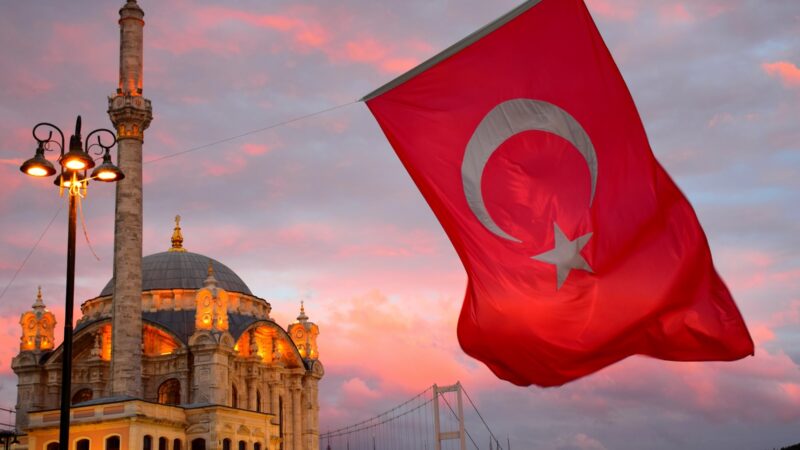
There is a clear difference between the health and overall robustness of modern British and Turkish cultures, to give an example. This can be demonstrated in how cultures collide. In Turkey, the native culture reigns supreme, forcing all forms of art and entertainment to conform to local tastes or bend itself in some way. Netflix and Disney plus can’t just dish out subtitled versions of their usual fare, they must create locally produced, Turkish-oriented content or they won’t survive. Likewise, foreign music is a rarity on the airwaves, with outside genres being morphed and orientalised out of recognition before taking final form. International fast-food chains perform well but will never outcompete the legion of local takeaways with their motorcycle delivery armies. Even then, country-specific modifications are common. The point is, this is a robust culture that absorbs and bounces away outside elements. Modernity is only accepted once it has been infused with tradition, or domesticised.
Unfortunately, modern British culture does not absorb and shape incoming elements but rather accepts and is taken over by them. Such is the dogmatic nature of the near-official state ideology of Diversity, Equality, and Inclusion, that the concept of a supreme, native culture is a thoughtcrime. If you told a Turk that Britain’s national dish was something called ‘Chicken Tikka Masala’ he would look at you with a mix of bemusement and disdain. Multiculturalism does not have to mean accepting foreign cultures as they are and putting them on a pedestal, but in the absence of a muscular home-culture this becomes a fait accompli. Britain, a country that just a few decades ago was a net cultural exporter, has undeniably lost its mojo. The reasons for this are likely to do with our modern economic system and the various cultural and sexual revolutions visited upon it in this period. Adding many millions of immigrants from the most incompatible parts of the world to the population in a short timeframe has undoubtedly contributed to the decline in shared identity, but it is not the root cause. Few offer a compelling way forward. Traditionalism offers a way to relook and renew.
There is something universalist in this perspective that deserves appreciation. Traditionalism has a ‘to each their own’ attitude that is especially attractive those of us who are sympathetic to non-interventionism and realism in international relations. At present, we ‘the West’, have not given up our position of the constant moral lecturer of the world. This position becomes ever more absurd as the reality of our corruption and social decay is further exposed. We lament the imprisonment of Alexei Navalny and other political dissidents in Russia yet have nothing to say about the imprisonment of Julian Assange or the death of David Kelly. We condemn the primitive corruption of local officials in the third world yet have nothing to say about the institutionalised corruption of our military and pharmaceutical industries and their revolving door self-regulating agencies. We scare ourselves with stories of China’s ‘social credit system’ while living in a comparable digital dystopia ourselves. We invade countries on false pretences, only to bait-and-switch into a Darwinian superiority battle of civilisations.
Our reaction to spending trillions of dollars, two decades and thousands of lives to replace the Taliban with the Taliban, is to Twitter shame Afghanistan for being culturally backward. It is therefore no surprise that Israel has done its own bait-and-switch, abandoning its anti-Hamas line in favour of posting pictures of gay IDF soldiers kissing, therefore demonstrating its cultural superiority compared to the backward homophobic Arabs. All this hypocritical and psychopathic nonsense is thrown out when you view the world through the traditionalist lens. It accepts the world as it should be; differing realms with their own ways of life. The world will not end if we simply let the Arabs be Arab and let China be China. The important thing is that we let Britain be Britain. We should own the right to be ourselves and drop the self-imposed burden of trying to change others. Live and let live – at the moment we do neither.
As far as cultural inheritances go, these islands are luckier than most. The rich tapestry of clans, tongues and kingdoms are genuinely ‘diverse’, and when you drive out of the big cities their beauty is on full display. This is a great lot to work with. As modern urban life becomes increasingly unbearable, it will be to the countryside and villages where people will escape and try to reconnect with the eternal. In the last few years especially, people of individual, independent, conservative, and alternative persuasions have (ironically) used the power of the internet to become part of a revival of traditional ways of eating and living. These people are entitled to (and do) make their own meanings and tell their own stories, but a nation is like an organism and relies on all its constituent parts to function properly. For this, we need grand narratives not of a brighter material future, but of a deep, spiritual, and eternal connection to the land and the people we share it with. It doesn’t particularly matter what stories we tell, but we need to think of some new ones because the old ones don’t work anymore. It will not make me popular to observe that the Second World War, for whatever reason, is no longer the unifying national myth that it once was (at least for Britain). Even countries like Russia, which treats the Second World War as a sort of national religion, needs other tales and stories to tell itself in addition to that. We need big narratives about who we are, where we’ve come from and where we’re going. Celebrating St George’s Day and Margaret Thatcher isn’t going to cut it. We are faced with a fundamentally different country at a critical time in its history.
Britain is a nation with extraordinary prospects that are being wasted because there is no vision. It has, to use Gumilyov’s terminology, low passionarity. Many British people to do not feel that group-specific inner biocosmic force inside of them, and that is a failure of culture over anything. My few childhood years spent in an Irish primary school imbued me with more of an appreciation and affection for that island and its culture than I ever got from a lifetime of secondary and higher education in the UK. The stories of my parents and grandparents, who as immigrants are more inclined to engage in cultural propaganda, instilled in me a visceral feeling of belonging and connection with my ancestors, and their cultures and histories. Yet I only truly connected with the traditionalist mindset after a long process of consciously deprogramming myself from the globohomo monoculture. I now experience a complete synthesis of my various identities, without succumbing to shallow partisanship. I see the beauty in and take strength from them all. The stories and traditions sustain me every day. These bedrocks of any culture need serious replenishing in our country. Our future depends on it. It won’t be an easy task and there are no overnight fixes. The many decades and multiple generations it took for the long march through the institutions to bring us to our current state can only be counteracted through an equally long period of renewal. As the cultural Marxists attacked the family and hijacked education, watching the consequences ripple through to the rest of society, so too must we rebuild the family and reclaim education over a long period of time. If this is viewed as a political project with goal posts, we will be doomed to fail. Instead, this should be viewed as an unending, cyclic process of passing on and telling stories to inspire meaning and bravery. So, reject modernity, embrace tradition!
Post Views: 1,716 -
Stop Pigeon Hate
Why is the pigeon so hated? Is it due to his availability as a target? After all, he is a common sight in our towns and cities, so common he can seem like an omnipresent nuisance.
Maybe it’s his appearance? Admittedly, he is less stunning than other birds; his generally grey countenance is far less pleasing than the radiant scheme of a kingfisher or the sparkled wings of a starling.
Perhaps it’s his stature? Small and stout, he’s certainly an easier target than any bird of prey, lacking the brawn of an eagle or the sleekness of a falcon.
Whatever the case, the pigeon does not have a good reputation. Recently, he has faced criticism for a variety of reasons, from trying to liberate mankind from its self-imposed enslavement to mass media, to taking over a house after the landlord made the avoidable mistake of leaving the windows open for four weeks.
In my view, the public’s attitude towards pigeons can be best summarised with a well-known, albeit not entirely original, comment from Ken Livingstone, former Mayor of London: “pigeons are rats with wings.”
Now this is simply not true. Given the opportunity, the pigeon shows himself to be a considerate and upstanding member of our society, which is certainly more than can be said for many of its human participants.
Naturally, some nuance is required. After all, there are many different types of pigeon and there is no strict distinction between a pigeon and a dove, the latter of which has marginally better connotations, such as being a symbol of peace and salvation.
The largest and most common pigeon in the UK is the woodpigeon. Shy and tame, they are mostly grey with white patches on its neck and wings. Although primarily found in rural areas, they can also be found in more urban areas.
Due to their sizeable presence, you’ve definitely heard their call, especially if you live in suburban England. The soundtrack to a gloomy Sunday evening, their gentle cooing stirs a sense of melancholy in the local children, reminding them they have got school tomorrow.
Secondly, there is the collared dove, which gets its name from the black mark which stretches around the back of its neck. Pale brown, with reddish eyes and feet, unless there’s a buffet on offer, they’re almost exclusively seen on their own or in pairs.
Indeed, the collared dove’s unwavering monogamy is arguably more defining than the mark to which it owes its name. Wrapping only half-way around it’s neck, hence it’s comparison to a collar, when united with another collared dove, it becomes a full matrimonial ring. How’s that for nature’s poetry?
Then, there are rock doves. Also known as the feral pigeon, they are ancestors of domesticated pigeon. Coming in a diverse range of colours, from dark blue to black, from pale grey to white, from a rustic brownish orange to a brick-red.
These are the urban sprawl of pigeons. Whilst all creatures are innocent until proven guilty, should you find a stray blob of poop on an inner-city pavement, he’s going to be your prime suspect. When people speak of rats with wings, they think of the cooing greaseball known as the rock dove.
Similar to rock doves, stock doves have darker feathers, especially on their rump and wings, a distinct green neck patch, and a pink chest. Concentrated in the English midlands and southwest, becoming rarer in northern Scotland and Ireland, the UK is home to over half their European population.
However, unlike the rock dove, the stock dove is less likely to be seen in urban and suburban areas, preferring farm life to big city living. This is because he is generally shyer and more averse to humans than his cosmopolitan cousin.
Finally, the turtledove is the runt of the flock, being only slightly bigger than a blackbird. Arriving in the UK in spring and leaving for Africa in winter, its feathers are a distinctive mottled mix of a black and golden brown, with a white-rimmed black tail.
Unlike his relatives, the turtledove is a picky eater, choosing to indulge on cereal grains, oilseed rape, and chickweed. Unfortunately, due to his refined tastes, the turtledove has been in decline since the mid-90s, largely due to a lack of his favourite delicacies.
Given this, we can see that the pigeon is not merely a rat with wings. All at once, the pigeon is a sensible everyman, a young lover, a boisterous yuppie, a country bumpkin, and a persecuted aristocrat. They are diverse and endearing creatures with varying personalities and habits, reputations and interests, but much of the public want to exterminate him over a few measly droppings.
Every bird defecates, but the pigeon is solely hated for doing so. It’s for this reason I militantly oppose anti-pigeon architecture. Every public building in Britain is glazed with spikes, ruining their appearance in the name of protecting it.
On several occasions, I have sat in York station, waiting for my train home, with a quiet emotional investment in pigeons looking for somewhere to perch, watching them steer clear of the spikes, mentally cursing the communist station master who had them installed.
I’d prefer railway staff clean up bird droppings than behave like members of the Cheka, indulging their pathetic power fantasies by shouting at people for standing less than a country mile behind the yellow line. Mate, mate, mate. Health and Safety, yeah?
Following the riots of Oxford Street, which included looting and violent clashes with the police, one left-wing academic suggested the chaos could’ve been avoided if the rioters had access to public swimming pools.
As most people realised at the time, this suggestion is ridiculous on a number of levels. For one, unlike animals, humans have an innate tendency towards evil. It is easy to imagine machete brawls between illiterate migrants and fake bomb threats by TikTok pranksters overrunning such places.
However, it raises an important, if only loosely related question: why are there so few public birdbaths?
Despite his reputation as a feathered hobo, the pigeon is quite a cleanly creature, taking every chance he gets to fastidiously groom himself.
We have a birdbath in our garden, and we have many regulars, our most well-known being an especially rotund and fluffy woodpigeon, whom my mother affectionately refers to as Fat Wilbur.
I do not see this ‘winged rat’ Livingstone speaks of. Wilbur makes his stop, does what he needs to do, takes in the atmosphere, before moving on his way, not wanting to overstay his welcome. Should other pigeons accompany him, he makes room, as they do for him, and all is well.
The idea that such tranquillity could emerge in a society as presently low trust as ours is simply absurd. Of course, being a pigeon, it’s unlikely he does this for any pretentious, perception-based reason. Indeed, his fixation must be rooted purely in the value of cleanliness itself!
However, contrary to pervasive anti-pigeon sentiment, the pigeon is not only a cleanly creature, but a clever one too.
It can be hard to accept that pigeons, creatures known for flying into windows and pecking at cigarette butts, can distinguish between Picasso and Monet, but they can. In fact, according to the scientific research we have, pigeons are amongst the most intelligent birds in the world, showing a variety of relatively complex cognitive abilities.
Of course, whilst it is undeniable that humans are much smarter than pigeons, we do not use our superior faculties particularly well.
Whilst humanity may be threatened by the whims of idiots or a lack of imagination, hindering our ability to innovate and develop, our kind is similarly threatened by overthinking.
As a result, we deny ourselves the ability to be authentic, we shun risks in the name of avoiding embarrassment and pain when such risks could just as easily bring us laughter and joy. In the words of Paglia: “consciousness has made cowards of us all.”
As such, we should not be surprised when pigeons manage to be funnier than us. Just by being what they are, pigeons are funnier than basically every living comedian. Every wannabe BrewDog-sipping funny man, with his safe-edgy humour and hashed-out irony, fails to be more amusing than a random birb going about its business.
Walking around in circles, sporadically pecking the pavement, stopping occasionally to exhibit his dumbfounded ‘the lights are on, but nobody’s home’ expression, bobbing its head like its listening to a really good song, it is a grave fault in our being that a character as innocently absurd as this is considered less amusing than James Acaster.
Even the mere idea of a pigeon is funnier than most human attempts at humour. Go ahead, in your mind, visualise a pigeon (don’t worry, the cops can’t do anything… yet). You see that? Now that’s comedy. If you deny this, you Just Don’t Get It. Not much I can do about that.
Looking at these odd creatures, has nobody once thought: what are they up to? What’s their game? Why did they peck there and not there? Why did he take flight for seemingly no reason? Is there some secret pigeon meeting he needs to get to? What’s his schedule? Does he have time for an interview?
Yet, despite his apparent gormlessness, it is clear pigeons are far more sensitive than the average human.
If you’ve ever commuted anywhere via public transport, you’re no doubt familiar with the hectic nature of it all. From the loud noises to the chaotic stampedes, from the excruciating delays to the dodginess of certain folk, commuting isn’t exactly what most people would call an enjoyable experience.
Of course, whilst we might find certain aspects of commuting more annoying than others, we all agree on one thing: the worst part of commuting is other people.
Compare this to the pigeon, who shows consideration for personal space, does not play loud music, doesn’t try to con you out of your money, and generally minds its own business, preferring to get out of your way, rather than get into it.
If what Sartre says is true, that hell is other people, perhaps heaven is to be in the company of animals. More to the point, who is better company on a long commute than a pigeon?
Undoubtedly, the pigeon is not a faultless creature, and the shortcomings of us and other beings cannot excuse or undo this fact. That said, any fault which can be found with the pigeon can easily be remedied by human custodianship. We must spare him from the misguided disdain of busy adults and the clumsy tyranny of misbehaved children.
Pigeons are not flying rats, nor are they government spies. They are our friends and we should treat them as such. Stop Pigeon Hate!
Post Views: 1,703