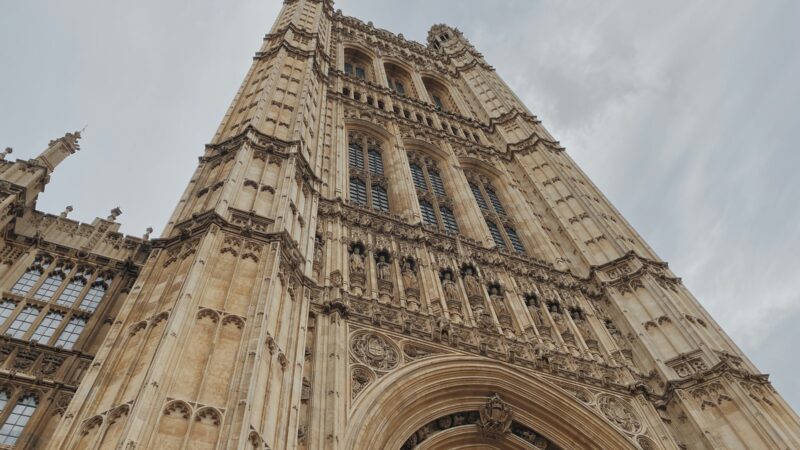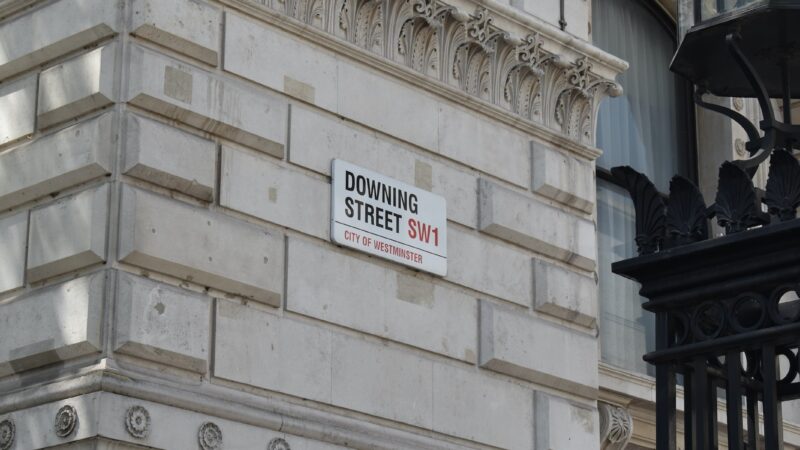
A soft “What the hell” was heard from a reporter as former Prime Minister David Cameron stepped out of the car outside 10 Downing Street on Monday. The significance of the moment was quickly deduced as earlier Suella Braverman was sacked as Home Secretary and former Foreign Secretary James Cleverly had already walked through Britain’s most famous door: Cleverly becomes Home Secretary and Cameron, returning from political oblivion, replaces him as Foreign Secretary.
The appointment of Cameron, who is not an MP in the House of Commons and had to be elevated to a peerage by King Charles III to take office, is not only something no one saw coming. It is also a manifestation that Sunak might lead the Conservatives back in a direction that does not resonate with the voters.
A Look at the Political Realignment
A political realignment has been evident in British politics for just as long as in US politics. And it was the Conservatives’ realigned political approach, which emerged with the Brexit vote in 2016, that gave them a large majority in the 2019 general election. The landslide victory of Boris Johnson and the Conservatives was ultimately deliverable thanks to a large number of traditional Labour voters who switched in the hope of getting Brexit done.
It showed that there was a large voter base that the Conservatives could not only win over, but also lead them to large majorities. I will call this voter base the ‘New Majority’. This ‘New Majority’ can be sketched as conservative to very conservative when it comes to social issues while supporting economic positions traditionally held by left to center-left parties.
In conservative circles, the realignment towards this ‘New Majority’ is frequently viewed critically, especially by people who were thought leaders in the years before 2016. Primarily because they do not see this new orientation as being conservative, but rather interpret classical liberalism as being conservatism to advocate liberal social policy and economic libertarianism. This interpretation of conservative politics, however, is not only not conservative, but also a formula for guaranteed electoral defeat.
The Case for Conservatism
That this ‘New Majority’ should be the Conservatives’ target voter base and can be turned into a lasting majority is shown in the recent report “The Case for Conservatism” by Gavin Rice and Nick Timothy at Onward. As they put it:
“There is significant political advantage to be gained in a political party moving towards the real centre-ground. A more culturally conservative policy platform would bring the Tory Party nearer to Conservative voters’ social values. Mirroring this, an economic policy platform emphasising greater fairness and security, rather than deregulation and individualism, would bring it closer to the economic values of both Conservative and Labour voters.”
The report shows that there is a major disconnect between Conservative voters’ attitudes to economic and social issues and what the Conservatives are doing in terms of policy. In order to deliver policy that serves the electoral base, the report establishes 12 new core principles that lead to a “form of conservatism that takes long-established insights and principles and applies them to very modern challenges and problems. It argues for a conservatism that is popular and democratic, seeking to serve the whole nation.”
This includes a desire for a more active state, moving away from the old Conservative emphasis on limiting the state as much as possible. Working towards a fairer social contract by doing more for workers and families rather than pursue tax cuts that only benefit the few – an approach that was the beginning of the end for Liz Truss. And for the preservation of the environment, including more action on climate change.
On Suella Braverman
So where does David Cameron fit into this vision? He doesn’t!
Lord Cameron represents the pre-realignment form of the Conservatives, a form that makes policy not for those who find their desires reflected in the Rice and Timothy report but for the liberal elite who have benefited from previous Conservative governments.
Not only that, this appointment must also be seen in the context of the sacking of Suella Braverman. Braverman is a prominent figure who covers many of the concerns of voters who put their faith in the Tories – often for the first time – in 2019. Furthermore, for many people who felt that Rishi Sunak’s policies did not sufficiently address the concerns of the ‘New Majority’, she seemed a possible successor.
She spoke out against mass legal and illegal immigration. The Rice-Timothy report states “Currently, 63% of voters say that inward economic migration is too high” and “Polling conducted for Onward shows that there is a migration-sceptic majority in 75% of parliamentary constituencies.”
She spoke out against multiculturalism. Rice and Timothy’s report cites a Demos study which found that “71% of British adults say they believe that immigration has made the communities where migrants have settled more divided, reaching 78% in high-migration areas.”
And she spoke in defence of national identity. The Rice-Timothy report states, “A 2021 poll found that 61% of voters said they were very or fairly patriotic, compared to just 32% who said they were not very or not at all”.
These three examples alone show that her views are in line with those of the British population and even more so with those of the Conservative voters of 2019, who form part of the ‘New Majority’.
The Meaning of David Cameron’s Appointment
Now Lord Cameron is given a place in the Cabinet, while Braverman is sent back to the backbenches. Although he has not directly replaced her, one has to imagine that the two personnel decisions are viewed hand in hand and show two very different pictures of Conservative politics.
The ‘new majority’ will certainly perceive this as a vindication of pre-2016 policies and refrain from voting Blue in the next general election. One can’t have a former Prime Minister in the Cabinet, especially in one of the Great Offices of State, without them shaping, at least in part, what voters expect from the Party would they vote for them. And in this case, they are likely to see a return of social and economic liberalism, which, as Rice and Timothy show, as a “political outlook represents just 5% of voters”.
Not only that, but the politicians in the Conservative Party who supported Cameron and often held up the Remain banner will feel validated by this and may feel the momentum in the party shifting back towards them. Now people such as former Deputy Prime Minister Lord Heseltine are saying that Rishi Sunak should even consider bringing someone like George Osborne back into the cabinet, or at least letting him work on the levelling-up agenda.
What does this appointment tell potential voters? As Matt Goodwin puts it, “It’s telling them the Tories would much rather return to the pre-Brexit liberal Cameroon era of 2010-2015 than reinvent and renew themselves around the post-Brexit realignment, that they are simply incapable of reinventing who they are.”
You Might also like
-
Conservatives Just Don’t Get It
This article was originally published in April 2020.
“It is always said that a man grows more conservative as he grows older; but for my part, I feel myself in many ways growing more and more revolutionary” – G.K. Chesterton.
One should never attempt to fight the enemy on his home turf. Unfortunately, conservatives have been doing exactly that for the past 60 years. The changes to the social fabric that have occurred over decades, courtesy of the left’s dominance on the cultural front, have been nothing short of extreme. Such changes are paramount to an intergenerational sociocultural revolution, one which many “conservatives” refuse to acknowledge the significance of, either due to ignorance, arrogance, or cowardice.
Some would rather indulge in the rather fashionable practice of vacuous contrarianism, insisting that the concept of “Culture War” is trivial; imported for the sake of disruption rather than anything important. I can assure you, it’s not. Despite the coronavirus pandemic, our politics continue to no longer be defined by the material and the necessities for survival. Nor is it defined by the intricate details of policy papers. Rather, it is fundamentally cultural; it is an existential conflict, one which has emerged amid the increasingly different ways we define who we are. Far too many conservatives underestimate the importance of this fact. Far too many conservatives just don’t get it.
Defining the Enemy
The most common understanding of the left is the left-wing party. Naturally, in Britain, the Labour Party comes to mind. It’s those socialist maniacs who want to raise your taxes, bankrupt the country, and bring back the IRA. To some extent or another, this may or not be true. Some may be (correctly) willing to push the boat out and incorporate other parties such as the Liberal Democrats and the SNP into this understanding. Whilst they incorporate different ideological strands into their party platforms (i.e. liberalism, Scottish nationalism, etc.) they are still understood as belonging to the broadly progressive, left-of-centre bloc of British politics. Of course, this excludes the Conservatives themselves, not because they’re right-wing, but because they are not ‘officially’ seen as such.
However, specifically in the scope of culture, “the left” has historically been encapsulated in (as one in the midst of China’s own cultural revolution would put it) the hatred of “old customs, old culture, old habits, and old ideas”. It is the movement which not only holds these things in contempt, but has artificial over the course of several generations, actively sought to undermine them, and supplant them with placeholders. Whether it is branded as liberation or social justice, deconstruction or decolonisation, the motive is the same: the eradication of Britain’s true understanding of itself. It is the removal of a nation’s identity, onto which another one can be projected; one that serves the interests of the revolutionaries, who have long since been assimilated into positions of officialdom. Tradition, in all its forms, is not a milestone of progress to these people, but something which stands in its way. Tradition are markers of oppression, bigotry, and other devalued soundbite terms that have long infested modern politico-cultural discourse.
This outlook, when put into perspective, is hardly contained within the confines of mainstream political parties. On the contrary, the most ardent advocates and enforcers of these ideas do not have a seat in parliament or hold a party membership card, yet they still wield extraordinary amounts of influence over the public realm, either as well-known figures or grey eminences. If conservatives are to get serious about conserving, they will have to think outside the party-political box and engage with the wider political arena; the Labour Party is merely one of many heads of the progressive hydra that has been wreaking havoc on our country.
The Conservative Problem: The World Moves On
So often, mainstream conservative figures evoke the Devil-like image of Marx, whose communist ideals linger within the minds of leftists. This is often done with the hope of incentivizing the public to steer clear of such people. This poses two problems. One is that most people (especially young people) really don’t care about the “threat of communism”. They may find the CCP distasteful, they may prefer the USA as the world hegemon, but people (again, especially young people) don’t have a potently adverse reaction to communism. Keep in mind, this general sense of apathy is also felt towards other historically charged political forces, such as the IRA, Hamas, and Venezuelan Socialism. Indeed, one could say the same thing about National Socialism, but I digress.
Too many conservatives fundamentally misunderstand of the type of left we are up against, not just in the party-political sphere but in all nooks and crannies of every institution of society. If you want to understand the grotesque and underhand nature of modern leftism, you’re better off the intellectual descendants of Marx, rather than Marx himself. Whilst Marx called for the proletariat to revolt against their bourgeoisie oppressors, Gramsci fixated on the issue of cultural hegemony – that economic transformations can only occur if a society is preconditioned with the necessary cultural values; it is these cultural values that justify whatever economic system is in place, and by extension, the specific nature of economic redistribution. Conservatives can hardly hope to win if they can’t even recognise the type of battle that’s being fought which is, first and foremost, one of a cultural nature.
Politics is Downstream from Culture
Supremacy in Parliament is important; it is the sovereign legislature after all. However, conservatives must remember that power, in all its forms, transcends the walls of Westminster; capturing the building where legislation is made must be combined with capturing the institutions that shape our nation’s political “Overton Window”. It is this framework that inspires the legislation that is created within it and dictates what legislation can exist. If legislation isn’t allowed to exist in a ‘culturally appropriate’ sense, then it almost certainly won’t be allowed to exist in a practical sense.
Conservatives must reaffirm themselves with the timeless truth that “politics is downstream from culture”. Politicians are important actors, but they are not the only actors. Conservatives must learn to march through the institutions as the left has done for so many years with frightening efficacy, whether it be in the classroom or the court room, the media or the civil service, the hospitals or the churches. It is victory on this front that has already altered the perceptions we have of our society, and therefore how we conduct our politics.
Currently, the products of these institutions are often laced and ingrained with progressive preconceptions and cultural attitudes. Dissenting views and sentiments are purged from the circles that produce these mass-consumed cultural products. This is not because they are wrong in any objective sense, on the contrary, many have realised that what’s said in these instances is actually pretty milquetoast (“trans women aren’t biological women, etc.). People’s politics are shaped by the environment in which they operate, and as time has gone by, the leftist-domination of seemingly neutral institutions has resulted in those who would otherwise being apolitical becoming (either explicitly or implicitly) averse or straight up hostile to conservatism. Then again, why shouldn’t cultural progressives do this? They have shown time and time again that they cannot (currently) advance their ideas via the ballot box, so instead they focus on maintaining and integrating their power where it already exists and doing what they can from there.
Conservatives are foolish if they think that they can ignore the concerns of people until they reach 30. Whilst young conservatives are more radical than their elders, they are fewer in number. Young people are far more hostile to conservatism than 40 years ago, and older people are becoming increasingly progressive themselves. The demography is against us, in more ways than one. They may not call for the workers of the world to unite, but they still hold disdain for those who hold socially traditionalist sentiments. The Conservative Party can win as many elections as it likes, but it won’t matter provided culturally conservative ideas are suppressed and forced to remain on the fringes. The electorate may not be averse to the Party, but as for the philosophy from which it draws its name, that a very different kettle of fish.
The Conservative Problem: Parliament is the Ultimate Prize
Despite all this, it is hard for many in the Conservative Party to comprehend how “the left” continues to be an existential threat to the British and our way of life. When I converse with Conservative Party members, many often exalt over “Bojo winning a stonking 80 seat majority and saving Britain from the clutches of Red Jezza”. Once again, the problem with this is that it reduces the political to party politics, electoral success, and the squabbles of Westminster and Tory Twitter. It also severely underestimates the vehicle for change an 80-seat majority could act as provided we addressed the current cultural paradigm in which the party is forced to operate. A cultural paradigm that will only continue in the favour of progressives provided conservatives get their act together.
Unfortunately, anytime someone within the ranks of the party dares to defend Britain from continuous desecration besides the safe stuff, such as the monarchy and purely liberal-democratic interpretations of Brexit, much like the spiteful and monotonous Marxist-drones thy insist to be so different from, they hound you, assassinate your character, declare you unfit for public life. To not sufficiently submit to the brand of “Conservatism” permitted by the current cultural paradigm is often nothing short of social suicide. This also goes for those who espouse their profusive love for the “broadchurch” and talk about free-thinking with impassioned vigour, like some firebrand philosopher from the enlightenment. Then again, one should expect such two-faced behaviour from careerist sycophants. For the overwhelming number of apparatchiks, patriotism is just for show.
This is not to say supporting the monarchy and Brexit are bad things. On the contrary, I am a monarchist (although, I am not a Windsorian) and favoured Brexit before Brexit was even a word. What should be noted though is that to truly prevent Britain’s abolition, we must do so much more. This “do what you like so long as it doesn’t affect my me or my wallet” mindset is deeply ingrained into our society, even in its economically downtrodden state, inhibits the political conscience we require for national renewal.
Of course, there have been “attempts” by “culturally conservative” minded individuals to engage in cultural discourse. Pity they rarely talk about anything cultural or conservative. Normally its either some astroturfed rhetoric about the wonders of free-market capitalism and individualism, and the menaces of socialism and big-government. When they do, it’s nothing more than them desperately trying to prove to their left-leaning counterparts that they’re “not like those other nasty Tories” or that it “it’s actually the Left that is guilty of [insert farcical modern sin here]”. I look forward to living in the increasingly cursed progressive singularity in which leftists and “rightists” are arguing over who’s more supportive of drag-queen story time, mass immigration, and open-relationship polyamory. What’s more, attempts to indoctrinate the youth into becoming neoliberal shills could be more forgivable if their attempts weren’t teeth-grindingly cringey.
The Mechanics of Political Discourse
The mainstream media, for example, is one of many institutions dominated by cultural progressives, has long perpetuated the façade of meaningful politico-cultural discourse. How many times have we seen a Brexiteer and a Remainer go head-to-head on talk shows and debate programs only for it to be a session of who can come across as the most liberal and globalist? “Brexit is a tragic isolationist, nationalist project” pathetically weeps the [feckless and unpatriotic] Remainer. “No no, it is THE EU that is the isolationist, nationalist project!” righteously proclaims the [spineless and annoying] Brexiteer. These people talk as if the British populace have all unanimously agreed that therapeutic-managerialism is currently the best thing for their country. As much as the grifters and gatekeepers might like to ride the “reject the establishment, stand up for Britain” wave to boost their online clout, they’re just as detached from the concerns and problems facing Britain as “those damn brussels bureaucrats” and “out-of-touch metropolitan lefties”. As a Brexiteer you’ll have to forgive my mind-crippling ignorance, but I am highly suspicious of the idea that most Leave voters sought to accelerate the effects of economic and cultural globalisation. Brexit, by all measures, drew the battle lines between the culturally conservative Leavers and the culturally liberal Remainers (individual exceptions accounted for).
This influence must not be taken lightly, even the most authoritarian regimes must rely on some consent and co-operation from forces beyond the central government. Not the people of course, but those who assist it in the government’s ability to govern; an all-encompassing apparatus through which a government may be permitted to assert its influence; comprised of NGOs, QUANGOs, the civil service, the mainsteam press, and various directly affected sections of society with vested interests in the form of corporate monopolies, universities, and devolved bodies. Without support and co-operation from these institutions, a government’s ability to exert influence is drastically limited. It is from these non-parliamentary sources of influence that have come to possess substantial (and practically unaccountable) amounts of power over the politico-cultural discourse. They decide what questions exist, what topics are taught, how issues are discussed, what viewpoints get publicity, what projects receive funding, what subjects’ officially matter… they decide what’s funny, and what’s not!
The cultural values at the top of society, and therefore endemic to society as a whole, lend themselves both to the creation of a cohesive ruling class. One with capabilities so indispensable to government that even if a party were to capture power on a conservative platform, it likely wouldn’t make all or most of the necessary changes needed. It also makes those values assume a special worth that other cultural attitudes do not have. Like all such “sacred” values, they do not exist in a single place, they permeate out as both a civilisation’s assumed-to-be natural moral standards and as something which exists at the top of socio-cultural hierarchy of status.
The Conservative Problem: The Rules are Fair
Considering what is a highly restrictive discourse, many will shake their fist and declare “you just can’t say anything these days”. Total rubbish. You just say certain things. You can say that mass-immigration is a blessing. You can say we should normalise dating sex workers. You can’t say anything meaningful about the nationwide grooming gangs or “I personally believe {insert any run of the mill socially conservative view here}. If you do, you’ll end get fired from your job, or the Church of England and be forced to issue a grovelling and humiliating press-mandated apology for harbouring remnants of Christian sentiment. The New Statesman-lead character assassination of the late and great Sir Roger Scruton, a smear campaign by the media that continued even after his death, is a rather poetic embodiment of the conservative situation. The great irony of liberalism is debating whether one should tolerate those with alternative attitudes (regardless of how illiberal) or utilise the power of institutions to force those people to adopt liberal ones, explicitly or implicitly. As one would expect, vast majority of liberals in recent years have selected the latter. Openness must be secured through the exclusion of those that demand exclusion, which neccesarily narrows the scope of politics.
Unfortunately, despite cultural leftists wanting to eradicate them for political life, conservatives still see themselves as above obtaining and using power. Again, they’ll try their hardest to win an election, but when it comes to actively supporting the defence and furtherance of conservative values they’d much rather not be involved. At most they’ll shake their heads at those crazy progressives with their wacky pronouns and move onto the next Twitter controversy. Of course, power is not the only thing of value in this world, but is neccesary asset if you want your principles to actually mean something. It is hardly a sufficient response to throw your hands up and declare yourself above the fight. If anything, it’s the acknowledgment of this reality that makes people conservatives in the first place.
On Counter-Revolution
A cultural counter-revolution is possible. However, it will require conservatives coming to terms with their new roles, not as protectors of the status quo, but as those who are reacting to the increasing perversity, corruption, and sclerosis of the new order. The struggle will be long but that it is the only way it can be. Efforts to conserve our future must begin in the present, even if we look to the glories of the past for inspiration.
Many will not stand as they do not have a conservative bone in their body and are in themselves part of the problem. Others will be defiant about taking a stand at all. They will self-righteously declare:
“I’m not choosing a side. I want nothing to do with this. It’s got nothing to do with me!”
Unfortunately for them, the choice to be apathetic about the destruction of your civilisation is still a choice. Many haven’t clocked that politics is not only a never-ending war, but an unavoidable one; one which we are losing, with consequences mounting with every generation.
Of course, a lot of conservative activists are like me. We are not just Conservatives in the sense of party membership, we are instinctually conservative. We came to the Conservative Party because, despite the self-interested careerists and the severe shortcomings in policy in recent years, we recognised that the party itself serves a fundamental role in making our voices heard. As much as liberals in the party would like to throw us out by the scruff of our necks, one can only deny social conservatives their rightful place within the Conservative Party for so long.
Although I must say, I was hoping that a party with an 80-seat majority would have more vitality than a freshly neutered dog. Far too many Conservatives would prefer the party to be an over-glorified David Cameron appreciation club, or the parliamentary wing of the Adam Smith Institute, rather than the natural party of Britain. A Conservative Party that supports conservatism will not alone be enough, but it will be necessary, The Conservative – Labour/Liberal dichotomy is so ingrained in British politics that an alternative right-wing is likely to fall flat, even when there may be demand for one.
I am sure we are not small men on the wrong side of history. However, should I be wrong, I have the benefit of being young and naïve. I have come to terms with being an argumentative, nationalistic Zoomer and I’m far too stubborn to give up on my ideals, especially at this stage in my life. The fire of counter-revolution must not be extinguished, it must be passed down.
My fellow rightists, you can continue leading the life of a cringe, narrow-minded normiecon; begrudgingly submitting to apparatchiks, gatekeepers, and controlled opposition; parroting every stale, uninspiring, mass-produced talking point to inoculate against the turbulence of politics. Alternatively, you can break your chains and take Britain’s destiny into your hands.
Post Views: 1,291 -
An Interview with the JFvD
In late September, a few members of the Mallard team were fortunate to get the opportunity to sit down with representatives of the JFvD, the youth wing of the Dutch ‘Forum for Democracy’ (FvD) party. We discussed the incredible success of their political and cultural youth movement; the founding and future of their party; and their views on what the future of the Netherlands and Europe should be.
The Mallard (TM): We want to get a sense of what the FvD is; what it stands for; and what the JFvD does within that.
Massimo Etalle (ME): So the FvD was founded in 2015 as a think tank. Our party leader (Thierry Baudet) was a journalist, and he had a critique on the world around him but did not believe that these problems could be solved through politics. So, he founded this think tank to influence the ideas in our society. Politics is downstream from culture, so to influence politics you have to influence culture. We had a unique opportunity at the time due to the referendum with Ukraine [the 2016 Dutch advisory referendum on the proposed Ukraine – European Union Association Agreement]. The FvD has always been a very Eurosceptic organisation, so when the association agreement was proposed in a referendum, we campaigned against it. When the referendum was held, it was overwhelmingly opposed by 62% of the Dutch people. In response, the government ignored it and signed the agreement anyway. At this moment we realised we needed to do more than just influence ideas. You have to get closer to power to influence society. So we started a political party and we won 2 seats out of 150 in parliament. The energy was unmatched and, as soon as we started, we flew through the polls. The youth movement (JFvD) was founded in March 2017. Due to the lateness of its founding, we had to have 100 members before midnight to secure subsidies and funding. Before midnight we had over 1000 members and by the next day we had 2000 members. We were the fastest growing youth movement ever in the history of the Netherlands.
Iem Al Biyati (IAB): So we (The JFvD) know we are a youth political movement but we don’t see politics as the number one way to change stuff. It’s a part of it but not the most important thing. We believe in transforming peoples mentality and influencing culture from bottom-to-top instead of top-to-bottom. We want to bind them to history and culture; identity and family instead of the modern view of the Dutch people which is to hate themselves and their culture – we want to oppose that. We think a lot of young people are aimless with no sense of identity anymore, and we are trying to make them see this and give them an opportunity to evolve this feeling and better themselves. We have a culture of losers who are afraid of risks and not being part of ‘the group’. We embrace these things, and we are proud of it. We stand totally against the modern degenerate culture.
ME: Exactly. I wouldn’t describe us as a counter-movement. The modern world is the counter-movement. Ugly buildings are the counter-movement. They are anti-European. We embrace who we are, and all we see around us is opposition to who we are. This starts at the first day of school when we are taught things like participation being more important than winning. This is a total inversion of truth. There is no point in human history when this was true. It breeds a country of losers who don’t want to excel, instead they want to be equal. We want to return to this truth and to who we are. We want to go back to what we have always been and to what is our ‘eternal fate’. That is what we do. We want to mentally and physically challenge our members to become who they truly are.
TM: Do you think that young people in the Netherlands are becoming more radical?
IAB: I think that the youth are becoming more radical, but it goes two ways. I see that there are less centrist people and they go towards the ends. We have more communists and left-wingers and more radical right-wingers. Maybe this is a good thing or not, I’m not sure. But it’s because everyone feels that there is something not right. We no longer live in harmony, and I feel that that is the similarity between the radical left and radical right. We both feel something is off but the left have a different solution and cause. They think that lack of equality is a problem and want to form the world to eliminate stress and struggle. We believe in embracing struggle and accepting that life is this way instead of complaining and whining.
TM: Would you say that you prioritise changing the way people think over advocating for certain political policies?
IAB: Yeah. Policy changes aren’t even possible in our party’s current position. Maybe we never will be. We see it more as a metaphysical and philosophical struggle.
ME: Whilst you cannot change a policy, you can change your resilience to a bad policy. You can become more immune to things that the government does to hurt you.
TM: It’s interesting you say that because, in the UK, a lot of right-wing movements focus entirely on policy. Maybe it’s due to the homogenous nature of our politics. We don’t really have a movement that tries to affect culture instead of specific policies.
ME: The failure of Brexit proved the irrelevance of policy. Whilst you left the European Union, your politicians are now proud to say that your immigrants don’t come from Poland any more, instead they come from Pakistan. The problem you had wasn’t just the European Union, it was that your mentality was wrong. If you could change that mentality even a slight amount, the influence would be bigger in every new policy. Whilst if you change one policy, everything that will be built around it will still be rooted in perverse thought.
IAB: The most important thing to do is to implant those ideas in people to make them feel as though they are good and true because they are. That is what the JFvD and FvD is trying to do. We still participate in politics of course and try our best but the ideas are what is important. We had the state opening of parliament a few days ago when all the politicians came and met up. This is quite rare in the Netherlands. Two days of debate and all they talk about are the same boring stories: rising energy prices and cost of living. They are too afraid to tell a different story. We got our opportunity to speak for about 15 minutes, but after about 10 minutes our party leader made a criticism of one of the other members of parliament, and our speaker of the house turned his microphone off after members of the government signalled her to do so. The entire government stood up and walked out to avoid listening to him. After this stunt the Prime Minister came back to act upset about it and, when Thierry came back to speak he was only allowed to do so if he apologised. He refused to apologise and his right to speak was taken away. He had to leave.TM: Yes that happens in this country as well. A lot of politicians have cottoned on to the fact that, if you get kicked out, it makes headlines. So, people will say things that they want in the newspapers and then they will accuse someone of lying which will result in them being kicked out. This gets them in the papers and videos of it go online.
IAB: That’s actually pretty funny but of course it goes to show that it’s a theatre. It’s all a show.
ME: Just to be clear, our youth movement doesn’t focus on policy, but the main party does. We have ideas on how to solve the energy crisis, for example. We have the largest gas reserve in Europe and we give it away to the Belgians. We do propose and fight for policies but, especially as a youth movement, we have a very cultural and ideological task. Everyone is in the process of becoming an adult.
TM: So what do you do to promote cultural things?
ME: So we have a few things that we do. We have a summer camp and some other events which Iem will talk about and then we also have a magazine ‘The Dissident’ which I will talk about.IAB: So we have so many young members, and it’s very uncommon to be a member of a political party as a young person in the Netherlands. So, the first step was to attract the members and then we had to do something with them. We can’t just take 5 Euros from them a year and then not do anything with them. We want to select and train people how to be potential members of the future party as a nurturing role. We have a summer camp which takes about 80 people. It’s a shame because hundreds apply but we don’t have the space to take any more than 80. But we also want to connect with people on an individual level which is hard to do as a massive group. We engage in sport and physical activity and also lectures. We try to attract a different range of people.
ME: We don’t want to do just lectures. We believe in the unity of mind and body. It’s not just who is the smartest or the strongest. It’s the person who is expressing his desire to fight on all fronts.
IAB: Someone who can write stuff should also be able to express things physically in their lifestyle and not just academically. We look for these people and try to give them ideas in the lectures about politics, philosophy, health etc. We even do singing lessons and things. We try to challenge individuals and the group to create the ‘aristocrat’. We scout talents and we invite them to more exclusive academic training weekends. We obviously have other events but those are smaller and more specific. That’s how we try to make our ideas true.
TM: And the magazine?
ME: So, people can have a certain feeling about ideas but struggle to express them. They know the FvD is what they want, but the ideas are a struggle. Everything is so fast and changes all the time and your brain can get completely overloaded with information. To do something about that we started our magazine. It talks about all aspects of who we are. Our ideals, our actions, our history. You name it, we do it. It’s a very open platform which we allow people to pitch to. It’s our testament of who we are as a permanent record. Hopefully it will inspire people for a long time. It declines the chaos of every moment; we have no articles about quick news. Everything we talk about is timeless and we strive to keep it eternal.IAB: We didn’t have this before and we don’t want to lose the ideas that we have. We believe in action. We should try to make these ideas physical and then do things about these ideas. Putting the ideas into a physical record helps this. What I see a lot on the internet are people who have ideas that are similar to ours. They really believe in the traditional idea but they are a bit stuffy and get upset about more modern things. They make things like magazines, but their covers are old school. They are trying to hold on to ash.
TM: Like LARPing?
IAB: Yeah, just like LARPing. It’s not real. It needs to be more real. They like to pretend it’s the 1950’s.
ME: We went to Trafalgar square earlier and it felt a lot like being in a very very big museum. We were surrounded by all this beautiful art, but it felt like being in-between a museum and Pompeii. The volcano is erupting but the guard is still standing on duty. The monuments in Trafalgar square are still being cleaned but they are monuments to an idea, a people, and an empire that aren’t there anymore. That feels a lot like a museum. It was the main impression we got from Trafalgar Square.
TM: To focus more on the Netherlands in particular. How do you feel about the farmers’ strikes? What do you think is going to happen with that?
IAB: They have obviously been angry for a long time now and with the visits to ministers houses it’s getting more radical. I’m not really sure what will come out of it.ME: I think the government has a trick up its sleeve, honestly. Obviously, I fully understand and support the farmers. The big problem that caused this is the nitrogen storage and emissions laws. It’s a rule that they only apply when they want to hurt someone. The land the farmers have is valuable and it’s worth only a tenth as much as a farm when compared to housing. There is a very strong economic impulse to build on it and move the farmers elsewhere. Our land is too valuable. The farmers obviously don’t want to leave but the government is trying to use these economic sanctions to get them to leave. I don’t know what tricks they have up their sleeves. This will escalate and the rules will become more stringent. So, they have our full support and I hope they manage to resist this.
TM: I’ve been reading the FvD’s views on the Netherlands’ future in Europe. What do you think the future will be like for Dutch people and the Dutch nation in Europe at the moment if nothing changes, and what would you like the future to be?
ME: I think at the moment we are on the way to becoming a big metropole. There is a plan called the ‘Three State City’ which seeks to unite most of the big cities in the Netherlands with some cities in the Ruhr in Germany and the port of Antwerp in north Belgium. It would be a massive 50 million population city. That’s why they want to hurt the farmers to take their land.
IAB: I hope that our party will have a leading role in Europe to try and stop this. We have seen what has happened in Sweden and the trends in Italy and France. Maybe soon there will be a topple. Hopefully this will happen in the Netherlands, but our government has always been the leader of liberalism. I think this is the opposite of the Dutch soul. I hope that we can change this and become a leader in Europe in a more traditionalist way.
TM: So earlier you said that you think Brexit has been a failure. Does that imply that you want the Netherlands to stay in the European Union?
ME: I totally oppose the so-called ‘European Union’. It is very anti-European. It is built to castrate Europe and to keep it small and weak. It blocks everything Europe is good at. They promote the idea that participation is worth more than winning. This keeps everyone down and from excelling. Our ideal is a country where the people on every scale from individual to collective can express their fate and the European Union crushed it.
TM: It feels as though your opinion is that the wrong people carried out Brexit. Would you agree with that?
ME: Yes, definitely. After Brexit they built a structure around it that was done by the wrong people.IAB: This is why changing policy doesn’t change anything. Our countries are run by managers, they are not leaders. They are people who were bullied at school and now that they have the taste of power, they use it to bully successful people. They have no idea how to run a country and should be managing a Tesco instead.
ME: The civil servants are the ones who actually tell politicians what to do. The politicians come up with general policy ideas and then the civil servants are the ones who tell them what to do.
TM: There are generally two different schools of thought in the UK about influencing power. Either you infiltrate existing structures, or you set up parallel structures. Obviously, your party isn’t in power but you do sit parallel to it. Do you think there is any use in infiltration into institutions?
IAB: If there is a war, you don’t just use one tactic. You use land, air, and sea. You also use spies and infiltration. It’s a combined offensive. That is how I view politics. This is a sort of war and you have to fight it on all fronts. You have to infiltrate and also set up parallel societies and organisations. We are in the process of setting up schools and apps and other things. Our planned app for example allows people to do commerce and provides alternatives for maps and things. You can also use it to see what businesses are run by FvD supporters. They get discounts at these shops and things. You don’t have to go to a leftist’s or a communist’s pub or shop by accident anymore. You can support people who agree with you and who are like you and stop helping people who hate you.
TM: Yeah, that would probably be illegal in the UK. We have a few acts of parliament that would make that not even an option.
ME: Wouldn’t you say that that actually makes you sort of stateless? I mean, you can say you are fighting for a state which defends your ideals and who you are. Your current state doesn’t just not have a place for you, it actively opposes who you are. It stops you from expressing yourself. I would think that you are stateless and that you should orient your actions as a stateless person.
TM: In the UK we talk a lot about how a fair amount of our problems are caused by older people. They were the recipients of low house prices and a well-funded welfare state. Now that they are in a position of money and power, they have pulled the ladder up and made it harder for young people. We call it the ‘gerontocracy’. Do you agree with that? Do you have something similar?
IAB: That group was very mediocre throughout their lives too.
ME: Are they really that united against you though? It feels sort of like a false dichotomy. Think of a company like Blackrock which buys up huge amounts of land and property to turn it into rental property in Amsterdam and here too. The influence of one such company is vastly superior to one group of Baby Boomers who, to some extent, have taken actions to hold on to their wealth. I don’t think it’s necessarily the Boomers fault, they are a product of the world around them. They were posed different challenges than us. That’s life, I think.
IAB: Being a Boomer is of course an age thing but I think it can be a part of someone’s soul. People can have a Boomer mentality even if they are young. They believed that we are able to become anything we want. My parents said to me that I can just go to school and get a diploma and just do whatever I wanted. They gave us this box with all these things we could achieve and when we opened it, it was actually full of nothing. We had to work with that. Old people will complain about young people but that’s because they just don’t know what the reality is. I agree with Massimo though that a lot of these problems are actually caused by big companies like Blackrock.
ME: The greatest crime of the Boomer is raising a generation of spoiled kids. It’s the reason why people don’t understand that things are hard and that you have to struggle to get things. They didn’t have to fight in wars or do anything. Our greatest challenge is undoing this mindset and bringing struggle back to people’s lives.
TM: Yeah I think a lot of these older people, the Boomers, were raised in a more harsh or ‘Victorian’ way. They reacted to that by raising their children in a very hands-off and spoiled kind of way.
ME: They get their kids spoiled and then they scream when they grow up and find out that life is not as easy as they thought.
IAB: The weakest people are praised for it all the time. They are drained in the face, and they are rewarded for it. The few people who are actually struggling to carry everything and fight for things are seen as dangerous.
ME: Life in the end turns out to be hard and it implodes a lot of people. This is a renunciation of real life and it never had to be like this.
TM: Especially in the short-term things are seemingly getting worse with the war and the strikes and the prices of things rocketing. As things get harder, do you think maybe people will embrace struggle?
ME: It can go one of two ways. People are either going to rely much more on the state for handouts and welfare to make their lives easier. If there is no support offered and people start having to struggle, that may awaken something in people that shifts them.IAB: The whole ‘Build Back Better’ thing implies that something has to be destroyed. Things like social credit may be actually destroyed by this. We may end up going down the communist path of trying to make the world malleable and changeable. Or you can accept life as it is and build back something that’s true. You can’t avoid struggle and I don’t think our current artificial way of life is sustainable. There will be a time maybe in 10, 100, or 200 years where it does collapse and we might not even realise until after it’s happened. We think we probably aren’t going to be the generation that goes through that and turns it all around, but we will be the first people to lay foundations and make way for it so that future generations can continue this project and we can return to who we are.
Post Views: 1,833 -
Will The Amish Become Fashionable?
America is still young and, so far, remains the core of the proverbial ‘New World’. A brand-new world might, for some, require new thoughts and ideas taken from the ‘Old World’, or potentially, nearly new and separate religions. One might think of Mormonism or Scientology, but the rise of the Old World, emerging in the New, has found a solid foundation from the Anabaptists in the form of the Amish.
Finding their origins in the world of Dutch Calvinism, the Amish started as a series of small communities that spread rapidly. These communities were found within the Midwestern states, but in recent years, due to rapid population growth, have spread to over thirty states. This population growth in such a short space of time has left many wondering just how big the Amish population will be within the next few years across the United States.
As noted by Lyman Stone in 2018, it remains highly unlikely that the Amish will ever become a majority within the US largely due to structural factors relating to modernisation within certain groups and shifts from farming towards manufacturing. This is compounded by a lack of available farming areas for which they can use to move across the US. Most likely, in the coming decades, they will slowly become significant minority groups within many states, with Holmes County, Ohio most likely to become the first majority Amish County in the US this year, which will soon be followed by LaGrange County, Indiana.
For the Amish, all non-Amish are called ‘the English’. For the rest of this article, I will use the Amish’s own terminology (for my own sick amusement, knowing this article’s intended audience). The importance of this is because, at its core, what remains important is the examination of whether the Amish will bend to the knee to the English World or if the English World will learn anything from the Amish.
Will the Amish become fashionable as a cultural force that the English in America can rally around? Will they become fashionable, and can they not offer to help guide America back to its traditional roots? These are all important questions, which I hope might spark some debate amongst people and The Mallard readership. The good thing about writing online about the Amish, is knowing they will probably never see this.
Even prior to Covid, we have seen vast internal migration from around the US, from people fleeing states like California and New York towards that of Florida and Texas. Additionally, we are seeing a gradual return from the major built up cities towards the countryside. These trends are not unique to the US but it would seem that some kind of return to a more ‘tranquil’ and, dare I say, ‘traditional’ lifestyle has applied to many. Alongside this return to the countryside, the Amish have always, in one form or another, received attention from the body politic and general cultural zeitgeist of America. A friendly, devout, and non-violent group of Christians that merely wish to be left alone.
Following this, knowing that you have a high-trust, self-sustaining, and low crime faction of the population, may start paying dividends within certain states that have large major cities which suffer from various modern social ills (crime, drug abuse, etc.). As the Amish population grows, so too will the cultural weight they can throw around locally. Of course, we will never see Amish Congressman or Presidents. Instead, we will see a strong and firm cultural base in which a growing traditionalism-seeking group of people can find support within.
Will the Amish way of life ever become, by contemporary definitions, ‘popular’? Certainly not. However, similar to how people become Priests or Nuns, such paths may not be for them, but can be respected and admired. That admiration, the idea that such a group can do so much, may itself become fashionable; the Amish may come to symbolise a desirable form of of social stability, one situated in contrast to increasingly stormy issues emerging within American cities. As such, whilst the ‘full’ Amish way of life is not purely feasible for much of the population, elements may be worth emulating. A strong sense of local community identity, sustainability, and solidarity, as well as emphasising family and family-building; something that most agree is drastically needed.
In summary, will the Amish become a massive cultural force? It’s too soon to say. If demographic trends continue on their current trajectory, then within the next few decades, we may see the Amish become, not just a major cultural force, but the foundation of a parallel society; one providing an alternative to the excesses and drawbacks of globalised modernity.
It is entirely possible that the Amish, more than just playing a role as an increasingly culturally-influential Christian group within America, will come to provide a full-bodied blueprint for revitalising American ‘rugged individualism’. However, what is known for certain is that, in some distant rural parts of America, there still exist those who believe in the core values which made America into America – the will to flourish on the frontier of a new world.
Post Views: 1,801