William Peryam (1534–1604) of Little Fulford lies in the north side of the chancel. Adjacent to the west side of ‘Will’ is ‘Liz’, Elizabeth Tuckfield (1593–1630). Then John de Sully and his wife Isobel can be found at the end of the south choir aisle. John (1282–1388) was Lord of the Manor of nearby Iddesleigh, noted since for its public house, The Duke of York, recently frequented by Our King, where the author Michael Morpurgo of Warhorse fame says he talked to an old soldier with first-hand knowledge of the use of horses during the Great War.
The Church of the Holy Cross at Crediton in the county of Devon is often empty of live people, which helps. Once known by the Pythonesque name The Collegiate Church of the Holy Cross and the Mother of Him who Hung Thereon, the church today is an ancient and sacred space alive with dust and history and I heartily recommend a visit. The grand nave and chancel of the current building date from the fifteenth century. The existing structure is built on the site of what was the cathedral of the Bishop of Crediton until the mid-eleventh century when the see was transferred to nearby Exeter. Conveniently, it sits twixt Brampford Speke on whose riverbanks I flyfish the Exe, and Crediton Tandoori where I gorge on lamb saag most Saturday evenings (when fishless) during season.
I find my four friends to be patient listeners. They have now replaced the old monks – a housemaster, a headmaster and a teacher monk – who used to listen and advise on how best to conquer life’s rapids. All are now dead and gone, my monks, buried in Monks’ Wood cemetery at Ampleforth, a Benedictine school and monastery, in North Yorkshire.
The peace one can find in this fine church in Crediton, especially on the pew nearest to ‘John and Izzie’, elevates one’s thoughts. Problems solve themselves while dust dances in the light. Speaking to effigies is a practice I recommend to all my friends – they don’t talk back; they never sue and not once have they lost their tempers.
The effigies have helped me map out a business plan and decipher a pressing recruitment challenge. We came up with some inspired moves for the backs in my son’s rugby team and I felt reassured in their presence of numbers at the recent death of a beloved labrador. I have role-played a court case with my effigy pals, pondered a complex moral quandary and worked through innumerable challenges to the point of viable outcomes.
The process I employ with the four is less Ghostbusters and more mentor mind mapping. (Mind mapping is when you write, draw, or think up pictures of a goal that you would like to achieve and then you brainstorm everything you need to do to achieve that goal. One can add mentors for assistance and wisdom). Some people are clever enough to mind map without the need for effigies – I am fool enough to require their help. I use the layout of Crediton church and my imagining of the characteristics of the effigies to build mind-maps in my head. Not wishing to big up their egos, I suppose the effigies merely provide effective sounding boards and some geographical parameters while existing in a quiet and holy place where one can think, open to the universe.
I hand a problem to each of my stone counsellors. Financial decisions tend go to Will, who was once Lord Chief Baron of the Exchequer. Family issues and questions of morality go to the ladies. John tends to get lumbered with questions of strategy for no reason other than he looks like a cunning, card-playing chap. Then I work my way around the church in my mind’s eye, imagining an exchange of thoughts, often inspired by the coloured light that shines through the church windows, giving off Newtonian stimuli. You’d be amazed at how effective the whole process is. If we get stuck, then there is always that gigantic crucifix atop the main altar.
When I am disburdened, I light a candle, pray for their souls and for loved ones alive and dead, then put a few quid in the roof fund box. This is the most practical thanks I can give my counsellors for their guiding light as they would all erode without shelter from Devon rains – alas, some already suffer from worn noses.
Speaking to the dead was a capital offence punishable by stoning under Old Testament law. God in the Bible considers talking to the dead a detestable practice and He calls His people to be blameless. In mitigation, I do not believe I am really talking to the dead in Crediton church, but I confess that talking to my effigies is sometimes easier than talking to the living. I am reminded by them of Marcus Aurelius’ encouragement to, “Think of yourself as dead. You have lived your life. Now, take what’s left and live it properly. What doesn’t transmit light creates its own darkness.”
When we are honest with ourselves, we are all mere effigies. As long as light is transmitted, who cares what state of living one’s assistants take?
As one of my Benedictines taught me, death is but a thin veil and we are never far from the dead. He was with two boys at Medjugorje who had recently lost a sister in a tragic accident. They pleaded with him to ask her to give them a sign that she was well. As he prayed out loud before them, a rose seller walked close by, and they were all overcome with the sweet smell of roses.
It is thus at Crediton church. I enter burdened with problems and leave smelling roses.
-
Little Dark Age and Murdering the Author
Roland Barthes’ essay Death of the Author is required reading for many students who wish to study the humanities, such as English Literature. The general thesis of the essay is that narrative intent from the author cannot be discovered as it is impossible to know what the author’s thoughts were at the time of writing. Thus, Death of the Author can be understood to mean “art without the artist” – by the reader is the only true reading. The authority of the author, and therefore the author himself, perishes.
It is an interesting and incredibly influential essay that has played a large part in the development of critical theory over the course of the 20th century. Using this as a basis, it is my belief that we can take the theory further.
Rather than experience the art in a passive way, accepting what the author produces as is, and making our own interpretations from that point, I propose that we instead take an active participation in taking art from the artist and use it to our own ends. This is much easier to do thanks to the internet, and the emergence of meme culture.
It is from meme culture that murdering the author rises. 2016 can be seen as the black swan moment for this with the election of Donald Trump and the reignition of right-wing populism. In this moment, a new breed of meme was born, and it is one of these memes that I think best exemplifies how effective murdering the author can be.
In 2017 MGMT released their song “Little Dark Age”, a protest song lamenting the election of Trump. As the title suggests, the zeitgeist as the artist saw it was regressing back into a period of ignorance, ultimately taking the past 70 years of Progress with it. As recent as 2021 however, the meme remixes of this song have become increasingly popular. The song is used as a backdrop over footage designed to ignite reactionary pride – praise of Christianity and the heroic spirit are commonplace within this. My personal favourites are the ones that glorify the British Empire.
The popularity of the meme is an example of the remix culture unique to the internet, an issue with 21st century creations in general. 21st century art is stunted, and we can only find creative outlets in what has come before. This is a problem with all art and culture in the West, but has been commented on before so I will not belabour the point, except to say that our obsession with nostalgia seems to have left us bereft of creating our own cultural milieu and we are forced to stand blindly on the shoulders of giants.
We are indeed in a little dark age, and MGMT clearly felt that. It just isn’t the dark age they think it is. For a generation of people brought up in countries whose hour of greatness was over, and on whom all the world’s ills could be blamed, it is little surprise that a song like Little Dark Age could be used in the way it did. With lyrics like “Forgiving who you are for what you stand to gain/Just know that if you hide it doesn’t go away”, the song seems to be calling out to those who are trodden on by the current regime, such as political dissidents, delivering the Evolian message of riding the tiger. In the remix culture that epitomises internet trends, this is an example of destroying the meaning of a talented, well intended but misinformed artist and rewiring it for a different purpose.
No matter how MGMT feels about the current political and cultural climate, the fact remains that Little Dark Age is reactionary. It speaks of cultural degradation, inauthenticity – the sense of something being lost. MGMT have put their finger on the pulse, and their diagnosis seems apt – but the wrong patient has died.
Their anger is correct but misdirected, which is why we on the right see the song as something to be hijacked. We are not witnessing the death of the author here – instead, we are the author’s murderers. We are Lenin storming the Tsar’s palace in 1917. We take what is theirs and subvert it to our own ends.
The fact is that reactionary media, be it music, film, literature or television, is entirely hegemonic to the left’s favour. Reactionary discourse is repeatedly shut out of the Overton window, which is panned by boomeresque false idols on one side and comical Marxist villains on the other. In order to make a point, we must use the tools of the enemy. We must be the Vietcong stealing M16s from a US military base. We take from the author what is theirs, deconstruct their arms and create something entirely new using the skeleton of their works.
We are the murderers of the author and this is our strongest weapon.
-
It’s not the economy, stupid
Although it seems so distant, the current political landscape is a direct product of 2016. Without specific reference to the victory of Donald Trump, the Brexit referendum, and the rise of anti-immigration parties across the Western world, it’s impossible to sufficiently contextualise the obvious sense of insecurity characteristic of contemporary left-leaning politics and political analysis.
Every twenty years or so, the Western Left convinces itself it can finally do away with its native working class supporters and fully re-align itself along socially liberal lines, catering to the interests of ethnic and sexual minorities, immigrants, women, graduates, the underclass, and the progressive elements of the haute bourgeoisie.
These attempts at fully actualising a rainbow coalition of the oppressed and their allies rarely work out, backfiring and resulting in catastrophic electoral defeats.
Realising it’s jumped the gun on their replacement, the Western Left is once again begrudgingly going cap-in-hand to those it momentarily considered obsolete, hoping to win them over for election time, and hold onto them whilst in government.
The Left’s ‘bipolar’ relationship with its traditional voters has arguably been the central driving force behind its ideological development for the past 40 years. Categories like ‘Blairite’ and ‘New Democrat’ can’t fully be grasped without reference to the strategies by left-leaning parties to ease the anxieties of native working and middle class voters.
In a similar way, Keir Starmer and Joe Biden have undertaken initiatives of their own. The former is scarcely filmed or photographed without a Union Jack whilst the latter plays into his roots in order to present as a scrappy, charmingly cantankerous working class Irishman. As Biden’s successor, Kamala Harris clearly intends to continue this process, leaning heavily on V.P. pick Tim Walz’s ‘White Dude’ minstrel act and various forms of cosmetic patriotism.
However, whilst the comparative lack of political imagination is evident, and the general disinterest in being ideologically creative is obvious, ongoing rapprochement strategies are desperately trying to formulate a convincing counter-narrative to scupper the enduring threat of the populist right.
Confronted with an insurgent New Right on both sides of the Atlantic, the counter-narrative of the Third Way suggested the liberal revolutions of the 1960s and 1970s had crystallised. Despite the profuse sense of hopelessness, the Left had successfully dislodged the traditional moral and cultural tapestry which underpinned Western societies. Rather, they claimed that the activists had simply grown-up, encumbered with adult responsibilities and considerations, which (until fairly recently) went hand-in-hand with fiscally conservative politics.
Of course, this narrative was never entirely true. In no small part, the rise of the New Right was a reaction against the excesses of the social movements of previous decades, although this tendency was sub-ordinated by the right’s shift towards socalled neoliberalism; social conservatism was a present but ultimately secondary characteristic.
Grappling with a new threat from the right, similarly drawing on cultural discontent and siphoning support from the native working class, the Left is trying to use the same playbook, minus any of the context which gives it any credibility or sense.
Bemoaning the alleged capitulation of the centre to the so-called far right in The Guardian, former Prime Minister Gordon Brown argued:
“Sooner rather than later, the far-right poison will have to be countered with a progressive agenda focused on what matters to people most: jobs, standards of living, fairness and bridging the morally indefensible gap between rich and poor.”
Brown’s article is one of many left-wing think pieces and op-eds which have tried to recast right-wing populism – a movement motivated first and foremost by opposition to immigration and its demographic ramifications – as a misdirected reaction to a cluster of ‘real’ problems which the Left tactically concedes to have ignored: declining standards of living, economic inequality, deindustrialisation, social mobility, and/or a lack of educational opportunities.
Typically, the primary factor is something economical, although a social issue that specifically isn’t immigration can be thrown into the mix too, such as the spiritual deficits of secularism, emasculation anxiety, social alienation, and unaddressed mental health problems.
In their own musing on the issue, Novara Media’s Ash Sarkar and Aaron Bastani concluded deindustrialisation, consumerism, and cultural Americanisation (in other terms, not immigration) should be primarily blamed for the loss of social cohesion, oddly using the provincial towns of Southern France and Northern Italy (that is, the strongholds of the National Rally and the Brothers of Italy respectively) as places with a sense of community severely lacking in England.
Putting aside the fact the concept of community is treated as abstract and present-tense in left-wing commentary, or the fact it’s OK to talk about the scourge of foreign culture insofar it originates from America, or that England has its loose equivalents, the fact these picturesque settlements are voting for anti-immigration parties indicates how the inhabitants (either based on an influx of arrivals in their community or elsewhere) can infer that immigration is a threat to the very delicate and complex social harmony required for such places to exist. You could say good things are hard to create but easy to destroy!
Whatever the specifics, the Left is caught between its true constituents (immigrants and their descendants) and its tactical constituents (working and middle class ethnic natives).Not wanting to speak ill of immigration out of fear of offending the former, yet realising the importance of the latter to the integrity of its temporary (but necessary) coalition, it needs to decrease the salience of immigration by shifting the public’s focus, leveraging its media influence to push politically-convenient revisionist narratives.
The vote to leave the European Union was initially written-off as an emotional spasm, which was redefined as a more sympathetic but ultimately instinctive bout of political discontent, before finally being redefined as a desperate but rational economic decision motivated by declining living standards (as understood in purely materialistic terms).
Some attributed this to deindustrialisation, others attributed it to housing prices; some touted austerity whilst others pointed to the cost of living. Whatever the case, it didn’t really matter. Politics was being neatly steered back to safe, technical questions, the likes of which could only be solved by the same managerial class which felt threatened by the result.
A similar process happened following Trump’s victory. The White Male backlash at having a Black president (and the plausible threat of having a female president) became another iteration of the paranoid style in American politics, which was revised into a vague disaffection with Washington, finally boxed as an unrefined but understandable protest vote against the offshoring and automation of American industry and jobs.
Consequently, the Biden administration quietly left many of Trump’s trade policies in place and seriously started to entertain decoupling from China, making it a central and pronounced component of the Democrats’ party platform, alongside a more visible association with trade unionism.
Following the riots in the UK and the state election results in Germany, in which the Alternative for Deutschland won in Thuringia and achieved very close seconds in Saxony and Brandenburg, attempts at misdirection have already begun, from Starmer’s flat-out denial that discontent over immigration created circumstances ripe for public disorder to the sudden recasting of the German right’s successes as a reaction to regional inequality and name-calling, rather than Germany bearing the brunt of unwanted immigration into Europe.
In all the aforementioned instances, it’s not that the primary factor behind was initially misunderstood. The Left attacked voters as racist and xenophobic prior to these events and in their immediate aftermath, so they evidently understood the ethno-racial motivation.
Nor can it be said that the cluster of various socioeconomic factors attributed as the driving force of recent rightward shifts in the electorate are being plucked at random. The calculated selection is part of the style.
Right-wing populism is obviously motivated by economic discontent, but so is every political uprising. Even at the best of times, the economy matters to everyone, so it can’t sufficiently explain the behaviour of specific subsets of the electorate on its own.
Rather, it’s the fact that these concerns are secondary to immigration is not publicly acknowledged by the Left, even after ten years of political development, and attempts to revise the motivations behind these movements persist with such stubborn tenacity shows the modus operandi of contemporary left-leaning so-called ideas.
No insights or solutions, only new and innovative ways to distract from the elephant in the room: immigration. Primacy matters, especially when political capital is finite. We needn’t let the importance of economic reform fall by the wayside, but we shouldn’t allow it to be used as an obvious mechanism for deferring a major issue, wrapped-up as level-headed, ‘sensible’ analysis of current political circumstances.
-
On the Invention of British ‘Values’
Contender for the Conservative Party leadership and Prime Minister, Rishi Sunak, has declared that he would widen the scope of our PREVENT programme to include those with “anti-British” attitudes. He didn’t bother to define those attitudes but no doubt they include equality, diversity and inclusion to the extent that I will be sent to the Sensitivity Hub in the Leveled Up North for saying I don’t think young girls should cut their breasts off and that a wider cuisine base is the price worth paying for a million immigrant.
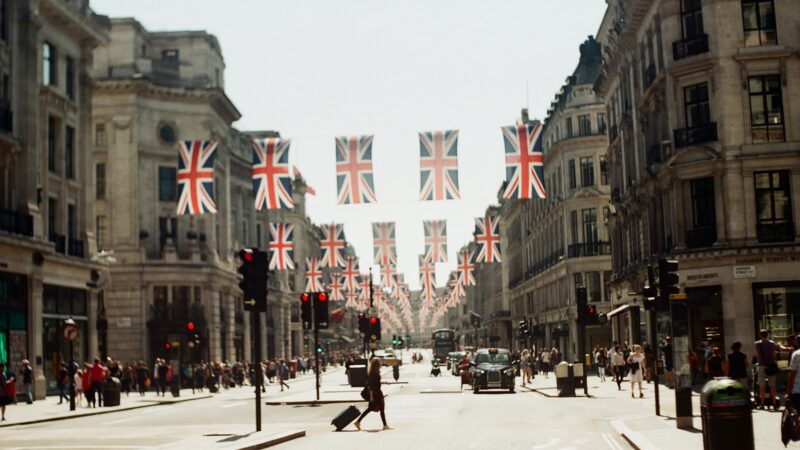
British values have had to be invented in the 21st century because they never existed. I’m sorry, but it’s true – otherwise David Cameron wouldn’t have had to try so hard to either define them or legislate for their respect. I still remember that cringe Google advert from circa 2014 that asked “what are British values” and delighted in showing us a picture of two men wearing kilts getting married. But culture, like air, is only felt in its absence. What’s worse, the definitions that have been foisted upon us of “British values” are only British in the sense that they can be found in Britain, but they are not uniquely British. Is it wrong to say that most of Europe respects the values of “equality, diversity and inclusion”?
Diversity built Britain, claims a fifty pence piece with a smug Rishi Sunak behind it. This is only true if you buy the Blairite lie that Britain was born in 1997 and actively chose to depart from its millennium-long history thereafter. Yet, these invented values are clearly not powerful enough to inspire the one thing that keeps a country together – loyalty. The chairman of this publication asked the question “what is a nation if it cannot inspire loyalty?” but neglected to interrogate the cultural dimension of that question, focusing on the legal questions of identity. This is like describing a human in terms of their body only, and making no distinction between living or dead bodies; a body needs a soul to be a person. If you don’t believe me, try and sit in the presence of the corpse of someone you know.
It does not have to be this way; and, when you climb out of the political rabbit hole built for us, you realise it actually is not this way. “Britain” is stamped across everything and pushed into your face at every opportunity – and I’ll tell you what Britishness is shortly. Instead, there is a richer dust beneath that impoverished earth that can be found, if only you look for it: Englishness.
The left fears Englishness because it is real. It does not fear Englishness because it does what the left wants to do, and better – it does not offer “an inclusive and diverse” society – but they fear it because it inspires so much loyalty and with so much ease. And as with oxygen, you only find it when you’ve been denied it for so long; but this actually makes finding it easier since we are so starved of it already. You can find it in a country pub, at a church fête, at a garden party, at a Christmas church service, in the architecture of Buckingham palace, in the music of Herder and Elgar, in the tailors of Saville Row – in short, in all the places you would not find anywhere else in the world. You don’t find it in a cup of tea, or in a queue, or the other twee nonsense that is so important to the 21st century project of multiculturalism.
You have to find these things, though. They are hidden, and consciously so – otherwise they threaten the damp, empty and meaningless focus of loyalty you’re supposed to feel, “British”. And Englishness threatens Britishness because it’s so much more powerful. I don’t blame the SNP or Plaid Cymru or Sinn Fein for being so successful. I blame our gutless, cowardly elites.
It wasn’t always like this. Britain and “Britishness” was only ever a legal identity supported by an English hegemony. There’s a reason that, for so long, writers would use the words interchangeably – it’s because they were. Englishness was unique and different to Scottishness (Welshness doesn’t exist), and quite clearly the animating spirit, the soul of Britishness. Scottish and Irish people might complain today that their culture was “erased” by the British state under an English hegemony, but to the victor, the spoils. England and Scotland had the same population sizes for centuries, and went to war so very often, it’s hardly surprising that one of them would eventually triumph.
English people were aware of this. It’s no surprise that Enoch Powell spoke about this – typically eloquently and with deeper understanding than any living politician – and urged that “Britain” concede its diminished place in the world, surrendering the Empire (and its step-child, the Commonwealth), instead accepting that England is the only real entity worth loyalty. Powell thought that clinging on to a vaguely defined “Britain” at a time when her seapower was basically gone, the massive waves of immigration were becoming the norm, and the European Economic Community was expanding, meant the hegemonic English identity would be turned in on itself, swallowed up, and hollowed out by the desire to make “Britain” as palatable as possible. As with everything else, on this issue Time has proved to be Enoch’s greatest ally, to the extent that David Lammy – who has no cultural or ethnic connection to Englishness – can call himself English. The only reason he can, is because Englishness and Britishness are still mistaken for one another. We have made the mistake of letting an English hegemony be captured by those who hate England.
But this hegemony is almost dead: whilst the last bits of “Englishness” that have dominated “Britishness” are swallowed up, it became the project of the Left in the post-Thatcher years to become even more aggressive in simultaneously undoing that hegemony whilst also turning it in on itself. That first part, of undoing this hegemony, was fuelled by Leftist desires for “equality” between Scotland and Wales, and England, and the farcical idea of Britain as a “nation of nations”, culminating in the devolution programmes that created the fake nation of Wales (still a principality of England, really) and threw the rabid dog of Scotland a steak as if that would satisfy its hunger. You don’t feed the strays.
Peter Hitchens’ Abolition of Britain catalogues that second arm of the Leftists strategy, of taking the ‘kind and gentle’ civilisation of Britain and weaponising it against the England upon which it was built. Another article published by the Mallard, written by Eino Rantanen, put this point well – “British friendliness has created not only complacency, but rather powerlessness in the face of people and ideologies that have no qualms asserting themselves, often violently”.
One violent ideology of this kind is the hated enemy of Blairism. Blairism was the final legal victory of the Leftist assault on English hegemony: again, the Blairite elements of the British state have been rightly identified before, but I will list them for the sake of explaining my point: the Supreme Court (which is a nonsense name, the Monarch in Parliament is still supreme); devolution, as I say above; the eradication of our educational heritage by devaluing university; and so on.
But, this publication has made it its job to be more optimistic, or so I’m told. The situation may look bleak, and I doubt I’ve helped, and this next point might make me sound even more blackpilled: the British project is nearly exhausted. The values that had to be invented in the sundering of the English hegemony of Britain were a sort of proto-globalism – that triumvirate of mediocrity, “equality, diversity and inclusion” have proven to be as empty as the French Revolution’s “liberte, egalite et fraternite” – but some kind of pseudo-cultural identity was needed to keep Britain going. In a way, the Left has dug its own grave, because it took away the only real substance that gave Britain an identity, and replaced it with a set of contradictory inventions.
And you can see this new public culture everywhere. Indeed, it is stamped across everything, in such a way that you cannot avoid it: for example, despite the fact that June has (somehow, unquestioningly) become “pride month”, there are still “pride parades” everywhere and all the time, and in such public spaces that you need to actively try to avoid them – an inconvenience that they are counting on, of course. And “pride parades” are not even about being gay anymore, or LGBT, or whatever, they’re just an excuse to get drunk and be promiscuous in the street, and you can take part – provided you wear the dress and make up and face paint necessary to mark you out as “one of us”, whoever the “us” is.
Contrast this, quite literally, with the fact that Eid is celebrated by thousands of Muslims on the streets of London, a religion that is less tolerant of homosexuality than Christianity. And again, you don’t even really need to be Muslim to take part in the celebration of Eid. The fact that these contrasting belief systems are publicly supported and worshipped is the sign of the absence of a communal identity, not its existence; deep and contradictory belief systems cannot be present in the same collective identity. It is just proof that different collectives live in the same space now; and the simultaneous celebration and sublimation of each is the only way their contradiction can be held in check. In the same way that Patrick Deneen wrote in Why Liberalism Failed that the expansion of atomistic individualism required a stronger state, so too does multiculturalism (another invented British “value”).
Then there’s the fact that every advert – every advert – is full of black people (or, if you want to see intersectional London’s one-step-further form of this, spot the Tube advert with an interracial lesbian couple in which both are wearing face masks). To such an extent that British people think the British population is 20% black (it’s 3%, by the way); and never mind the fact that black people are not Britian’s biggest ethnic minority, we now have a “Black history month”, apparently. You would be forgiven for thinking we lived in America – but maybe that’s the point.
Where is the room for Englishness in all of this? That’s just the point: there isn’t any, and by design. The desire to strip the England out of Britain by the Left meant that Englishness has to be sublimated in order to for “Britishness” to be viable. But here is the optimistic point of this article: the twin facts that the British project is fraying, and that English culture has to be suppressed, points to a single, irresistible conclusion. Englishness is both too powerful for the new British “identity” to counter, and that it is ripe for rediscovery.
The final point here is that, the word “rediscovery” is intentional – Englishness has to be found, partly because it is so smothered by that new British pseudo-culture I lay out above, but also because real culture is physical and tangible. You can find English culture hiding in an Anglican church, in a garden party, in the squat village pubs – basically, in all the places that are unique to England and around which a recognisable pattern of behaviour has been built. Englishness can be found once again – you just need to look for it.