Since the end of World War Two, the United States has received a heightened amount of criticism for how it has conducted itself abroad. Its interventionism and choices in which to act has thrown many a challenge to its own legitimacy and eligibility as a superpower. In the following short article, I will argue that at its core some of America’s interventionism is more a sign of a flawed but idealist attempt at helping the world.
From this, we can think of many circumstances in which America and its strategic choices to intervene have resulted in large scale failure. From Southeast Asia, to that of Latin America, we can be shown countless examples of either propping up corrupt dictatorial figures or even right-wing paramilitary death squads. This criticism has found itself not just from the proverbial left-wing but even from non-intervention right and libertarian circles. These failures have sadly detracted from the times America was arguably right to say it had a moral obligation to do something. Its critics have largely been correct with figures like Odd Arne Westad, Stephan Walt and Vincent Bevins, being the most notable at generating specific criticism towards American foreign policy failings, rather than the traditional critics like Noam Chomsky and Howard Zinn; commentators who prefer to use certain political arguments, while ignoring other uncomfortable and less than ideologically convenient truths about America.
As such, thirty years ago, we can be shown an example of America standing up for doing what is right and just, and being punished for it anyway. This was found by America directly after Desert Storm and the first Gulf War, turning its attention to that of Somalia and the Horn of Africa in 1993. Although remaining complex and disputed, what is known is that the nation of Somalia had largely fallen into a state of Civil War by the end of the 1980s. This conflict still continues to this day and still continues to displace many within the region at large. By the early 1990s, the nation remained a lawless place, in which differing power factions and warlords were fighting over what was left. It is this, for which many were exposed prior to American involvement.
American involvement came as a means to support and back up the United Nations which were being targeted within the country. From this involvement, America turned its attention to that of targeting those figures and warlords which had declared war on the United Nations personnel, such as Mohamed Farrah Aidid. As such, the mission to find him was that of Operation Gothic Serpent.
Out of Gothic Serpent, we enter what became the most famous and defining image of this conflict, the ‘Battle of Mogadishu’. The Battle of Mogadishu, fought in early October 1993, became famous through writer Mark Bowden’s book, ‘Black Hawk Down: A Story of Modern War’, for which Ridley Scott’s 2001 war movie was named. This battle became emblematic of America’s foreign policy failures, as it fought the toughest house to house fighting since the Tet Offensive within 1968’s Vietnam (something it would not match until the Second Battle of Fallujah in 2004). The outcome for the battle was the death of some twenty one Americans and nearly 300 Somalians. Dead American bodies were dragged naked through the streets and shown on CNN, the helicopters that had been shot down (four in total) became symbols of America’s failure and success for the Somalis. The sight of American Marines running back to base after being chased out the city by armed militia showed they were far from welcome.
How did America end up here? In the years prior, Somalia had descended into being a failed state, the outcome of which had been a complete disaster for all within its borders. Compounding this, a large famine had begun to grip the nations. The results of which meant that some 200,000-300,000 individuals had succumbed to starvation, in 1992. Alongside high rates of food aid looting and storage, the famine was used as a tool to wage war and genocide against others within the nation. There was no fixing this, there was little anyone could do to stop this nation from ripping itself apart at the seams. Out of this mess and the targeting of the United Nations personnel, America decided to support those on the ground. Within several years, it had all but left completely.
What we can learn from such events? Three decades after, has Somalia improved in any way? Well of course not. Has Afghanistan improved in any way since 2001? Of course not. As such, this attempt at fixing the problem was to only inflame the situation and result in the deaths of more individuals. More than just the US State Department, the entire world must realise its problems cannot be solved by sacrificing the lives of white boys from Arkansas and Ohio.
One might begin to wonder if the Somalian Civil War and its aftermath had never occurred, whether America might have also seen itself as being politically able and morally obliged to intervene in other African nations that also went through genocide in the subsequent years, such as Rwanda and Burundi. In this sense, its attempts are more than flawed but tragic. Imagine if Vietnam had never occurred, if America would have then had the stomach to stop the Cambodian Genocide from occurring.
Heavy is the head that wears the crown, some might say. I would personally lean towards the viewpoint that America’s intervention into Somalia during this time is more indicative of a wider tragic sense of action that has haunted America since the end of World War Two. In many ways, America is damned if it does and damned if it doesn’t. It is forced to choose between fickle condemnation and disgrace its reputation as a superpower or military action, the latter of which produces images of dead soldiers being dragged naked through the streets, leading many to ask the question: what was it all for?
-
A Brief History of US Student Politics
‘Hey, hey LBJ, how many kids did you kill today?’
These chants outside of the White House haunted Lyndon B. Johnson throughout his presidency. He would sit in the Oval Office with his head in his hands as the chants wafted through the walls. When his son-in-law Charles Robb sent in a tape from Vietnam, Johnson buckled against the table and looked as though he was in tears. For the loud Southern Jackson, who took great pleasure in towering over and intimidating others, this seemed like quite a big deal.
This is not about Johnson, however. This is about the students who protested him and the Vietnam War. This is about the students who protest now and any time.
An American Education
Harvard University was founded in 1636 and is classed by many as the oldest institute of higher education in the United States. Throughout history, the Ivy League colleges (Harvard, Yale, University of Pennsylvania, Princeton, Columbia, Brown, Dartmouth and Cornell) have been considered the most elite, though others have made quite the showing. Between them, the Ivy League colleges have educated fifteen US presidents. They’ve also educated many Supreme Court Justices, Governors and members of Congress.
Throughout early American history, the Ivy League and other elite colleges were almost exclusively for white, wealthy men. Colleges for women did exist, such as the female equivalent of the Ivies, the Seven Sisters, though they came far later. Colleges for African-Americans also came later, such as Howard and Tuskegee.
Cornell began to accept women in 1870, but it took until 1983 for all of them to admit women, with Columbia being the last.
Minority men were able to attend earlier and more frequently, with Yale being the last to accept black students in 1964.
Despite more diversity in terms of the student body, Ivy League colleges see students of the wealthy 1% overrepresented. One in six Ivy students have parents from the top 1%, and they are 34% more likely to be accepted than students with the same scores but from less wealthy backgrounds. The children of these parents are also more than twice as likely to attend elite universities- the Ivies, Stanford, MIT, Duke and Chicago.
The Times They Are A-Changin’
Whilst protests and activism were not unknown prior, the 1960s saw an explosion in it.
The decade was one of great social change, perhaps the greatest since the 1860s. Firstly, there was more of a focus on youth. TV, radio and movies began to cater to teenagers. Bands like the wholesome Beach Boys and sassy Beatles saw teenage screaming along. As incomes expanded, college enrollment doubled between 1945 and 1960, doubling once again by 1970.
There was also less social and cultural hegemony than before, something that Richard Nixon and his Silent Majority sought to exploit. The Civil Rights movement was at an apex as students sat at segregated café counters and took integrated buses to register African-American voters in the Deep South. Second-wave feminism saw women demand access to birth control, abortion and equality in the workplace. As students moved away from their generally conservative homes, many became embroiled in a more progressive political atmosphere.
Perhaps most impactful in terms of lives was the Vietnam War. Action in the Asian nation had significantly escalated, particularly after the Gulf of Tonkin incident in 1964.
Students in particular were opposed to the draft. College students could receive deferments, but they were in the target conscription demographic of being young and healthy and unmarried, though the marriage deferment ended in summer 1965. One of the most notable forms of protests saw students burning their draft cards.
They were also active in the protest movement as a whole. College campuses became hotbeds of political activity. Students also joined protests and demonstrations.
There were varied reasons as to why students in particular were opposed to the war. Some echoed the popular sentiment of many that it was war thousands of miles away that did not have anything to do with America. Others believed that American soldiers were killing innocent civilians. Some thought that the money would be better spent elsewhere or that war in general was wrong.
One college that became a centre of counterculture politics was UC Berkeley. The California university became a hub of activism and protests regarding Civil Rights, free speech and Vietnam.
Most of the decade saw passionate but peaceful protests in the area, but this changed. In April 1969, students at Berkeley set up an informal encampment in People’s Park, scuppering a plan to turn it into a public space. On the 15th May 1969, police arrived to turf the squatters out. This, combined with a nearby college protest, saw around 6,000 people turn out at the park. The police eventually opened fire, killing San Jose resident James Rector as he watched from the roof. Many others were injured; one man was blinded. California Governor Ronald Reagan called in the California National Guard.
There had been a notable protest at New York’s Columbia University a year before. Black student protestors had asked white protestors to protest separately, which they did, segregating it on racial lines. Some of the students occupied the administrative Hamilton Hall, holding Acting Dean Henry S. Coleman hostage.
In another protest that year, students at Morehouse in Atlanta held the board of trustees. One of those students was a young Samuel L. Jackson.
Sixties Assassinations
Adding to the students’ cynicism were the assassinations of four famous men, all of whom were generally admired by students.
The first was John F. Kennedy in November 1963. Kennedy had been a proponent of college education and had been a point of fascination for young people, mainly due to his relative youth compared to other politicians.
The second was Malcolm X, the firebrand minister for the Nation of Islam and advocate of civil rights. He was slain in February 1965.
The third was Martin Luther King Jr, the well-known minister who advocated for civil rights via peaceful means. He was killed in April 1968.
The fourth and final one was Robert Kennedy in June 1968. He had entered the Democratic race for president as an anti-war and liberal alternative to unpopular incumbent Lyndon B. Johnson.
Death At Kent State
One of the most tragic events of the student protest movement came in May 1970.
The Sixties was over and new president Richard Nixon had promised law and order. Meanwhile, America was expanding military operations in Vietnam by entering neighbouring Cambodia. This caused immediate controversy in the anti-war movement. Several hundred students at Kent State in Ohio were protesting this. Residents and police officers had been concerned about potential repercussions in the community, and the Ohio National Guard was called.
The National Guard attempted to disperse the crowd through tear gas and other means, but this failed. Protestors began to throw rocks and other projectiles at them before being herded away. Near a hill, some of the officers started to open fire. Four students- two men and two women- were killed. Nine others were wounded, one of whom was permanently paralysed.
Images of the event, including the famous picture of a horrified teenager standing over one of the bodies, caused even more riots and protests across the nation. 100,000 people marched on Washington a few days later, leading to Richard Nixon famously talking to protestors in the middle of the night at the Lincoln Memorial.
Post-Sixties
Whilst the chaos of the 1960s gave way to a relatively more peaceful 20th century, activism and protests still remained. College Democrats and College Republicans have both been popular hubs for the partisan-minded students. Politicians regularly attend speeches and rallies, especially when they’re supported by the students.
As a rule, colleges tend to be on the left of the spectrum, in both faculty and students. Exceptions to this tend to be religious institutions like Bob Jones and Liberty University.
Issues that have arisen include the Iraq War, climate change, school shootings, race, gender, sexual assault and rape and military engagement in general.
The Current Protests
On the 7th October 2023, Israel was surprised by an attack by Hamas. People were murdered, missiles were fired and civilians taken hostage. In response, Israel had gone all out on Hamas. As a result, there have been numerous deaths and injuries in Palestine. Many people have been made homeless or have needed to evacuate from their homes. Some have flooded into neighbouring Egypt. Neither Palestine or Israel are safe.
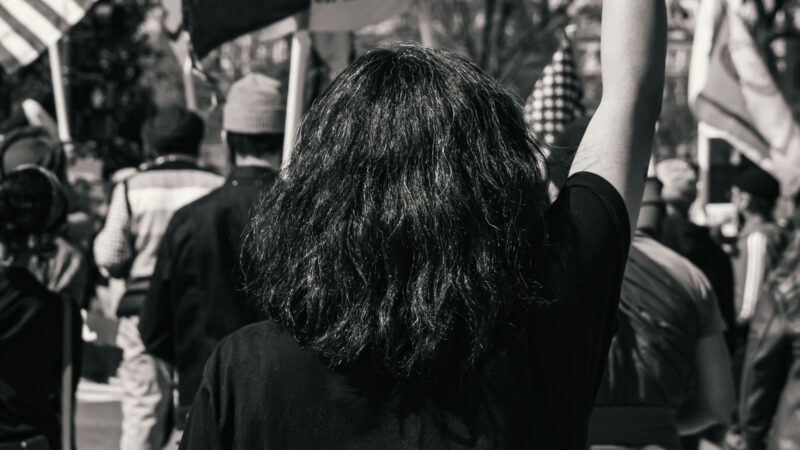
Sympathy for the deaths of innocents have been widespread, but there is a huge difference in opinion regarding Israel. Protests have happened in major cities across the world, with the pro-Palestine side occupying most of that space. London for example has seen weekly protests since October.
The issue has become a massive one in America. Historically, the American government has been a strong supporter of Israel. Joe Biden has given assistance to Israel, but seems to want incumbent Israeli PM Benjamin Netanyahu out. Internally, there is debate amongst the legislative branch. Pro-Palestine and anti-interventionist politicians have come together to stop aid to Israel. Others wish to help it more.
It’s also been dynamite for college campuses. Coast to coast, north to south, university students have been protesting non-stop since October. The Ivy League colleges have been the centre of the protests, but other elite and notable colleges such as Stanford, Berkeley, Northeastern, NYU, Ohio State, and Emerson have seen student activism.
Students have been calling for an immediate ceasefire in the area. Regarding their own colleges, they ask for the institutions to break all ties to Israel, especially regarding financial gifts.
The protests themselves have been controversial. The shouting of ‘from the river to the sea’ is seen as a call to action against Jews, as well as the calling of a global intifada. Flickers of anti-semitism have allegedly been seen in these protests, despite the bulk of participants proclaiming they oppose Zionism, not Jews. Some Jewish students have participated in the protests, whilst others feel unsafe. Classes have been called off and students have been forced to study online.
Encampments have been put up on several campuses. Some have been cleared by police whilst others remain. These encampments are made up of tents, donated food and other communal activities, all of which are subject to rules. Whilst the protests remain mainly about Israel and Palestine, they tend to bend towards anti-capitalism and progressive ideology.
New York’s Columbia University has been the establishment most in the news. On the 17th April, a number of Columbia students started an encampment. Whilst the encampment was torn down by police the next day, it was rebuilt and protests continue. Students report difficulty getting to class. Arrests and suspensions have also been made.
Student Kyhmani James became the subject of media attention following comments regarding the murder of Zionists. He filmed a video of himself talking to the administration in an attempt to get his views across. Unfortunately for Mr. James, he has been kicked out of Columbia.
The Response
America’s 1st Amendment is very strict on the freedom of speech and assembly. That being said, law enforcement and university officials are more than a little tired of it. Students have been arrested, suspended and even expelled. Three college presidents have sat before Congress- Mary Magill of UPenn, Sally Kornbluth of MIT and Claudia Gay of Harvard. Magill resigned in December 2023, and Gay followed in January 2024 after a plagiarism scandal.
Some presidents have been tough. The University of Florida sent out a very clear letter to protestors telling them which behaviour was appropriate and what would get them kicked out. Florida State turned on the sprinklers. Northeastern University got the police to clear the encampment, saying that the use of ‘Kill the Jews’ crossed the line. Florida Governor Ron DeSantis promised to expel any protestors who joined mobs. Even Columbia, the home of the most infamous protests, allowed the police in to tear down the encampment.
It doesn’t look like this is going to go away anytime soon. What some call a win for free speech is what others call going ‘too far’. As parents look away from the Ivy League to less elite but still reputable universities, one wonders if it’s a case of rich kids with too much time on their hands and no problems of their own. Is it that or a genuine example of solidarity with Palestine? Whatever the case, America’s campuses remain on metaphorical fire.
-
One simple way to fix the government | Daniel Evans
Sorry, not this government. The idea of proportional representation seems to be fluttering about, but you don’t even need to go that far. There’s a much simpler solution which doesn’t rely on changing the electoral system. Even better, all you have to do is lean into existing political expectations. And, well, it’s not so much one simple way to fix the government. First comes the political party, which then becomes the government.
Solution
Put party appointments, candidates, and occupants of elected positions under the direct and total command of the party leader. Yes. Run the party like a company, military unit, the mafia, etc. whatever comparison works for you. In other words, like any group organised to actually achieve a common purpose in the face of external pressures.
But what about party members?
Shouldn’t the members have a say? No. At least not the way they do now. It’s better that way. They’ll come around when their party wins.
Party members don’t really have much, if any, of a say in party matters as it is. Whether it’s council, parliamentary, or leadership candidates, there’s quite a lot of filtering which goes on before they are presented to members. At the lower level, staggeringly few party members vote on internal party association positions, or even council candidates, so there’s no real loss there. At the higher levels, in the Conservative Party, for example, Kemi Badenoch was the most popular choice for leadership this time around, among the members, before MPs filtered her out and narrowed the field to Truss and Sunak. Now it looks like the party isn’t even really getting Truss. (A lot of that is her fault to be fair).
As a party member, what exactly are you losing by not getting a say? Even after all that, you were almost certainly going to vote for the party anyway, so what are you even complaining about? Isn’t it more important to get behind those who reflect your principles, or back who you think is the best shot, etc. rather than “having a say” exactly?
The reason you want a say isn’t that you want power, exactly, it’s that you want to feel like you matter. Trying to get thousands of cooks to meddle in the broth isn’t the way to matter. When you identify the leader and plan that you want to back, fall in line, and follow their lead. As part of the masses, you have a very small amount of individual energy. If you want it to do anything, it needs to be focused like a laser. Let yourself be focused.
Success happens when there’s a plan and everyone sticks to it. It doesn’t happen when everyone starts fighting over their own ideas. Make the party leader ultimately responsible not just for their plan but for all the resources and people they will need to execute it. That means party members do not get a say. Party members must be rewarded in other ways, but that’s a topic for another piece.
Loyalty
There is one aspect of party candidate selection which is worth keeping: loyalty. The selection process today selects for loyalty above all else, to the party, and to nebulous groups of insiders within the party itself.
Loyalty is important. You need everyone to act as one, working to the same goal, with the same ethos, presenting a strong, united front. The leader at the top should have a plan and will need loyal people to get it done. Make it obvious where that loyalty is going to – to the leader – rather than vaguely to the party, which really means planless, disorganised, venal, behind-the-sceners.
Members don’t really have a say as it is. When it comes to it, most don’t seem to mind and vote for the party in elections anyway. Activists keep knocking on doors, delivering leaflets, donating, etc. Lean into that political reality, clear up the leadership structure, and, even better, make it much more honest by showing plainly where that loyalty really goes.
Just in that regard, putting everyone under the direct and total responsibility of the party leader would make everything better for the candidates, party activists, and the party as a whole.
For candidates, they don’t need to waste time with the chaos and pettiness of the local party and activists. They don’t need to waste untold hours doing pointless tasks to prove their loyalty. If they owe their position entirely to the party leader, that’s where you get the loyalty. Remove some big obstacles to getting the best candidates 1) the time they have to spend doing politics instead of whatever highly demanding civilian job they have, and 2) the risk of not getting selected even after all the loyalty-proving they have to go through.
Do you want better politicians? Make it easier for the better ones to put themselves forward.
For the party leader, the benefits are obvious. He squashes the potential for distraction and dissent, potential rivals from within his own camp, and gets to act much more pragmatically.
This all increases the chances of winning. You like winning, don’t you?
What If It All Goes Wrong?
If the leader turns out not to be a winner, at least it’s totally clear where the problem is – the leader. If the party can only go where the leader does, and the party fails, you know what to do. This makes it much easier to cut your losses, move on, and try again with someone else in a new party.
This criticism is more or less a criticism of the status quo anyway. When party leaders don’t work out, the leaders change. Often the party as a whole changes, merely the branding stays familiar. How many of you have asked whether the Conservative or Labour Parties are really Conservative or really Labour?
What’s the difference, practically, between junking an entire party with its leader and starting again fresh, and more honestly?
Better Government
If you were reading closely enough, you noticed that the solution included total responsibility over those in elected positions.
Let’s face it, people don’t really elect the individual MP. They vote by party or leader. Lean into that political expectation. Use it to clear up and prevent parliament becoming whatever it is now. Stuffed full of has-beens, inadequates, and failures, many occupying “safe seats”.
The party leader should be able to fire and hire as they see fit to the parliamentary seats they/their party has already won. Accepting this should be a condition of candidacy in the first place. It could even be the first law the party passes.
The ability to replace bad MPs might keep them good for longer and allow for a proper cycle of “tested and done” out for “promising and new”. For example; what is the point of Matt Hancock? He’s just blocking someone potentially useful, or at least someone who is not a net negative. Let’s be real, nobody voted for Matt Hancock. Come on. Why wait around? Fire him and get someone else.
Spent losers hanging on is one of the reasons the Conservative Party today is having so much trouble. It happened to the Labour Party too in the dying days of the Gordon Brown government too. Too many MPs hanging around long past their usefulness. It diminishes the pool of potential ministers.
Before you know it, we’re all pretending that Dehenna Davison is a minister who actually does any governing.
The Party Leader
Command over all party appointments, candidates, etc. would include the party leader himself.
No party leadership elections. Most people vote by party or for a party leader, presidential style. Lean into that. Spare everyone the mixed and mashed chaos of whatever normally goes on in the background of party politics. Spare everyone the same mixed and mashed chaos of what goes on in the foreground of party politics!
But isn’t it a problem if you can’t remove a leader from the party? No. Just back the leader you want in a new party. It doesn’t really matter if someone can’t be removed as leader in a party if everyone leaves to do something different. Just look at UKIP/Nigel Farage/the Brexit Party. And now Reform UK or whatever the Brexit Party rebranded as.
The solution for fixing the government
In summary: there’s a leader, a plan, their team, who they will hire and fire to get the job done, and do you want it or not? If yes, you have a structure which might actually be able to get something done. If not, don’t vote for it, and from your perspective, nothing is lost. Simple.
-
Net Zero Versus Cost of Living
Atmospheric Carbon Dioxide levels are rising – that is a fact. Before the industrial revolution, atmospheric CO2 levels steadily remained at around 280ppm (parts per million). This number had remained constant for thousands of years, with very minor increases over the years due to natural processes. In March this year, CO2 concentrations were sitting at 418.81ppm. This huge increase in atmospheric carbon dioxide concentrations has already created and will continue to create unprecedented effects on the environment globally. This daunting fact has prompted leaders across the globe to act.
Last November in Glasgow, the COP26 summit was held which was widely regarded as an instance of the UK taking global leadership in the fight against climate change. The UK has worked hard to bring all participants of COP26 to a consensus about the actions needed to mitigate against the harmful effects of climate change and reduce global CO2 emissions as a means of lessening the damage caused by global warming in the future. In doing so, the UK government has sought to fulfil their end of the bargain and beyond, making bold promises in the hopes of accelerating the UK’s charge to becoming net carbon neutral by the year 2050.
Energy production is one of the biggest issues regarding our drive to net zero, producing 21% of the UK’s greenhouse gas emissions. As such, the government has placed a levy on domestic energy bills, costing the average UK household an extra £159 per year on energy bills as a means of financing subsidies for renewable energy products. In addition to this, the government has recently raised the household electricity price cap from £693 to £1,971. This will put immense strain on the budgets of many households, not even mentioning the skyrocketing inflation recorded at 7% in March 2022. This financial squeeze is not showing any signs of relenting, with disposable incomes predicted to fall by 1.9% this year – an even bigger decline in living standards than the one seen in the year prior to the Winter of Discontent.
With all the economic doom and gloom spreading about, a question must be asked – is net zero by 2050 worth it? The UK sits on top of huge shale gas deposits which could easily be exploited by the government issuing licences for companies to begin fracking on these lands, solving the gas supply issues which drives lots of the inflation currently seen. This gas could also be used to generate electricity domestically, reducing the UK’s reliance on French electricity whilst increasing supply to the point where households’ electricity bills could be drastically reduced. The UK currently contributes to 1% of global emissions, meaning that despite being virtuous, the drive to net zero will have relatively little effect globally when countries like China and India make relatively little efforts to reduce their own carbon footprints. Moreover, exploiting domestic energy supplies will likely result in lower overall carbon emissions than the alternative of importing, as huge amounts of carbon dioxide is emitted when transporting these resources to the UK.
As such, it is little surprise that Reform UK – the largest right-wing opposition party to the Conservative party has begun to campaign against the government’s current plans to achieve net carbon neutrality. Whilst it is a noble cause to reduce carbon emissions, the current economic reality shows that the plans currently in place will massively reduce the quality of life for millions in this country instead of being the ‘Green Revolution’ that was promised by this government. We need pragmatic, not dogmatic solutions to current issues and reviving domestic energy production is the first step to solving the cost-of-living crisis and reducing our dependence on energy imports. We still have twenty-eight years to reach our target. Making sure that people are financially safe should be the government’s priority, only then can we focus on the environment. There is no doubt that this method of mitigating the cost-of-living crisis will encounter large resistance from pressure groups such as the Extinction Rebellion, but a far larger resistance will be seen in the polls if the government does not get a handle on the situation soon.