Month: January 2023

Keir Starmer is right about the NHS

A couple of weeks ago Keir Starmer made headlines by claiming that too many people from overseas are recruited by the NHS. For this he was, of course, slandered as the second coming of Sir Oswald Mosely or Enoch Powell by his own side, who, despite their protestations to the contrary, rarely look beyond the headline when it comes to statements about immigration.

Sir Keir made the point that immigration was not the key to ending the staffing crisis faced by the NHS, a point in which he is perfectly correct. Rather than relying on foreign workers to fill the shortfalls in staffing, he would instead “train people in this country” to return to the goal that every country that seeks: remaining somewhat close to self-sustaining one of its most important government services.

An estimated 34% of people joining the NHS last year were from overseas, up from 18% just 8 years ago, a massively disproportionate amount compared to the wider population. There remains in England a shortage of 12,000 hospital doctors and more than 50,000 nurses and midwives. This compounded with the issues of the COVID backlogs has meant that the health service now faces some of the longest waiting periods in its history. Going into a winter with the ongoing fuel and power it is clear that, amongst the litany of other permacrises the service seems to face, the NHS may be entering one of the most testing seasons of its 75 years.

Why not then, if the situation is indeed so dire, accept as many immigrants as it takes to see us through? This makes sense to the types to whom immigration is a hammer and every problem a nail, but continuing this reliance on outsiders to prop up our geriatric and unreformable healthcare system can only end in disaster. They would have us prioritise short term relief over long term investment, a propping up of an overreaching shanty than to build with foresight the proper foundations of a functioning institution

But it makes sense to build from within. For one, it makes no sense to have our healthcare system, one of the most important things in the lives of millions of our countrymen, reliant on those who could at any time up and leave to go home. This has already happened with many Poles who after the covid pandemic dissipated have decided to go back to the continent, affecting services like bus provision in Birmingham particularly hard; so why are we so blind to it’s possible happening in a far more crucial industry? There is also a conversation to be had about our own homegrown medical personnel leaving for America after their training; but one problem at a time here.

This all feeds into the wider discourse around immigration, which has once again hit a record high. 1 in 6 people in England and Wales were born abroad, yet the ONS has decided – for no reason at all, I’m sure – to no longer record ethnicity statistics, and coincidentally demands for housing and services are strained to breaking point. The arguments are tired, but now with this it seems some are finally awake to our current reality that mass immigration is unfair and unjust to all parties save two: left-wing parties who prey on the votes of migrants; and big businesses who can save on labour costs by endlessly importing low cost workers from the third world.

All others suffer for the system; native peoples find their wages undercut and the value of their vote diluted, their languages and culture displaced from inner cities now turned to foreign ghettos. These areas are inhabited by the destitute peoples drawn to a strange place where they have no roots or history, taken from countries far poorer than ours who desperately need the wealth and skills of the people poached from them by the lazy politicians and managers of our institutions who would rather paper over cracks than build from within a stable and secure foundation.

This is a problem far wider reaching than just the NHS, but given that that particular institution is tantamount to our golden calf it’s a good place to start the discourse. For many in Labour however this discourse is unthinkable, as is any that seeks to come up with any solution to our immigration questions with any other answer than “no human is illegal, just let them all in”. This is Starmer’s problem; there remains in Labour the strain of far-left terminally online social vandals that took charge during the Corbyn administration. Though he is leading a cautious return to the centre, he will be answerable in part to these cerebral vacuums, as will his (often just as miserably online) MPs who have already shown themselves to have a habit of breaking rank, as seen in their attending picket lines over the last few months, in order to appease their Twitter followings.

Starmer, whose wife works in the NHS, might be the political equivalent of a plain ham sandwich but on this he knows what is needed, even if it puts him out of lockstep with his party, to whom even suggesting a policy on immigration that isn’t throwing open the door to the world is equivalent to having a televised fireside chat in which he reads extracts from Mein Kampf whilst sat atop a chair made from slave-picked cotton. It remains to be seen whether he sticks to his guns, or will be cowed back into toeing the line by his party, though on this it can be assured; Keir Starmer is right about the NHS.


Photo Credit.

The Dishonorable Victoria Nuland | Ilija Dokmanovic

As the Russia-Ukraine Crisis crawls into the second month of conflict, humanitarian disaster, and media sensationalism, many passive observers of the situation have been wondering who is to blame for the biggest military conflict in Europe since 1990’s Yugoslavia.

Mainstream media, OSNIT Twitter experts, and heads of state all make substantial claims about the culprits, the causes, a variety of predictions for the outcomes, and “solutions” that do nothing to actually solve the issue other than to speculate needlessly and obfuscate the reality on the ground in order to garner as much engagement as possible from the online community, and inflame hatred on both sides – dumbing down the debate to kindergarten levels of maturity, driveling the issue down to just another “Kony 2012” bandwagon for everyone to jump on.

In the West – particularly NATO member nations such as the United States and the United Kingdom – there has been a certain disregard for introspection and self-criticism in regards to the lead up to the current conflict. While the reality may not be as clean or as pleasant as we want, the current crisis in Ukraine is hardly a new development, nor had the invasion of Ukraine been completely out-of-the-blue as many pundits make it out to be.

This conflict has been ongoing for the last decade – it seems that most discussing the current escalation are willfully ignorant of that fact.

The people of Donbass, Luhansk and other Eastern oblasts of Ukraine have suffered under similar war-like conditions and humanitarian crisis since the beginning of the Ukrainian Civil War in 2014. No one in the West has cared about it, nor paid any thought, hashtags, or great displays of solidarity for those who have suffered since then – only now paying attention as the conflict escalated from a local regional conflict to a nation-wide one as soon as the Russians directly became involved – all with the help of actually being televised, of course.

Framing the issue as an “attack on the territorial sovereignty”, “democracy”, or “self-determination” of Ukraine is not only blatantly dishonest – it’s entirely hypocritical. Where were the calls to recognize the territorial sovereignty or democratic will of the separatist regions who no longer felt that their interests were represented in Kiev?

Nowhere, of course. Because it wasn’t “our side”.

For most, the finger of blame for the escalation of tensions to all-out war in Ukraine has been pointed directly at Russian President Vladimir Putin for activating the “special military operation” and invading Ukraine. For others the responsibility lies with Ukrainian leadership not compromising on territory claims and security concerns the Russian government has had, and the failure to follow the standards set by the Minsk II protocol signed in 2015. Many others lay the blame with NATO for encroachment and not taking Russia seriously or engaging in any sort of constructive dialogue with Moscow.

As the issue has been brushed aside, ignored, and unaddressed by Western powers who could’ve negotiated a peaceful resolution that would’ve put an end to the bloodshed years ago, the cock has truly come home to roost – metaphorically speaking. By not seriously engaging with any sort of dialogue with the Putin regime, attempting to make a buffer of any sort that addressed the security concerns of both sides, and by not prioritizing the safety of civilians on the ground but rather their own expansion, NATO has done nothing but help fan the flames of this conflict.

NATO, of course, cannot be “blamed” necessarily for the conflict at large. For what it’s worth, as a security organization it has been rather beneficial in creating a level of stability and bipolarity in European politics. It wasn’t always ideal, nor fair, but as a product of its time – the Cold War – it did a lot more good than harm in balancing power and security in the 20th century.

It may have acted as a bulwark against the threat of Soviet Communism back then, but as the Cold War ended it has changed with the unipolarity of the late 1990’s and early 2000’s.

Today, NATO is merely an extension of American security and political power. It has shaped the Western world and its response to threats from an American perspective, prioritizing Washington’s concerns above all others. It is entirely a fabrication that the responsibility and configuration of NATO is somehow shared between its member nations; that’s symbolic rather than the actuality. This has been observable in the past couple of years as the projected power of NATO has been growing weaker without an immediate perceived threat, and European member states skimping out on funding the organization or actively seeking alternate security solutions – such as the push for a militarized European Union separate from NATO.

How coincidental that as the crisis in Ukraine has developed, the re-emphasis of NATO power has occurred as it was staring at its dissolution after American security failures in Afghanistan and the rest of the Middle East?

NATO, of course, is composed of all sorts of characters and figureheads – both military and political – who maintain and grow the institution the way Washington needs it to. In the last two decades one of the largest forces in shaping how NATO (i.e. Washington D.C.) operates in Eastern Europe and in regards to Russia has been Victoria Nuland, who is currently serving as the Under Secretary of State for Political Affairs in the Joe Biden administration.

If anyone can be sourced as holding key responsibility for laying out the foundations for the current crisis unfolding between Ukraine and Russia, it is her.

Victoria Nuland has been described as “brash” “blunt” and “crude” by many who have worked with her, either through the State Department or as her counterparts across Eurasia. The Washington careerist Nuland has spent most of her life entrenched firmly in the circus of the US State Department, climbing the ladder of power with a ferocious tenacity and iron-set will to shape Washington’s policies across the world.

It would be commendable, if her efforts weren’t completely driven by neoliberal globalist ideology that props up the status quo powers and elite D.C. political class. We can see how close she is to the establishment elites, after all she’s married to the co-founder of the Project for the New American Century and Council on Foreign Relations member, Robert Kagan.

Nuland has found herself in a variety of powerful positions throughout her tenure in Washington – from deputy director of Soviet Union Affairs under Clinton, to being the US Ambassador to NATO during the Bush administration, to Assistant Secretary of State under Obama’s 8 year reign. The Under Secretary has previously worked closely with some of the most hawkish characters in Washington, having directly answered to Dick Cheney as his deputy national security advisor, and with Hillary Clinton as the spokeswoman for the State Department.

With mentors and colleagues like these, it is no wonder that Nuland has been able to entrench herself into the new administration rather safely. She doesn’t pull her punches, even if it would be the smart thing to do – preferring to ideologically shoot from the hip with her diplomacy and think later about the consequences of her actions – if at all.

Her attitude and approach to diplomacy may have allowed her to gain many fans in Washington, as brazen approaches are often applauded in the D.C. swamp – but it hasn’t gained her much of a fanbase among European diplomats. Her policy of ignoring the efforts of EU leadership to try and fix diplomatic relations with Russia, and by shipping weapons to Ukraine during the Obama years directly acted against the advice and fears of many EU nations who worried it would escalate tensions with Moscow.

Rather than her actions being a product of her career, Nuland seems to be a true believer in the diplomacy she practices, almost delusionally so. In 1997, along with former Senator Richard Lugar, Nuland published Russia, Its Neighbors, and an Enlarging NATO: An Independent Task Force Report; in which it was “concluded” that NATO should be able to expand into Europe, and that Russian concerns or perceived security threats were unjustified – any attempt to negotiate or compromise should be disregarded. The report is rather short, but statements and conclusions are entirely delusional and a product of liberal elitist thought – the only way for Russia to participate in this changing world would be to cede its own sovereignty and self-determination in order to join the “New Europe” and the authority of NATO (ie. Washington).

I imagine that any Russian authority who were in the effort of trying to rebuild a nation after almost a century of communism and centralized bureaucracy would see the terms laid out in the Nuland report and laugh in disbelief. Trading one bureaucracy for another, but this time with less sovereignty and being subjected to the whims of a former rival.

In the very same report, the issue of Ukraine is emphasized. The task force agreed that NATO’s “doors shall remain open” for Ukrainian membership. Of course we know today this has been one of the driving motivations for Russian engagement in Ukraine, has been the threat of NATO expansion towards Russia’s border with Eastern Europe and one of Russia’s vulnerable corridors for invasion.

Nuland has been wanting, and working hard to ensure that Ukraine joins the American sphere of influence. Whether this is a personal mission, given her Jewish-Ukrainian ancestry, or whether this is completely career-driven doesn’t matter. It has led to disastrous consequences regardless of the motives.

One only needs to look at the Maidan protests and 2014 coup d’etat that Nuland was a key figurehead in orchestrating – a leaked phone call with the then US Ambassador to Ukraine Geoffrey Pyatt shows how instrumental Nuland was in hand picking the pro-West Ukrainian Arseniy Yatsenyuk administration that took over after the expulsion of Viktor Yanukovych’s Moscow-friendly government during the “Revolution of Dignity”. Whether or not the previous government was a “Moscow puppet” matters little, when the United States and NATO conduct the same actions that they accuse Russia of – infringing Ukrainian democracy and self-determination – even if it is through more covert means.

While the massive shake-up of the government took place, NATO also funded and armed the infamous neo-nazi “Azov Battalion” to conduct operations in the Eastern Ukranian separatist regions, with disastrous humanitarian consequences for civilians in those regions. Everything from wanton destruction to residential areas, kidnappings, and even crucifixions – Azov Battalions have not only been blamed for this, they take pride in their cruelty.

It seems that the US State Department made it a policy during the 2000’s and 2010’s to arm and aid the most depraved groups of people, whether it has been Islamsist militias in the Syria or neo-nazi paramilitaries in Ukraine in order to fulfill their policy goals without getting their own hands dirty – with innocent civilians suffering the most due to this short-sighted, or willfully ignorant decisions.

Of course in the mind of someone like Victoria Nuland, the ends justify the means. But what exactly are the ends?

Is it to “stabilize” Ukrainian democracy?

As Zelensky has purged opposition parties and political rivals have been arrested and tortured, we can see by the lack of condemnation that that’s hardly the priority.

Is it to “secure the sovereignty” of Ukraine?

The whole reason this mess has occurred is because Nuland ignored Ukraine’s sovereignty in order to place her own political pawns into positions of power – so claiming that they’re trying to do this is laughable.

Is it to “prevent the humanitarian crisis and deaths of civilians”?

This conflict has been ongoing for a decade, with tens of thousand already dead or displaced before Russia stepped foot into the region. Where were the actions to prevent the humanitarian crisis that has existed for the past decade?

So what are the ends? Because the narrative that Washington and the mainstream media are pumping out are hardly grounded in reality.

If I was a gambling man, I would wager that the end goal of this crisis that has been created is multifaceted; waging the media war against the Russian Federation has been ongoing for the past decade – many Americans, particularly those in red states and from working class backgrounds see the more conservative culture of Russia and the strongman figure embodied by a leader such as Putin as a viable alternative to the current American society that empowers the elite Washington D.C. political class and desecrates the rest of the country. Many saw Trump as a leader like that, after all.

Regime change in Russia to bring it into the “global society” and the confines of internationalism is also a possibility. Nations can’t be seen as breaking away from the “rules-based order”, as that would not benefit Washington D.C. or global institutions like the United Nations or World Economic Forum that have infiltrated the top levels of government and society in order to push their own agendas under the guise of “democratic will”. However, I think this is far stretched and I think the horse has bolted in regards to this scenario – Russia has been cut-off, and I don’t think anyone at the Pentagon or the State Department wants to get involved with what would be a severely messy operation to pull off in trying to oust Putin and his loyalists from power.

What I think is the most plausible situation is actually rather outside the box. As the United States recedes as a global superpower under the weight of its recent failures and crumbling domestic situation, the best way to prevent any other rising power from gaining a foothold at the top is to make a chaotic situation that is so out of control that no-one could possibly control it.

Ukraine has so far proven to be far from a “clean” operation on the ground for the Russians. Victoria Nuland has done a rather outstanding job of shaping Ukraine to be so emboldened by their own ideas of fighting for their “sovereignty” and crafted such a unique identity separate from Russia that they will likely continue to be a rather large thorn in the side of Russia for decades to come, regardless of the outcome of this current war. Russia will be exhausting itself and its resources trying to control the situation.

So while the United States may not be “directly” involved with securing the situation on the ground, at least Washington can be guaranteed that Russia won’t be able to do it either despite their close proximity. All the Americans have to do is keep pumping weapons and resources to keep ground-forces fighting or causing a logistical headache, and in the meantime they can refocus their priorities to other, more pressing situations – namely domestic security.

But if those are indeed the “ends”, are they justified?

To any rational, morally sound and peace-loving person, of course not.

But as we have seen time and time again, Washington D.C. and the elitists that occupy the highest seats of government will create their own justifications, even if completely false or out-of-touch, in order to fulfill their own goals of self-preservation and holding on to power.

This reason, above all, is why Victoria Nuland has been perfectly fit for the job that she has undertaken for the past two decades. Because she embodies those very same insane values.

And Washington D.C. loves her for it.


Photo Credit.

Rip Up the Roads

Driving may well be the biggest psy-op in modern history. The car has often been depicted as the symbol of freedom, the ability to go wherever one pleases – to emancipate oneself from the circumstances they find themselves in, and to strike up a new existence elsewhere. There’s a reason they talk of the ‘open highway’. Maybe in America this imagery resonates. After all, America has the size necessary for road trips to take you to genuinely isolated places. But America is America, and Britain is Britain. If you woke up at a random place on the British Isles, you could walk in any direction and find a marker of civilisation and follow it to safety before you were seriously close to death.

This fact is part of Britain’s charm, we really are the national equivalent of The Shire. A place where just the natural landscape lends itself to safety. Our island status makes it easy to defend, and our size allows us to grow, but not isolate ourselves from one another. Considering this, there really is no escape from civilisation in Britain. This may well be why exploration and adventure are such a large part of our culture: the only way to experience these things was to leave the country. 

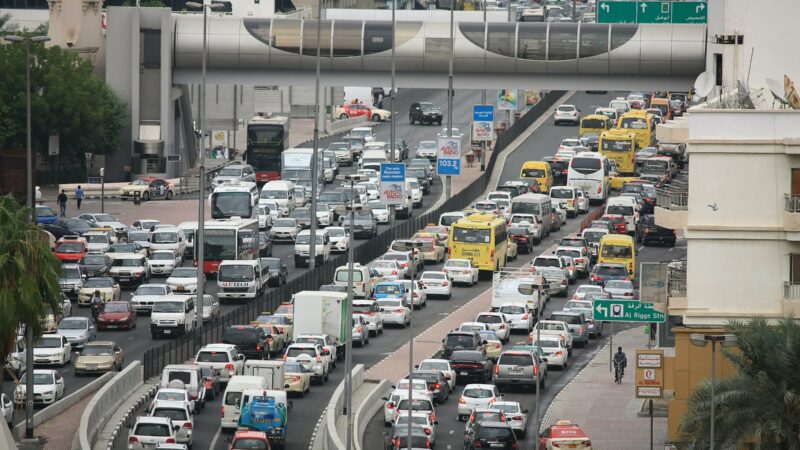
These facts make cars not so much a freedom, but a restriction. There is no ‘open road’ in Britain, just congested highways and country lanes that were fit for horses and carriages, not Land Rovers and BMWs. Driving in modern Britain means going from your box apartment to your box office, all facilitated by your box car. What do you get for the privilege of this freedom? More paperwork, bills, and another thing to look after. These are just the personal costs, the social costs are much greater. Huge swathes of land have to be taken up to facilitate cars. Roads are just the beginning, parking, driveways, motorways and car-related services such as petrol stations and garages all take up space that could otherwise be allocated for residential use. Cities such as Rome enchant those who visit because they were structured around the human and not the car. The streets of Rome have natural, organic arcs to them which obscure the street ahead. Cars don’t do well with too many turns, and so roads become long stretches that give the eyes nothing to feast upon but the gruelling monotonous journey ahead, often accompanied by ‘humorous’ bumper stickers or, God forbid, billboard emblazoned with advertisements – turning your commute into an advertisement break between your diminishing private life, and your gruelling work life.

So what should replace the roads? Surely we still need all of the creature comforts of the modern world, and if we don’t have roads between towns or within them, we can’t have any trade. First and foremost, people will not simply sit in their homes and starve because the A419 has been ripped up and they cannot reach a Tesco. Where there’s mouths to feed, there’s money to be made, and a new wave of farm-to-table markets would be incentivised to emerge locally. Now that walking is the main way of navigating towns and cities, commerce has to spread out to accommodate. No longer will there be massive central hubs of consumption, but small decentralised centres catering to the bespoke needs of communities on the most elemental level. For transport between these centres, the newfound cash not spent on road maintenance can be used to build trams to move people between these different centres allowing cross-pollination of consumers without the homogenisation of products that comes with shoving those products in vans and moving them across towns.

Of course, there are those goods which simply cannot be manufactured locally, and certain goods like fish are quite obviously not easy to come by if you’re not on the coast. To this end, a massive expansion and upgrade to the railways is needed. Expansion to offset the now-defunct road freight industry, and upgrades to ensure timely delivery of goods. This would mean moving away from much of the Victorian-era railway, but returning In full force to the Victorian-era spirit of industrialisation and progress. Rail freight is often cheaper per-mile than road freight, and allows for quick loading and unloading of containers, rather than manual loading and unloading from the back of lorries.

In order for rail to dominate the British landscape, the failures of the British state can no longer be tolerated. It shouldn’t take a decade to open a railway for public consultation, only to downscale it before any serious construction has taken place. Instead, a reactive and dynamic centralised infrastructure is required that clears out the dead weight who would stand in the way of a new vision of Britain – one in which the countryside is reclaimed from the concrete mess of roads, and the rewilded landscape tears past the window of your maglev as you travel from Plymouth to Edinburgh in four hours, rather than ten.

However, the removal of roads doesn’t require the end of private travel. Instead, we can simply take paramotors to the skies and fly to any number of open fields. Paramotors are statistically safer than cars, and can go at around 60mph. Private travel in Neo-Britain would mean the removal of box cars to open skies, overlooking a renewed landscape. For those who prefer to remain grounded, the reclaimed land doesn’t need to be privatised, it can be kept public and traversed by anyone who rents a quad bike and decides to drive through the wilderness to visit their friend a town over, or anyone who just wants to to ramp around the countryside for the day.

Roads are an ugly blight on Britain, they turn a once green and beautiful isle into a grey, dead landmass full of grey, dead people. They facilitate a society built around machinery and not around the character of the people who compose it. There are those who want to end the growth of technology where it stands. These people will lose out to those who wield the weapon of tech. There are also those who wish to simply allow tech to override their humanity. Indeed, we see this in the fact most of our cultural events (including Project 22) are experienced through a screen. Instead, I propose a third way: that technology is a tool in the hands of those who wield it, and through a great strength of will, we can adapt it to the world we live in. We ought not to see technology as an escape from nature, nor as a means to become stewards of nature. We are a part of nature, and must shape ourselves and our societies to work in tandem with it. To that end, we must rip up the roads.
Photo Credit.

Book Review: Ten Year Anniversary, The Demon in Democracy, by Ryszard Legutko | Ryan Anderson

A rarely remarked upon effect of Covid-19 has been the neglect of works that would have ordinarily garnered broader acclaim. Thus, as we’ve been distracted by the medical events, an assortment of commendable offerings have largely escaped public attention. One such work is ‘The Demon in Democracy: Totalitarian Temptations in Free Societies’ by Polish academic and European Parliament member, Ryszard Legutko. Originally published in 2012 as Triumf Człowieka Pospolitego (Triumph of the Common Man), then edited and first appearing in English in 2016, Legutko’s book is a rare recent work of real import. A decade on from its original publication, Legutko’s book is still one of the best indictments yet of our liberal age

In a similar vein to the works of Christopher Lasch and John Gray, Legutko’s is an account that is tepid towards the Thatcherite consensus that has come to define the right whilst resisting the easy overtures of our dominant left-liberalism. It’s a book that illuminates the errors of the age as it rejects the pieties that our epoch demands.

Like Ed West, Michael Anton and Christopher Caldwell, Legutko is one of few contemporary writers willing to provide an honest account of the liberal status quo. By not succumbing to our assorted unrealities, Legutko is able to articulate the inadequacies of liberal democracy without the pusillanimous equivocation that’s sadly all too prevalent. The book is thus a welcome addition to what is an otherwise bleak scene for the conservatively inclined, entrapped as we are in the all-pervasive mould of liberalism.

Such commendations aren’t restricted to this reviewer, however. Figures such as Harvard’s Adrian Vermeule and Notre Dame’s Patrick Deneen have been equally effusive. For as Vermeule wrote: “Legutko has written the indispensable book about the current crisis of liberalism and the relationship of liberalism to democracy”, while for Deneen the book is a “work of scintillating brilliance. [With] every page…brimming with insights.” 

High praise, undoubtedly, yet it’s well vindicated upon reading. The central thesis is that despite an outward appearance of difference, communism and liberal democracy share a range of similarities. An observation that appears prima facie preposterous, yet after 180-odd pages of tightly-packed prose the reader is unable to avoid this unsettling insight. 

The rationale for this claim is as such: both are inorganic systems that involve unnatural impositions and coercive zeal in their pursuit of illusory utopias. Utopias that are to be achieved practically through technology and ‘modernisation’ and buttressed theoretically by the purported fact of human equality. The two are thus historicist projects, seeking to ground human affairs in delusions of ‘progress’ in lieu of any underlying nature.

Both platforms are thus mere dogma. They are, as Legutko states:

Nourished by the belief that the world cannot be tolerated as it is and that it should be changed: that the old should be replaced with the new. Both systems strongly and – so to speak – impatiently intrude into the social fabric and both justify their intrusion with the argument that it leads to the improvement of the state of affairs by ‘modernizing’ it.”  

The two systems are hence unable to accept human beings and political affairs as they actually are: man and the polis must be remoulded along the lines of each respective ideology. For the communists, this involves the denial of man’s natural egotism and the subordination of his individual efforts towards an ostensible communal good. That this requires extreme coercion in implementation, unfathomable violence in practice, and has been deemed a delusion since at least Plato’s Republic, is a tragedy that’s all too commonly known.

So far, nothing new. Yet it’s the author’s elucidation of the unsavoury aspects of liberal democracy that is of particular note, especially for us here at the so-called ‘end of history’ and in light of the easy-going liberalism that permeates our societies, even as they slip further and further into evident decay. As Legutko suggests, liberal democracy shares a proselytising urge akin to that of Leninist communism, yet it’s as equally blind to its theoretical errors and its evangelical impulses as was its communist forebear.

As Legutko sees it, a liberal-democratic man can’t rest until the world has been vouched safe for liberal democracy. Never mind that this liberal-democratic delusion requires a tyranny over the individual soul – we’re neither wholly liberal nor democratic – and entire groups of people. An emblematic example is the recent US-led failure to impose either democracy or liberalism (terms that Legutko fuses and distinguishes, as appropriate) on the largely tribal peoples of Afghanistan.

The justification for this liberal-democratic ‘imperialism’ is, of course, its final and glorious end. Once there’s a left-liberal telos insight, then all means to its achievement are henceforth valid. For the communists, their failures are now common lore. Yet for our liberal-democrats, their – still largely unacknowledged – fantasies continue apace, aided as they are by their patina of ‘enlightened improvement’ and by the imperial patron that enables them.

That the effects of all this liberalising are unnatural, usually unwanted and often utterly repulsive to the recipients tends not to matter. Like all movements of ‘true believers’, there is no room for the heretic: forever onward one must plough.

The ideological spell cast by liberalism is thus as strong as any other. As Legutko observes:

The liberal-democratic mind, just as the mind of a true communist, feels as inner compulsion to manifest its pious loyalty to the doctrine. Public life is [thus] full of mandatory rituals…[in which all] must prove that their liberal-democratic creed springs spontaneously from the depth of their hearts.”

With the afflicted “expected to give one’s approving opinion about the rights of homosexuals and women and to condemn the usual villains such as domestic violence, racism, xenophobia, or discrimination, or to find some other means of kowtowing to the ideological gods.”

A stance that is not only evident in our rhetoric, but by material phenomena as well. One need only think of the now-ubiquitous rainbow flags, the cosmopolitan billboards and adverts, the ‘opt-in’ birth certificates, the gender-neutral bathrooms, the Pride parades, the gender-transition surgeries, the biological males in female events and so on to confirm the legitimacy of Legutko’s claims and our outright denial of physiological reality.

Indeed, here’s Legutko again: [the above] “has practically monopolized the public space and invaded schools, popular culture, academic life and advertising. Today it is no longer enough simply to advertise a product; the companies feel an irresistible need to attach it to a message that is ideologically correct. Even if this message does not have any commercial function – and it hardly ever does – any occasion is good to prove oneself to be a proponent of the brotherhood of races, a critic of the Church, and a supporter of homosexual marriage.”

This sycophantic wheedling is practised by journalists, TV morons, pornographers, athletes, professors, artists, professional groups, and young people already infected with the ideological mass culture. Today’s ideology is so powerful that almost everyone desires to join the great camp of progress”.  

Thus whilst the tenets of liberal democracy clearly differ from those of 20th Century communism, both systems are akin in their propagandistic essence, as he writes:

To be sure, there are different actors in both cases, and yet they perform similar roles: a proletarian was replaced by a homosexual, a capitalist by a fundamentalist, exploitation by discrimination, a communist revolutionary by a feminist, and a red flag by a vagina”.

Variations on this theme inform the entirety of the book and are developed throughout its five chapters: History, Utopia, Politics, Ideology, and Religion. Whilst there is some overlap, the book is written with a philosophical depth reflective of Legutko’s status and which only a few contemporary writers can muster. As Deenen remarks:

I underlined most of the book upon first reading, and have underlined nearly all the rest during several re-readings. It is the most insightful work of political philosophy during this still young, but troubled century”.

Yet the book isn’t exclusively an arcane tome. Aside from Legutko’s evident learnings, what further enhances the work is the author’s ability to draw upon his own experience. Born in the wake of the Second World War, raised in the ambit of Soviet communism, and employed in the European Parliament in adulthood, Legutko’s is a life that has witnessed the workings of both regimes at first hand.

The author recalls that the transition from communism to liberal democracy was greeted with an early enthusiasm that soon devolved into disenchantment.  As he states, any initial exuberance steadily subsided, with Legutko sensing early on that “liberal democracy significantly narrowed the area of what was permissible – [with the] sense of having many doors open and many possibilities to pursue [soon evaporating], subdued by the new rhetoric of necessity that the liberal democratic system brought with itself.”

An insight which deepened the longer he worked within that most emblematic of our institutions of modern-day liberalism: the European Parliament. He writes:

Whilst there, I saw up close what…escapes the attention of many observers. If the European Parliament is supposed to be the emanation of the spirit of today’s liberal democracy, then this spirit is certainly neither good nor beautiful: it has many bad and ugly features, some of which, unfortunately, it shares with communism.”

Even a preliminary contact…allows one to feel a stifling atmosphere typical of a political monopoly, to see the destruction of language turning into a new form of Newspeak, to observe the creation of a surreality, mostly ideological, that obfuscates the real world, to witness an uncompromising hostility against all dissidents, and to perceive many other things only too familiar to anyone who remembers the world governed by the Communist Party”.

And it is this tyrannical aspect of liberal democracy to which Legutko ultimately inveighs. After some brief remarks on the eclipse of the old religion (Christianity) at the hands of the new, Legutko’s parting words are an understandable lament that liberal-democratic man – “more stubborn, more narrow-minded, and…less willing to learn from others” – has vanquished all-comers. As he adds:

With Christianity being driven out of the main tract, the liberal-democratic man – unchallenged and totally secure in his rule – will become a sole master of today’s imagination, apodictically determining the boundaries of human nature and, at the very outset, disavowing everything that dares to reach beyond his narrow perspective.” A sad state whereby “the liberal democrat will reign over human aspirations like a tyrant”.

In this regard, Legutko’s remarks echo the German proto-fascist-democratic-dissident, Ernst Junger, who ‘hated democracy like the plague’ and saw the triumph of America-led liberalism as an utter catastrophe. A posture which is also evident in Junger’s compatriot and near contemporary, Martin Heidegger, and in his notion of the ‘darkening of the world.’

Yet it’s perhaps the most famous German theorist of all, Friedrich Nietzsche, to whom we should finally turn and in whose light Legutko ends the book. Largely accepting the popularised Hegelianism of Fukuyama – that there’s no alternative to liberal democracy – Legutko nevertheless muses over whether our current status as Zaruthustrian ‘Last Men’ is a concession we must make to live in this best of all possible worlds or an indictment of our political and spiritual poverty.

As he concludes, the perpetuation of liberal democracy “would be, for some, a comforting testimony that man finally learned to live in sustainable harmony with his nature. For others, it will be a final confirmation that his mediocrity is inveterate.”

A more accurate precis of our current situation I’ve yet to see, and one of many such reasons to read this most wonderful of books.   


Photo Credit.

On the Invention of British “Values” 

Contender for the Conservative Party leadership and Prime Minister, Rishi Sunak, has declared that he would widen the scope of our PREVENT programme to include those with “anti-British” attitudes. He didn’t bother to define those attitudes but no doubt they include equality, diversity and inclusion to the extent that I will be sent to the Sensitivity Hub in the Leveled Up North for saying I don’t think young girls should cut their breasts off and that a wider cuisine base is the price worth paying for a million immigrant.

British values have had to be invented in the 21st century because they never existed. I’m sorry, but it’s true – otherwise David Cameron wouldn’t have had to try so hard to either define them or legislate for their respect. I still remember that cringe Google advert from circa 2014 that asked “what are British values” and delighted in showing us a picture of two men wearing kilts getting married. But culture, like air, is only felt in its absence. What’s worse, the definitions that have been foisted upon us of “British values” are only British in the sense that they can be found in Britain, but they are not uniquely British. Is it wrong to say that most of Europe respects the values of “equality, diversity and inclusion”? 

Diversity built Britain, claims a fifty pence piece with a smug Rishi Sunak behind it. This is only true if you buy the Blairite lie that Britain was born in 1997 and actively chose to depart from its millennium-long history thereafter. Yet, these invented values are clearly not powerful enough to inspire the one thing that keeps a country together – loyalty. The chairman of this publication asked the question “what is a nation if it cannot inspire loyalty?” but neglected to interrogate the cultural dimension of that question, focusing on the legal questions of identity. This is like describing a human in terms of their body only, and making no distinction between living or dead bodies; a body needs a soul to be a person. If you don’t believe me, try and sit in the presence of the corpse of someone you know. 

It does not have to be this way; and, when you climb out of the political rabbit hole built for us, you realise it actually is not this way. “Britain” is stamped across everything and pushed into your face at every opportunity – and I’ll tell you what Britishness is shortly. Instead, there is a richer dust beneath that impoverished earth that can be found, if only you look for it: Englishness. 

The left fears Englishness because it is real. It does not fear Englishness because it does what the left wants to do, and better – it does not offer “an inclusive and diverse” society – but they fear it because it inspires so much loyalty and with so much ease. And as with oxygen, you only find it when you’ve been denied it for so long; but this actually makes finding it easier since we are so starved of it already. You can find it in a country pub, at a church fête, at a garden party, at a Christmas church service, in the architecture of Buckingham palace, in the music of Herder and Elgar, in the tailors of Saville Row – in short, in all the places you would not find anywhere else in the world. You don’t find it in a cup of tea, or in a queue, or the other twee nonsense that is so important to the 21st century project of multiculturalism.  

You have to find these things, though. They are hidden, and consciously so – otherwise they threaten the damp, empty and meaningless focus of loyalty you’re supposed to feel, “British”. And Englishness threatens Britishness because it’s so much more powerful. I don’t blame the SNP or Plaid Cymru or Sinn Fein for being so successful. I blame our gutless, cowardly elites. 

It wasn’t always like this. Britain and “Britishness” was only ever a legal identity supported by an English hegemony. There’s a reason that, for so long, writers would use the words interchangeably – it’s because they were. Englishness was unique and different to Scottishness (Welshness doesn’t exist), and quite clearly the animating spirit, the soul of Britishness. Scottish and Irish people might complain today that their culture was “erased” by the British state under an English hegemony, but to the victor, the spoils. England and Scotland had the same population sizes for centuries, and went to war so very often, it’s hardly surprising that one of them would eventually triumph.

English people were aware of this. It’s no surprise that Enoch Powell spoke about this – typically eloquently and with deeper understanding than any living politician – and urged that “Britain” concede its diminished place in the world, surrendering the Empire (and its step-child, the Commonwealth), instead accepting that England is the only real entity worth loyalty. Powell thought that clinging on to a vaguely defined “Britain” at a time when her seapower was basically gone, the massive waves of immigration were becoming the norm, and the European Economic Community was expanding, meant the hegemonic English identity would be turned in on itself, swallowed up, and hollowed out by the desire to make “Britain” as palatable as possible. As with everything else, on this issue Time has proved to be Enoch’s greatest ally, to the extent that David Lammy – who has no cultural or ethnic connection to Englishness – can call himself English. The only reason he can, is because Englishness and Britishness are still mistaken for one another. We have made the mistake of letting an English hegemony be captured by those who hate England.

But this hegemony is almost dead: whilst the last bits of “Englishness” that have dominated “Britishness” are swallowed up, it became the project of the Left in the post-Thatcher years to become even more aggressive in simultaneously undoing that hegemony whilst also turning it in on itself. That first part, of undoing this hegemony, was fuelled by Leftist desires for “equality” between Scotland and Wales, and England, and the farcical idea of Britain as a “nation of nations”, culminating in the devolution programmes that created the fake nation of Wales (still a principality of England, really) and threw the rabid dog of Scotland a steak as if that would satisfy its hunger. You don’t feed the strays. 

Peter Hitchens’ Abolition of Britain catalogues that second arm of the Leftists strategy, of taking the ‘kind and gentle’ civilisation of Britain and weaponising it against the England upon which it was built. Another article published by the Mallard, written by Eino Rantanen, put this point well – “British friendliness has created not only complacency, but rather powerlessness in the face of people and ideologies that have no qualms asserting themselves, often violently”. 

One violent ideology of this kind is the hated enemy of Blairism. Blairism was the final legal victory of the Leftist assault on English hegemony: again, the Blairite elements of the British state have been rightly identified before, but I will list them for the sake of explaining my point: the Supreme Court (which is a nonsense name, the Monarch in Parliament is still supreme); devolution, as I say above; the eradication of our educational heritage by devaluing university; and so on. 

But, this publication has made it its job to be more optimistic, or so I’m told. The situation may look bleak, and I doubt I’ve helped, and this next point might make me sound even more blackpilled: the British project is nearly exhausted. The values that had to be invented in the sundering of the English hegemony of Britain were a sort of proto-globalism – that triumvirate of mediocrity, “equality, diversity and inclusion” have proven to be as empty as the French Revolution’s “liberte, egalite et fraternite” – but some kind of pseudo-cultural identity was needed to keep Britain going. In a way, the Left has dug its own grave, because it took away the only real substance that gave Britain an identity, and replaced it with a set of contradictory inventions. 

And you can see this new public culture everywhere. Indeed, it is stamped across everything, in such a way that you cannot avoid it: for example, despite the fact that June has (somehow, unquestioningly) become “pride month”, there are still “pride parades” everywhere and all the time, and in such public spaces that you need to actively try to avoid them – an inconvenience that they are counting on, of course. And “pride parades” are not even about being gay anymore, or LGBT, or whatever, they’re just an excuse to get drunk and be promiscuous in the street, and you can take part – provided you wear the dress and make up and face paint necessary to mark you out as “one of us”, whoever the “us” is. 

Contrast this, quite literally, with the fact that Eid is celebrated by thousands of Muslims on the streets of London, a religion that is less tolerant of homosexuality than Christianity. And again, you don’t even really need to be Muslim to take part in the celebration of Eid. The fact that these contrasting belief systems are publicly supported and worshipped is the sign of the absence of a communal identity, not its existence; deep and contradictory belief systems cannot be present in the same collective identity. It is just proof that different collectives live in the same space now; and the simultaneous celebration and sublimation of each is the only way their contradiction can be held in check. In the same way that Patrick Deneen wrote in Why Liberalism Failed that the expansion of atomistic individualism required a stronger state, so too does multiculturalism (another invented British “value”). 

Then there’s the fact that every advert – every advert – is full of black people (or, if you want to see intersectional London’s one-step-further form of this, spot the Tube advert with an interracial lesbian couple in which both are wearing face masks). To such an extent that British people think the British population is 20% black (it’s 3%, by the way); and never mind the fact that black people are not Britian’s biggest ethnic minority, we now have a “Black history month”, apparently. You would be forgiven for thinking we lived in America – but maybe that’s the point. 

Where is the room for Englishness in all of this? That’s just the point: there isn’t any, and by design. The desire to strip the England out of Britain by the Left meant that Englishness has to be sublimated in order to for “Britishness” to be viable. But here is the optimistic point of this article: the twin facts that the British project is fraying, and that English culture has to be suppressed, points to a single, irresistible conclusion. Englishness is both too powerful for the new British “identity” to counter, and that it is ripe for rediscovery. 

The final point here is that, the word “rediscovery” is intentional – Englishness has to be found, partly because it is so smothered by that new British pseudo-culture I lay out above, but also because real culture is physical and tangible. You can find English culture hiding in an Anglican church, in a garden party, in the squat village pubs – basically, in all the places that are unique to England and around which a recognisable pattern of behaviour has been built. Englishness can be found once again – you just need to look for it.


Photo Credit.

Men and Women, Mods and Rockers

In previous articles, I’ve been too harsh on the people who want to define a woman as ‘an adult human female’, and probably too harsh on people who genuinely want right-wing ideas to flourish. This time, I want to focus on the beliefs of the modern left and rather than attack them outright, provide an analogy that hopefully makes things easier for the right to understand where they’re coming from – I’ll leave the attacking to you at that point.

Despite the refusal of this publication to use a certain word, a refusal I helped in writing and a refusal I still stand by – when words are created or used there’s often a reason for it. The speaker, at the very least, feels a need to distinguish this specific thing from the stuff that came before it. And there is something different about the modern left than the left of the past – although the difference is one of intensity, rather than of content. The trend of Western societies from the French revolution onwards has been an insistence on a harsh dualism between the external material world, and the internal world of the self. The material, by its nature, has no moral character. Few Western societies today affirm a creator, and in insisting on that creator: a rhyme and reason to the way the world is. After all, if God exists and designed our world – the fact there is day and there is night suggests that some ultimate Being who judges us had a reason for creating such a cycle, and we can go from observations in the material world to moral statements by resolving those statements to that Being.

The secularism of modern life has fairly resolutely burned that bridge. Today, we rely on appeals to notions of reason to affirm or deny moral statements. This marks a change not just in how we consider the nature of morality, but the nature of our very existence. Whereas before there was some notion of the absolute which subsumed not just the material world, but each subjective experience of that world. Now there is just a sterile material reality, with internal projections of order onto that reality that we call morality. In the former case, limitations on the subjective experience with reference to the material are to be expected. After all, both are facets of a wider design. In the latter case, limitations on the subjective experience with reference to the material are not only absurd, but denials of the necessarily free internal world of the self.

Perhaps this is all too philosophical and abstract. Perhaps it is easier for me to refer to sentiments you’ve likely heard before. One such sentiment would be the notion that being a woman means different things to different people. Another would be that being a woman is nothing more than identifying as a woman. Both of these presuppose the aforementioned harsh binary between a physical, material, world that (in and of itself) tells us nothing about how it should be described, and an internal world of the self that projects descriptions onto it. We can provide descriptions which allow us to make predictions, and that’s what we call science – but what exactly we ought to predict, and the emphasis we place on those predictions is not something that can be resolved to the material world. 

For example, nothing about the fact we can describe the human species as male and female for the purposes of reproduction suggests that human reproduction is good (this is what anti-natalists believe,) or that we should assign clothing, roles, attitudes, separate changing rooms/sports and beliefs to those categories (this is what Queer Theorists believe.) With this disconnect, gender becomes something that has no coherent reference to the material world. We can associate them if we please, but nothing about that association is absolute. At best, it’s the general aggregate of behaviours that come about due to biological impulses – which would suggest that anyone who imitates those behaviours and makes themselves resemble the biological makeup of who they wish to be, is in effect whatever they want to be.

When understood this way, it’s more accurate to understand the conception of gender from the modern left as being closer to a subculture than an unmoving category that one falls into and cannot escape. You can become a woman as easily as you can become a goth. Wear the right things, act the right way, listen to the right music and call yourself a goth and what right does anyone else have to deny you of that? The same is true in modernity of womanhood. A woman is whoever says they are a woman, and just as a goth remains a goth when they listen to classical instead of metal, when they wear no make-up instead of eyeshadow, or take out their piercings instead of wearing them: a woman remains a woman without wearing dresses, acting feminine, or having certain body parts.

Of course, this is me speaking from the perspective of the modern left – but it also demonstrates the convenience of wants between the modern left and capital. It’s easy today to find an endless number of businesses selling masculinity as a product, but why stop there? With an ever-increasing number of genders, there’s plenty of business to be had in creating unique modes of dress for each new grouping. The term “transtrander” got some usage for a while, but missed the mark. People don’t just become trans because being trans is trending, but because transitioning is a trend in and of itself.

The Boomers spent their time transitioning from being a hippy to being a mod, the zoomer transitions from queer, to genderfluid, to man, and back to woman. Each one has their own flag, set of styles, and modes of dress and ways to act and behave. In many respects, this is self-expression taken to its most extreme end, a self-expression which demands not just to express an unchanging identity, but to express the changing nature of identity itself as an extension of self-expression.

“Man cannot remake himself without suffering, for he is both the marble and the sculptor.”

Alexis Carrell

If modernism was the recognition of man as sculptor and creator, and the affirmation that there is no ultimate sculptor and creator to guide his hand, post-modernism is the recognition of man as both marble and the sculptor, and extends the unbounded freedom of self-expression not just to the individual, but to the nature of individuality said person emerges from.


Photo Credit.

The ‘Lines in the Sand’ Myth

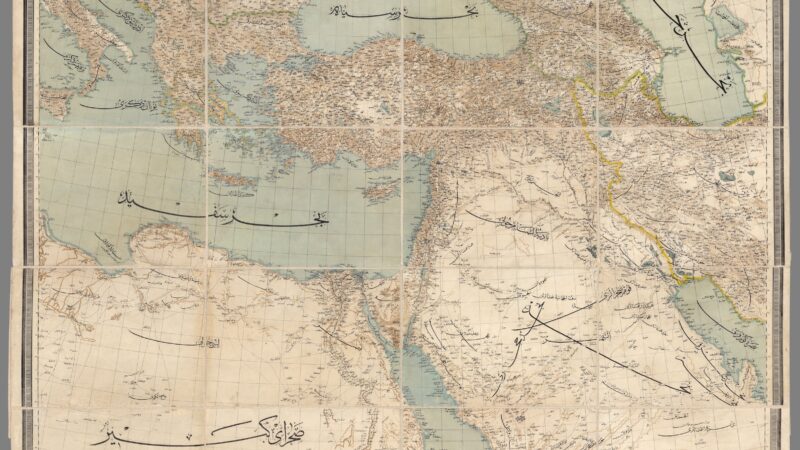
The idea that European colonialism is the original cause of modern day political strife in the Middle East is a popular one both in academia and amongst large sections of the general public. It originated in political science literature in the 20th century but has been ham-fistedly revived in the 21st, particularly in the context of the Syrian Civil War.

The narrative goes that the region was greedily carved up by the British and French empires following their victory over the Ottomans in the Great War. Bumbling colonial administrators drew straight lines in the sand, bounding territory arbitrarily and mixing peoples with arrogant disregard for differences in culture, ethnicity or religion. The resultant states were thus internally divided, unstable and weak – and it’s our fault. While it might be funny to point out the worrying implications this might have for our own enthusiastically multi-cultural society, it’s easier and more effective just to point out that it’s false. In actual fact, the states created by the much-maligned Sykes-Picot agreement have their roots in the pre-war Middle East and were starting to take shape in the 19th century as a result of various Ottoman attempts at reform.

Ironically, most who blame colonialism and Sykes-Picot for strife in the modern Middle East are doing a ‘Eurocentrism’ (a term you’ve certainly heard if you’ve spent any time as a humanities student) by exaggerating the impact of European empires and downplaying the importance of the Ottoman Empire. It’s high time we decolonise our thinking and give deserved credit to the Ottoman Empire for sowing the seeds of destruction in the fields of Iraq and Syria.

Syria, or ‘Suriyya’ as it was then known, began to take shape as a political entity in the mid-19th century as a result of a series of infrastructure improvements that connected previously isolated highlands with the cities of the coastal area of Bilad al-Sham. The creation of the Beirut-Damascus highway by French entrepreneurs encouraged more European commercial activity in the region as Beirut became the link between a significant portion of the Ottoman empire and the industrial economies of Europe.

Prior to the creation of the highway, Syria’s dismal transportation infrastructure left the region fractured and much of its population isolated. Improvements connected people in isolated hinterlands to participate in the economies of the wider region, uniting diverse and divided peoples together and forging a regional (and later national) identity. This infrastructural development occurred parallel with the aforementioned intellectual development that created ‘Suriyya’ out of Bilad al-Sham and the surrounding area. In 1863 local administrative boundaries were redrawn and the province of Suriyya was made concrete for the first time.

Syria was not the only state with a formation that predates Sykes-Picot, either – Iraq developed similarly. Iraq in the early 19th century was even more of an infrastructural backwater than rural Syria. While the main artery of 19th century Syria was the road, in Iraq it was the canal. Steamships in the 1860s cut the journey time from Baghdad to Basra down to just ten days while before it had been four weeks. Just as the Beirut-Damascus highway connected Syria to the world and to European trade, canal routes through the Persian gulf were what connected Iraq.

Although Iraq was never unified as a single province under the Ottomans like Syria was, the group of territories it comprised were referred to commonly by Ottoman administrators as ‘Iraq’ from as early as the sixteenth century. The skeleton of an Iraqi state can be seen also in the actions of the army, which was often organised in Iraq as a separate unit of its own with a headquarters in Baghdad, irrespective of the boundaries of local government. Despite the existence of religious and ethnic differences in both of these nascent states, importantly, all Iraqis rose up against British rule in 1920 as Iraqis and all Syrians rose against the French in 1925 as Syrians.

So we’ve established that Syria and Iraq, at least, were not entities made up by imperialists for their own convenience but rather nations that had formed organically out of a period of upheaval and transformation. However, the 19th century created a lot of disunity as well as unity in the region.

From the seventeenth to nineteenth centuries, poor infrastructure, low literacy rates and the relative remoteness of much of the Middle East meant that religious doctrine could not exert as commanding an influence as it could elsewhere and there was significant blurring and admixture of local communities. In the most isolated areas, lines between Christian and Muslim, and Shia and Sunni communities were blurred such that it was difficult to distinguish between them.

However, Ottoman constitutional reforms – known collectively as the ‘Tanzimat’ (‘reorganisation’) – crystallised this distinction by granting non-Muslims full legal equality with Muslims. The removal of the privileged position of Muslims in the Ottoman empire came at a crucial time of increasing European commercial dominance and penetration. Some Muslim textile workers thus began to resent Christian counterparts who, they felt, were gaining the upper hand on them thanks to connections with Europe and the preference of European merchants to do business with Christians. Local elite, who sought to preserve their power by opposing the Tanzimat were then able to use this to their advantage by framing their opposition to reforms in ethnoreligious terms, fanning the flames of sectarianism. The starkest example of this phenomenon reaching boiling point is the 1860 Damascus riots in which between 5,500 and 8,000 Christians were killed.

In this we can see clearly patterns of sectarianism and a political landscape that is very similar to what we have today. The only thing preventing large-scale violence from occurring up until the 20th century was the existence of the Ottoman state and the authority of the Sultan. However, the Ottoman Empire had territorially been in slow retreat since 1683 and modernisation – attempts to create a Western-style Weberian state – had repeatedly failed or achieved only partial success. The truth is that the importance of the Sykes-Picot agreement and the post-WW1 colonial settlement in the Middle East is massively overstated in comparison to the events of the mid-to-late 19th century, which are massively understated.

The problem isn’t so much that a common misconception exists – history is full of them and this is by no means one of the most egregious – it’s that this falsehood is used in bad faith as a political weapon. It’s a narrative that fits nicely into a far-Left view of the world wherein the shadow of colonialism still lies over the whole world and is responsible for all evil and conflict. It is used to bash British people over the head with guilt so they take responsibility for all that goes wrong in the Middle East, particularly with regard to contentious topics such as asylum seekers, foreign aid and military intervention. ‘It’s our fault, you know,’ they say. It’s pernicious and ultimately ahistorical.


Photo Credit.

Tavistock: Not the Victory the Right Thinks It Is

Shutting down Tavistock gender clinic is not the victory the Right thinks it is.

When it was announced on Thursday that the NHS will be shutting down a children’s gender identity development service (not a noun I ever thought I would use), the Sophie Corcorans of the world jumped onto Twitter claiming this as a victory in keeping children away from trans ideology. However, what those so keen to jump on the celebratory bandwagon fail to recognise is that the reason that this clinic is being shut down is not because it was over-providing its services, but the fact that it was seen to be under-providing them. 

While there have been some concerns raised about the overdiagnosis of gender dysphoria, the main reason for the service being shut down has been due to concerns of under provision. The number of referrals to gender specialists across the country has increased from around 140 in 2010, to around 2,300 in 2020. Whereas in the past gender dysphoria mostly affected men who believed themselves to be women, the inverse is now true, and much of the additional referrals come from teenage girls; the same group who are targeted by all others who seek to create a groupthink craze. These stretch from the relatively harmless, like One Direction fans back in the day, to the magazines promoting anorexia in the 90’s – and in the true spirit of throwing the baby out with the bathwater – the same publications now using Tess Holloway to promote ‘health at any size’. 

Because of the immense increase in referrals, waiting times to be seen at Tavistock are now five years. According to Hillary Cass, who was tasked with reviewing the service and writing a report which was published this spring, the service was under ‘unsustainable pressure’, with the long wait times causing patients considerable ‘distress’ and ‘declining mental health’. While the right picked up the quote that the clinic was ‘not safe’ for children, they failed to see that the reason this was claimed is that their supposed needs were being ignored, as opposed to being sated. 

What this argument seems to ignore is that long wait times are good and necessary when dealing with children with no medically urgent needs. Given the number of young adults seeking to de-transition (aka reverse the alterations done to their bodies during their adolescence), forcing those seeking such services to have a long wait period to consider the permanence and impact of such a decision is an entirely sensible policy. In accordance with the government’s focus on levelling up, a new network of ‘regional hubs’ is being planned to replace Tavistock, despite the fact that for someone in Birmingham or Manchester seeking such a service, the need to make a trip to London may make them consider whether or not their reasons for doing so are legitimate. 

However, the long wait times that have been tacit government policy for decades (and quite successfully, given the negligible numbers of de-transitions until very recently) are now being undermined by private providers with even fewer scruples than the NHS. Given that upper middle-class children of guardian-reading intellectuals are most likely to want to transition in the first place, there has been an increase in private provision of cross sex hormones and surgery, as well as an increase in people going abroad for cheaper surgeries. In order to gain the Brownie points of ‘supporting their trans child’, the parents will do whatever is necessary to fast-track their child’s transition without giving them the chance to change their mind. 

In conclusion, shutting down Tavistock is not a victory for conservatives but a loss. The ideologically driven medicine that was once contained in London for those determined enough to make the journey will now be spread out across the country in order to reach more and more children. If the government keeps allowing supply to grow to keep up with the supposed demand, we will end up with a generation where fewer and fewer young people have healthy bodies, and even fewer with healthy minds. However, the worst offenders in creating this contagion among young girls is TikTok and an educational culture which defines its role as helping children ‘unlearn’ their biases, as opposed to learning the realities of the world: until this changes, nothing will. 


Photo Credit.

Deconstructing Samurai Jack

Samurai Jack was an American animated TV series that premiered on Cartoon Network in 2001 and ran for, eventually, five seasons. The story follows the adventure of an unnamed samurai travelling through a dystopian future governed by a demonic wizard named Aku. What makes Samurai Jack unique is the moral paradigm that can be read into the central premise of the plot, neatly summarised by the tagline of the opening sequence: ‘Gotta get back, back to the past, Samurai Jack.’

The world that the samurai fights to destroy – a world corrupted at every level by Aku’s evil – is unambiguously modern in character. When he is cast through a time portal at the end of the first episode, he falls out into the squalid depths of a futuristic inner city ghetto. He drops out of the sky into a world of towering black skyscrapers, massive electronic billboard advertisements and sky-streets jammed with flying motorcars. The thunderous roar of the city’s traffic disorients and terrifies him.

After barely surviving his dramatic entrance, he is greeted by some locals who give him the name ‘Jack’ and speak to him in what is easily recognisable as a modern urban patois. ‘Yo, Jack! That was some awesome show!’ ‘Word! Jack was all ricochetically jump-a-delic!’ Their manner of speech contrasts heavily with Jack’s own old-fashioned and deliberately measured standard English. When Jack hesitantly asks where he is, he is told by these odd strangers that he is in the ‘central hub’ of Sector D. This is a placeless place, devoid of history or culture and labelled a ‘hub’ of a ‘sector’ in familiarly modern and soulless bureaucratic fashion.

Jack then stumbles into a seedy nightclub where he becomes even more distressed than before. He holds his hands to his ears, desperate to block out the loud, thumping techno music, and looks around wild-eyed at a room full of scantily-clad dancers and hideous aliens with bionic body parts. This new world is too bright and too loud for Jack. The world he came from is tranquil, soft and full of flower-filled meadows, rolling hills and beautiful snow-topped mountains. Aku’s world is vulgar, harsh and obnoxious. Jack is a man out of time, questing through the future in order to return to the past. He fights to turn the clock back in order to prevent the world around him from ever existing and to save the world he once knew. The tale of Samurai Jack is a reactionary, luddite Odyssey.

The first scene of the first episode is like something out of a bad psychedelic trip or a nightmarish fever dream. Everything is uncanny – the sun and moon are too large, the landscape is barren and red and the lone piece of flora in the scene is a twisted black tree. The giant moon eclipses the sun, shooting red lightning through the sky as the tree twists and morphs into the demon Aku. This terrifying moment, complete with deliberately unsettling sound effects, masterfully introduces the show’s main antagonist. It is also a prime example of Tartakovsky’s use of the environment instead of dialogue to evoke emotion and convey information about his characters.

Aku is able to see Jack through a magic mirror at all times, he can shapeshift endlessly and is immune to all physical weapons. Aku is more than a demon wizard – he is a malevolent god. He is informed instantly of Samurai Jack’s arrival in the future by his informant network that, throughout the show, seems to extend into every nook and cranny of the universe. Aku’s armies are inexhaustible, dwarfed only in size by the intergalactic mining operation he employs to sustain it. The entire universe is in the grip of an Orwellian state in the service of a quasi-Gnostic demiurge. The central premise of the show itself implies the extent of Aku’s dominance – dominance so complete as to be completely insurmountable, and able to be defeated only through time travel. Genndy Tartakovsky’s finest creation is a kids TV show set in a world that is incomprehensibly awful, where the main character faces completely hopeless odds and the main antagonist is all-powerful. Jack stands alone, armed only with a magic sword and the power of righteousness, and yet it somehow feels as though Aku fears him more than he fears Aku.

For the first four seasons Jack is an unchanging constant as the setting around him is repeatedly changed in line with his journey. Dialogue and character development are conspicuously limited in contrast to many other shows, but this speaks to the genius of Samurai Jack’s unique formula. The relationship between the main character and the setting are reversed – Jack is the unchanging stage. The story takes place around him but he stays the same, dressed in his characteristic white robes, forever a fish out of water. The only exceptions to this rule are the first episode, where Jack’s character is established, and the final season on Adult Swim, which takes a different and more mature tack.

Genndy Tartakovsky’s work for Cartoon Network is understandably constrained by limits of what is appropriate for children to watch before school, but when the show was moved to Adult Swim it became free to explore darker themes. For the first four seasons, Jack turns his deadly sword on his robotic and demonic enemies only. This allowed Tartakovsky to showcase Jack’s skill, defeating hordes of enemies that sometimes cover the entire horizon, without any graphic violence. The fact that Jacks opponents until the final season remain the minions of Aku, which are overwhelmingly robots, rather than the flesh-and-blood inhabitants of his fallen world is another way in which Aku and his evil are made to seem industrial in character, in opposition to noble, agrarian Samurai Jack.

The entire show is hand-drawn without outlines so that characters blend into their backgrounds. Lineless drawings give the animation a rudimentary, child-like appeal as well as greater flexibility with regard to proportions so that all of the characters’ movements feel powerful and dynamic. Action scenes are one of the great strengths of Tartakovsky’s cartoons – evident in Star Wars the Clone Wars (2003) earlier in his career right through to Primal, which aired just recently in 2019. All of this combined with the use of comic book-esque screen framing make the series feel more like a graphic novel come to life or an anime series than a Western kids cartoon. What’s more, Samurai Jack accomplishes this without sacrificing childish entertainment value.

However, what makes Samurai Jack stand out in a sea of well-animated cartoons is the story. Jack is a unique character that represents a sentiment not often explored in visual media – the sense of longing for a world you’re not even sure exists, or ever existed. The world around Jack is fetid and evil – but the world he remembers, was it ever truly as good as he remembers it to be? Was the world that was ever free of the corruption and evil that so disgusts him about the world – the ‘world that is Aku’ – that he fights to undo? Jack’s sense of alienation is deeper than that of a stranger in a strange land – he is a man trapped at the wrong place in time entirely. Not only is the world foreign, but everything is laced with and governed by Aku’s evil. The very ground on which he walks, the air through which he moves, is hostile to him. In our world where seemingly nothing can escape the plastic-coated grip of modernity, this cartoon asks whether it really is so crazy to feel like you’ve gotta get back, back to the past, Samurai Jack.


Photo Credit.

The Conservative Party, once my ally, now my enemy

I considered the Conservative Party once as my ally. During the 2019 General Election, I found Boris Johnson’s policies admirable. Who wouldn’t want to see the country ‘level up’? Almost all policies I agreed with – except Net Zero by 2050. However, this appeared a relatively insignificant commitment; I assumed they wouldn’t keep it.

Alas, that Net Zero policy I disregarded has turned out to be one of the most significant debates this country would have in 2021. Much fluster was created for the climate summit in Glasgow. COP26, a gathering of globalists and hypocrites was, in my opinion, rather dull. An over-hyped event. I thought to myself that maybe it was a smoke screen to please the ever-growing environmentalists. Maybe it was just a policy that they didn’t want to pursue wholeheartedly after all.

Then I remembered the last 12 months. Chaos after every policy announcement. Chaos with the government. Chaos with the pandemic. It wasn’t just the chaos which I was concerned about, it was the very fabric of the Conservative Party.

Now a Blairite party, the members of the parliamentary Conservative Party have a choice to make. Do Members of Parliament want to reclaim conservative values through the party machine, or do they split off to pastures new?

In this current state, the Conservative Party is no ally to me. If you are a social and moral conservative reading this, then they are no ally to you either.

Social and moral conservatives are losing, for lack of a better term, the ‘culture war’. Recently, four Black Lives Matters protestors were cleared of all criminal charges for tearing down the Edward Colston statue. While this is fundamentally a legal issue, the acquittal speaks volumes to how we deal with protest. Protest should be about voicing concerns peacefully.

Yet, through the Police, Crime, Sentencing and Courts Bill Ministers are clamping down on protest in completely the wrong way. It seems that while the government loves their opinion polls as direction for policy, they cannot gauge the temperature of the ‘culture war’.

And so, it was with no sadness I ripped up my Conservative Party membership. I cannot support this party. David Cameron once said that he was the “heir to Blair”. These words will ring loudly when the Tories find their membership declining. I hope that the electorate and membership of the Conservative Party will realise that the Tories are no ally to the conservative movement.

But you may be asking, what party do I go to now? Well, if you are searching for my opinion, you will be disappointed. I have been politically homeless for some time now and unless the Conservative Party is destroyed there is no reason that I can see to join any other party. The Conservative Party is too large and established to be challenged from a political party standpoint.

Rather, we should be focusing our attention on the issues that affect our everyday lives, such as Covid restrictions. Fundamentally, we are now in a fight for freedom – you must stand up and be counted.

Quote: Now a Blairite party, the members of the parliamentary Conservative Party have a choice to make. Do Members of Parliament want to reclaim conservative values through the party machine, or do they split off to pastures new?


Photo Credit.

Scroll to top