Month: January 2023

On the Invention of British ‘Values’

Contender for the Conservative Party leadership and Prime Minister, Rishi Sunak, has declared that he would widen the scope of our PREVENT programme to include those with “anti-British” attitudes. He didn’t bother to define those attitudes but no doubt they include equality, diversity and inclusion to the extent that I will be sent to the Sensitivity Hub in the Leveled Up North for saying I don’t think young girls should cut their breasts off and that a wider cuisine base is the price worth paying for a million immigrant.

British values have had to be invented in the 21st century because they never existed. I’m sorry, but it’s true – otherwise David Cameron wouldn’t have had to try so hard to either define them or legislate for their respect. I still remember that cringe Google advert from circa 2014 that asked “what are British values” and delighted in showing us a picture of two men wearing kilts getting married. But culture, like air, is only felt in its absence. What’s worse, the definitions that have been foisted upon us of “British values” are only British in the sense that they can be found in Britain, but they are not uniquely British. Is it wrong to say that most of Europe respects the values of “equality, diversity and inclusion”? 

Diversity built Britain, claims a fifty pence piece with a smug Rishi Sunak behind it. This is only true if you buy the Blairite lie that Britain was born in 1997 and actively chose to depart from its millennium-long history thereafter. Yet, these invented values are clearly not powerful enough to inspire the one thing that keeps a country together – loyalty. The chairman of this publication asked the question “what is a nation if it cannot inspire loyalty?” but neglected to interrogate the cultural dimension of that question, focusing on the legal questions of identity. This is like describing a human in terms of their body only, and making no distinction between living or dead bodies; a body needs a soul to be a person. If you don’t believe me, try and sit in the presence of the corpse of someone you know. 

It does not have to be this way; and, when you climb out of the political rabbit hole built for us, you realise it actually is not this way. “Britain” is stamped across everything and pushed into your face at every opportunity – and I’ll tell you what Britishness is shortly. Instead, there is a richer dust beneath that impoverished earth that can be found, if only you look for it: Englishness. 

The left fears Englishness because it is real. It does not fear Englishness because it does what the left wants to do, and better – it does not offer “an inclusive and diverse” society – but they fear it because it inspires so much loyalty and with so much ease. And as with oxygen, you only find it when you’ve been denied it for so long; but this actually makes finding it easier since we are so starved of it already. You can find it in a country pub, at a church fête, at a garden party, at a Christmas church service, in the architecture of Buckingham palace, in the music of Herder and Elgar, in the tailors of Saville Row – in short, in all the places you would not find anywhere else in the world. You don’t find it in a cup of tea, or in a queue, or the other twee nonsense that is so important to the 21st century project of multiculturalism.  

You have to find these things, though. They are hidden, and consciously so – otherwise they threaten the damp, empty and meaningless focus of loyalty you’re supposed to feel, “British”. And Englishness threatens Britishness because it’s so much more powerful. I don’t blame the SNP or Plaid Cymru or Sinn Fein for being so successful. I blame our gutless, cowardly elites. 

It wasn’t always like this. Britain and “Britishness” was only ever a legal identity supported by an English hegemony. There’s a reason that, for so long, writers would use the words interchangeably – it’s because they were. Englishness was unique and different to Scottishness (Welshness doesn’t exist), and quite clearly the animating spirit, the soul of Britishness. Scottish and Irish people might complain today that their culture was “erased” by the British state under an English hegemony, but to the victor, the spoils. England and Scotland had the same population sizes for centuries, and went to war so very often, it’s hardly surprising that one of them would eventually triumph.

English people were aware of this. It’s no surprise that Enoch Powell spoke about this – typically eloquently and with deeper understanding than any living politician – and urged that “Britain” concede its diminished place in the world, surrendering the Empire (and its step-child, the Commonwealth), instead accepting that England is the only real entity worth loyalty. Powell thought that clinging on to a vaguely defined “Britain” at a time when her seapower was basically gone, the massive waves of immigration were becoming the norm, and the European Economic Community was expanding, meant the hegemonic English identity would be turned in on itself, swallowed up, and hollowed out by the desire to make “Britain” as palatable as possible. As with everything else, on this issue Time has proved to be Enoch’s greatest ally, to the extent that David Lammy – who has no cultural or ethnic connection to Englishness – can call himself English. The only reason he can, is because Englishness and Britishness are still mistaken for one another. We have made the mistake of letting an English hegemony be captured by those who hate England.

But this hegemony is almost dead: whilst the last bits of “Englishness” that have dominated “Britishness” are swallowed up, it became the project of the Left in the post-Thatcher years to become even more aggressive in simultaneously undoing that hegemony whilst also turning it in on itself. That first part, of undoing this hegemony, was fuelled by Leftist desires for “equality” between Scotland and Wales, and England, and the farcical idea of Britain as a “nation of nations”, culminating in the devolution programmes that created the fake nation of Wales (still a principality of England, really) and threw the rabid dog of Scotland a steak as if that would satisfy its hunger. You don’t feed the strays. 

Peter Hitchens’ Abolition of Britain catalogues that second arm of the Leftists strategy, of taking the ‘kind and gentle’ civilisation of Britain and weaponising it against the England upon which it was built. Another article published by the Mallard, written by Eino Rantanen, put this point well – “British friendliness has created not only complacency, but rather powerlessness in the face of people and ideologies that have no qualms asserting themselves, often violently”. 

One violent ideology of this kind is the hated enemy of Blairism. Blairism was the final legal victory of the Leftist assault on English hegemony: again, the Blairite elements of the British state have been rightly identified before, but I will list them for the sake of explaining my point: the Supreme Court (which is a nonsense name, the Monarch in Parliament is still supreme); devolution, as I say above; the eradication of our educational heritage by devaluing university; and so on. 

But, this publication has made it its job to be more optimistic, or so I’m told. The situation may look bleak, and I doubt I’ve helped, and this next point might make me sound even more blackpilled: the British project is nearly exhausted. The values that had to be invented in the sundering of the English hegemony of Britain were a sort of proto-globalism – that triumvirate of mediocrity, “equality, diversity and inclusion” have proven to be as empty as the French Revolution’s “liberte, egalite et fraternite” – but some kind of pseudo-cultural identity was needed to keep Britain going. In a way, the Left has dug its own grave, because it took away the only real substance that gave Britain an identity, and replaced it with a set of contradictory inventions. 

And you can see this new public culture everywhere. Indeed, it is stamped across everything, in such a way that you cannot avoid it: for example, despite the fact that June has (somehow, unquestioningly) become “pride month”, there are still “pride parades” everywhere and all the time, and in such public spaces that you need to actively try to avoid them – an inconvenience that they are counting on, of course. And “pride parades” are not even about being gay anymore, or LGBT, or whatever, they’re just an excuse to get drunk and be promiscuous in the street, and you can take part – provided you wear the dress and make up and face paint necessary to mark you out as “one of us”, whoever the “us” is. 

Contrast this, quite literally, with the fact that Eid is celebrated by thousands of Muslims on the streets of London, a religion that is less tolerant of homosexuality than Christianity. And again, you don’t even really need to be Muslim to take part in the celebration of Eid. The fact that these contrasting belief systems are publicly supported and worshipped is the sign of the absence of a communal identity, not its existence; deep and contradictory belief systems cannot be present in the same collective identity. It is just proof that different collectives live in the same space now; and the simultaneous celebration and sublimation of each is the only way their contradiction can be held in check. In the same way that Patrick Deneen wrote in Why Liberalism Failed that the expansion of atomistic individualism required a stronger state, so too does multiculturalism (another invented British “value”). 

Then there’s the fact that every advert – every advert – is full of black people (or, if you want to see intersectional London’s one-step-further form of this, spot the Tube advert with an interracial lesbian couple in which both are wearing face masks). To such an extent that British people think the British population is 20% black (it’s 3%, by the way); and never mind the fact that black people are not Britian’s biggest ethnic minority, we now have a “Black history month”, apparently. You would be forgiven for thinking we lived in America – but maybe that’s the point. 

Where is the room for Englishness in all of this? That’s just the point: there isn’t any, and by design. The desire to strip the England out of Britain by the Left meant that Englishness has to be sublimated in order to for “Britishness” to be viable. But here is the optimistic point of this article: the twin facts that the British project is fraying, and that English culture has to be suppressed, points to a single, irresistible conclusion. Englishness is both too powerful for the new British “identity” to counter, and that it is ripe for rediscovery. 


The final point here is that, the word “rediscovery” is intentional – Englishness has to be found, partly because it is so smothered by that new British pseudo-culture I lay out above, but also because real culture is physical and tangible. You can find English culture hiding in an Anglican church, in a garden party, in the squat village pubs – basically, in all the places that are unique to England and around which a recognisable pattern of behaviour has been built. Englishness can be found once again – you just need to look for it.


Photo Credit

Joe Biden and the Ghost of Ronald Reagan

In an appearance on William F. Buckley’s Firing Line back in 1980, newly inaugurated President Reagan was asked his thoughts on a number of key issues. His responses, despite now being 42 years old, remain all too relevant.

He argued for long-term investment in expanding the oil economy in the face of rising energy costs, an argument that Republicans are making once again as Joe Biden’s cancellation of the Keystone XL pipeline has driven gas prices up to eye-watering levels, compounded further by sanctions on Russian oil. On the issue of inflation, he pointed out that “since government causes inflation, government’s the only one that can stop inflation,” in stark contrast with Biden who prefers to leap from calling inflation “transitory” to celebrating it to blaming Trump to blaming Russia.

Perhaps Reagan’s most pertinent words of advice were on dealing with aggressors:

“The United States cannot recklessly put itself in the position where the confrontation does take place. The United States… should make it plain that [the Soviet Union] can run that risk of having such a confrontation, if they continue with their imperialism and this kind of expansion.”

He followed this by stating:

“I think one of the foolish things we’ve done going clear back to the Vietnamese war is telling potential enemies the things we would not do. For example, when President Johnson repeated over and over again that, of course, we would never use nuclear weapons there. I don’t think we should’ve use nuclear weapons there. But I think the North Vietnamese should have gone to sleep every night worrying about whether we would. We shouldn’t tell them the things that we wouldn’t do.”

Reagan faced a Russian state spreading its imperial tentacles, acting through its various satellites as well as through its own troops – a situation that is playing out once again.

Biden’s tendency to rule out action represents a major stumbling block in dealing with Putin, who knows all too well that the West is simply not ready, militarily or otherwise, for a major conflict of any kind. At his meeting in Brussels, when asked if his clear unwillingness to go beyond a proxy war had “emboldened” Putin, Biden replied, “No and no,” as if saying it twice would make it any less untrue. Obama made a similar mistake by talking big with his “red line” threat but failing to follow up with any action. One can hardly blame Putin for expecting the same from Biden as he effectively acts out Obama’s third term.

When Biden does propose any action, as he did when he mistakenly suggested that use of chemical weapons would be met with a response “in kind,” the White House quickly performed damage control. The net result was an embarrassed Biden, a bemused Putin and a slightly nervous free world.

Whatever one may say about Trump, his unpredictability lent him a Reaganesque quality, with his talk of consequences for America’s enemies being followed through with appropriate, often severe, action, as was the case with his targeted assassination of Iranian military leader Qasem Soleimani.

What is most alarming is that Reagan’s advice, given in 1980, has not been heeded by Biden and his team despite his being in politics since 1976. If he had paid attention, he may not have been called “wrong on nearly every major foreign policy and national security issue over the past four decades” by Obama’s defense secretary Robert Gates. Although he had numerous failings, from Iran-Contra to his response to the AIDs crisis, Reagan was the man who helped end the Soviet Union. If history is to repeat itself, as it seems to be doing, perhaps following in Reagan’s example is the ideal course of action.


Photo Credit

The Rebirth of Europe: Russia’s Invasion of Ukraine

After The First World War, Germany, the main aggressor of the war in Central and Western Europe, was punished severely by the victors and isolated. To oversimplify tremendously, that pushed Germany into a period of chaos from which it did not begin to recover until a decade later. At that time, the Wall Street crash of 1929 was not far away – causing the great depression and drove Germany into the arms of the National Socialists.

After The Second World War, the Allies did not repeat that mistake. The United States’ Marshall Plan sent vast amounts of cash from the US into Europe, to recover and rebuild. Then came the European Coal and Steel Community in 1951 and further developments into the union that it became. Germany (the Federal Republic of Germany at least) bloomed into the economic powerhouse at the centre of European politics that it is today. It is one of the dominant forces in the EU, leading that bloc as a second-tier world power. This is quite an accomplishment, coming from the ashes of two world wars. The economic benefits have been felt by the entire world, and the security that prosperity brought has increased cooperation and good relations across Europe.

The lesson of history therefore is to punish individuals, as the allies did in the Nuremberg trials, not entire nations.

I believe that the Putin regime has set itself on the path to political destruction, and that might take a decade to play out, though I think his regime will collapse far sooner than that. The die is cast, and the beginning of the end for Putin’s Kleptocracy has come.

I do not claim to know how this will come to pass, or what form of government will follow, but the answer from history is to pull in our former enemies, to tie them closely to us economically, and to forgive the mistakes of former regimes – allowing them to repent, rather than be punished.

In the case of Russia, the opportunity has arisen now for us to do what the West very sadly failed to do after the dissolution of the Soviet Union – to bring it into the West, to integrate Russia into our system, to give her both formal alliance and informal respect, that that great nation has always deserved – but which we rightly never gave to a gangster such as Putin.

We in the West should offer the Russian nation all the wealth that it desires and deserves, and which has been stolen from them for 20 years by oligarchs and brutes in their government. By offering them their rightful place in the world, as a second-tier nation and economic power such as Germany, they will have the ability to fulfil the aspiration that Putin (and Trump) often parroted, but never would allow: to be great again.

By doing this, Putin’s old lie of being held back by the West will be destroyed – Russia will return to be a core part of a Christian Europe, and of the West. Though Russia is more than Western, it is Asian too, and should be free to play a strong part in Asian governance/politics, and therefore world politics, as it geographically and culturally strides the world.

The Russian economy will have been desolated in a year’s time, under the current sanctions. Over the summer the Russian oil and gas on which Europe depends far too heavily, and from which Russian receives a vast proportion of its income, will be in far lower demand, and the Russian coffers will empty further. And even more, I’m certain that few creditors will be willing to take on Putin’s war debt.

The Rouble has hugely depreciated in value and an inflation spiral is highly likely. The cost of living crisis in the UK will seem insignificant compared to that of Russia, and this is on top of a 10% drop in living standards since 2014, due to the sanctions which followed Putin’s invasion of Ukraine.

Already, the war chest in reserves that Putin smartly built up has been taken away from him by sanctions imposed on the Russian Central Bank. The base interest rate has risen to 20%, making mortgages and loans far less affordable, and many banks and businesses are being crippled by their exclusion from the SWIFT payment system.

Unemployment will only rise, Oligarchs will increasingly bemoan their loss of wealth, and their exclusion from using London and other European capitals as retail playgrounds and education farms for their children. Those 18 to 26-year-olds who have been conscripted, their parents, and the soldiers who genuinely thought they were on training exercises will all increasingly seek recompense for how they have been treated.

The Putin regime will fall in due course. The West must seize the moment and take the opportunity to free the Russian people by bringing them into Western institutions, treating them as European allies and as a competitor, and no longer as an enemy.

Russia is currently a pariah state because of Putin, and Belarus the same because of Lukashenko, but it must not always be so. Of course, democracy must only come to those countries through revolutions, and must never be imposed upon a nation if it is to be seen as legitimate. But when democracy comes to Russia and Belarus finally, we must pull them in tightly.

Would we rather have a Putin, or an Orban? Putin is an enemy to the West, and Orban difficulty tendencies, but he is limited by EU membership and his nation’s own sentiment. Orban makes EU wide agreements difficult and disagrees with some of its values. Putin would rather the EU were destroyed. I am reminded of the inside versus outside of the tent analogy.

The way to integrate both Belarus and Russia is to bring them into the European and Western system with an economic agreement with the EU, and a partnership or treaty between Russia and NATO. Having democracy, liberty, security, and prosperity will allow the Russian economy and government to iterate, to adjust, and to be brought back properly into Europe culturally.

The point is this; when Putin falls, what then becomes the goal for the West? I believe the objectives should be as follows: To restore the nation and government of Russia to freedom and democracy, to recover her economy to prosperity, and to bring Russia into the fold and identify the true enemy of the West: China.

Russia has meddled, been aggressive, thuggish, kleptocratic and antidemocratic for 20 years now, but China is different.

Make no mistake, President Xi wants to impose his values, and his rule, on the world. He and the Chinese Communist Party are prepared to do this over 50 and 100 years, though it looks like it might not take that long. The CCP does not seek confrontation, but it is growing rapidly in the shadows, and is now the second largest economy in the world and seriously challenging the US as the world power.

Frankly, the West needs Russia on our team if we are to stand up to Xi. That is the real challenge of this century, more than climate change, more than COVID-19, and certainly more than a terrible, horrific war of aggression by Putin into Ukraine.

The West should sagely consider this: Putin’s days are numbered. How do we in the West recover Russia into the European family of nations where it belongs, and properly confront the Chinese, with Russia on our side? If we have no answer to that, then we are lost.


Photo Credit
A Response to Polly Toynbee

“Know thyself” is a most fundamental axiom of Greek philosophy that has been repeated into cliche in philosophy and religious studies classrooms around the world. And yet it is a concept that many seem to forget. To ignore our fundamental presuppositions and the grounding of our beliefs is foolish and to unwittingly seek to undercut them is ideological suicide. 

These thoughts follow my reading of Polly Toynbee’s recent article in the Guardian which seeks to essentially de-Christianise the Christmas celebrations and throws around the terms ‘cultural Christianity’ and ‘humanism’ as a way to legitimise her thoroughly anti-Christian position as some kind of reasonable middle ground/self-critique. A contradiction for sure, as she lampoons the foundations of Christian belief and excoriates the actions of early Christians. If we attached power cables to Friedrich Nietzsche’s grave, his rolling would probably solve the present energy crisis our country is currently undergoing. 

Cultural Christianity, at the very least, demands an adoption of Christian morality and admiration for Christian tradition and history that is ridiculous to maintain in lieu of actual religious belief and makes me wonder why one doesn’t go all the way to believe in God too. Perhaps we consider the morality of ‘love thy neighbour’ as not necessarily an exclusively Christian belief but the very mindset that the European and American lives in are framed by Christianity – from the Protestant work ethic to our preference for monogamous relationships. Believing in the morality, mindset and general worldview of Christianity without its origin and basis, the teachings of Christ and the existence of God is vapid and naive. Why is marriage a sacred, inviolable contract if its primary advocate is not even real? (or dead).

This mindset is ultimately pointless and shallow and seeks to provide its own moral foundation with an appeal to some kind of tradition, popularity, or history – merely copying a greater tradition than itself. Ms Toynbee’s self-critical cultural Christianity is further called into question as nothing more than a veneer in her decidedly un-historical diagnosis of Christianity as anti-philosophical, anti-mathematical and anti-intellectual. The church is aware of its failings as a human institution, our own doctrine expects this and our scripture reminds us to be constantly vigilant against sin and our nature. Unfortunately, examples in history can be dragged into scrutiny to illustrate the failures of our forefathers. Maybe certain Popes and church leaders resisted the progress of science, or maybe the condemnations of 1277 sought to strangle ‘heretical’ elements of Aristotelianism out of medieval philosophy, but it isn’t appropriate to attribute particular mistakes by fallible humans to the wider religion. To do so is to be blinkered to what Christianity has provided and what it stands for.

Many of the greatest leaps in mathematics and science were accomplished by monotheists, algebra was pioneered and beautifully developed during the Golden Age of Islam and much of modern science owes its exposition and articulation to Christianity: Newtonian physics, Mendelian genetics and even the Big Bang Theory originate from Christian scholars. As for philosophy, while the discipline in the medieval period did develop in partnership with theology, the enlightenment saw the emergence of important secular thought among many Christian thinkers. For one example, Immanuel Kant, the father of modern philosophy, sought to use God to justify human freedom and escape relativism and nihilism; providing a philosophical framework that has shaped the European zeitgeist. There is a good case to be made that most Anglo-American philosophy that traces back to Hume is essentially a secularisation of the work of William of Occam; a Franciscan monk. Yes, certain Christians supported the barbaric practice of slavery but subsequent Christians spearheaded the abolitionist cause and rebuked their forebears. To accuse Christianity of being backwards because some nuns teaching children attempted to use theological themes to encourage good behaviour is intellectually immature. Ms Toynbee can chase caricatures and mistakes by certain people in order to try and hurry Christianity out the door as much as she wants but her arguments are largely rebutted by a cursory reading of history. There is no real correlation between Christianity and intellectual stagnation. 

A point that is interestingly used to drive her case forward is to complain about the largely ceremonial title of Fidei Defensor, which our monarchs adopted as an ironic jest at the Papacy. It is a somewhat nickel and dime point to analyse the declaration of the Anglican church’s independence – remember that the monarch is also the (ceremonial) Supreme Governor of the CofE: a broadly ceremonial title. Surely then, in an institution that is allegedly racist and backward, we should be welcoming Charles’ declaration to defend all the faiths of all of his subjects even if he is styled with a ceremonial, historic title? Dwelling on the ‘the’ seems to be counter-productive. These nickel-and-dime points come across as the bread and butter of this article – We can see another example of these snipes in her discussion of assisted suicide. To say that life is sacred and that assisted suicide is a slippery slope somehow makes our elected officials dangerous radicals that are out of touch with the electorate. This polemic move is extremely dishonest. See the advancement of medically assisted suicide in Canada as an example of the practical risks associated with this policy. 

Maybe this response article is also rising to the nickel and dime bait. The debate could rage forever, as glib anecdotes and controversies are thrown about to illustrate the evil of the ever-vengeful skydaddy and his charlatan prophet. But let’s not forget the message of Christmas in the Gospel – a message of love, hope and the salvation of mankind by God who loves His creation and wants nothing more than to reconcile our broken relationship.

So this Christmas remember that the secular values we associate with it – family, reconciliation, joy, giving and altruism – stem from a message of divine love and peace with a promise to end human suffering. Ms Toynbee’s vision of a secular winter holiday is not possible without the Incarnation.


Photo Credit.

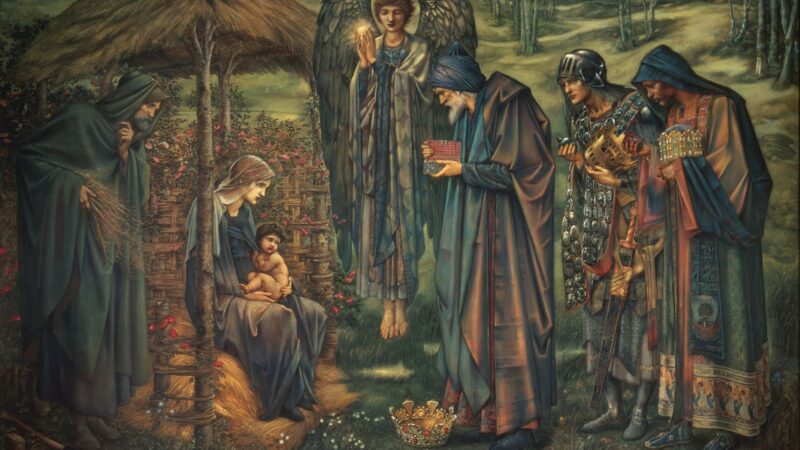
A sermon for Christmas day

“And the Word was made flesh, and dwelt among us full of grace and truth” – and so history began; the beginning of the perfect expression of the unchanging doctrine of the Church of God.

Turkey, gifts and – at least in my case – cigars are only incidental to the Birth of our Lord, and so I want to move past these things for this sermon. Other Holy Days in the Christian calendar are observed appropriately; Palm Sunday involves the distribution of palm crosses; Easter Sunday is when the Gloria is sung following its omission during Lent to mark the joyous occasion of the Resurrection of Jesus. So it is odd how many Christians mark Christmas with elaborately decorated trees, bright lights and lavish family gatherings, when the first Christmas celebration was meek, drab and in a stable.

We know through Scripture in the second chapter of Luke that the Christ spent his first hours in a stable, likely an unpleasant place to be for Joseph and the Blessed Virgin Mary – especially given how she had just given birth, and probably desired animal-free peace and quiet. Not only this, but on that same night three scruffy, ritually unclean shepherds arrive unannounced, excitedly, and very interested in the newborn Jesus. Contrary to popular belief, the Magi, or the Three Wise Men, did not arrive on the same night, and not at the stable, as the Shepherds. The 19th-century Bishop of Wakefield Walsham How wrote in his commentary on the Four Gospels that it is best to suppose that the visit of the Magi took place “at some period after the Purification and Presentation [of Jesus] in the Temple”, especially given how King Herod ordered the deaths of children aged up to two years when he had heard the Magi had not delivered Jesus to him. The gifts of gold, frankincense and myrrh associated with Christmas through the Magi were then not actually given on Christmas itself, making the day of the Birth of Jesus seem all the less glamorous. In other words, it was simple.

None of the aforementioned scripture is that which is appointed to be read on Christmas Day in the Book of Common Prayer; the Gospel reading is from John 1, beginning at the first verse. Returning to Bishop Walsham How, his commentary on the context behind the Gospel according to John reveals that as one of the Apostles closest to our Lord, John sought to “record the deeper spiritual truths” for more mature Christians. There is no better example of this than the reading for Christmas Day.

John’s Gospel talks of “the Word” in the beginning (the beginning before all time and creation which is eternal), and this is a term that has caused controversy. The roots of the Gnostic heresy were, in part, down to the understanding of who or what the Word of God is. Some believed that Jesus Christ is not the Word, and others believed that the Christ is a lesser being delegated to rule over us by a supreme god. John makes true doctrine clear throughout the passage: the Word was with God; the Word was God; all things were made by Him; the Word became flesh in Jesus Christ.

The several points made by John illustrate the crucial Father and Son relationship in the Trinity. The Word was with God to show that the Word is distinct and a person, not a mere attribute, but the Word is God to show that person is still very much God. This has always been so, as demonstrated in a parallel with Genesis when it is said that all things were made by Him. The Word of God is not some new creation – He has always been – but the Word did come into the world as a man at a certain point. It is by understanding John’s first chapter that we Christians can fully understand the Nativity.

Other prophets, such as Jeremiah, had births of special note to God, but there had been none up until now of this sort of significance. The person who had created everything, formed mankind and was the true, perfect expression of God’s Will became incarnate in an insignificant little stable, in one of many towns that people were moving to in order to register for a census. As mentioned earlier, the birth was simple in many respects, and it may feel odd to decorate Christmas with bright lights. Is this the full picture of Christmas, though?

St Luke tells us that angels appeared to the shepherds praising God and singing, and that they glorified the Lord. This day was almost certainly a day of celebration for them; the Angel of the Lord himself said that the news will bring “great joy”, though this was not the case for all. The Birth of Jesus caused a great stir in Jerusalem, and there was no-one more worried than King Herod about what he saw as a challenge to his earthly power. By both metrics of joy and fear, the Birth of the Christ was in no way insignificant for the world. The coming of the light of the world should be a time for great, significant joy and events – gathering families and enjoying the warmth of the Lord. Jesus’ Nativity was a simple affair, and yet it appears that we should mark this simple event elaborately.

The point was not to demonstrate to us to have an unpleasant birthday, or some more ludicrous interpretation, but that from such a humble nativity a Saviour was given to us. From a stable in Bethlehem, the years are dated and Christ’s Kingdom spread across the world – how greater will the greater Second Coming, in glory descending from the clouds, be? The anticipation for the Second Coming mirrors the anticipation one holds during Advent; perhaps we can use this time to reflect upon our own enthusiasm for this annual church festivity, and apply it to the wider wait for the coming judgement, when the faithful will be brought to Heaven.

As we, especially us in the more traditionalist churches, celebrate in the same way every year that God came to save us at first as a poor, helpless babe, let us reflect in the words of the Epistle for Christmas day reflecting on the temporal world; “they shall perish, but thou remainest; and they all shall wax old as doth a garment; and as a vesture shalt thou fold them up, and they shall be changed; but thou art the same, and thy years shall not fail”. Go forth, be merry, and remember that the Christ, your Saviour Jesus, came to this world to save sinners. Amen.


Photo Credit.

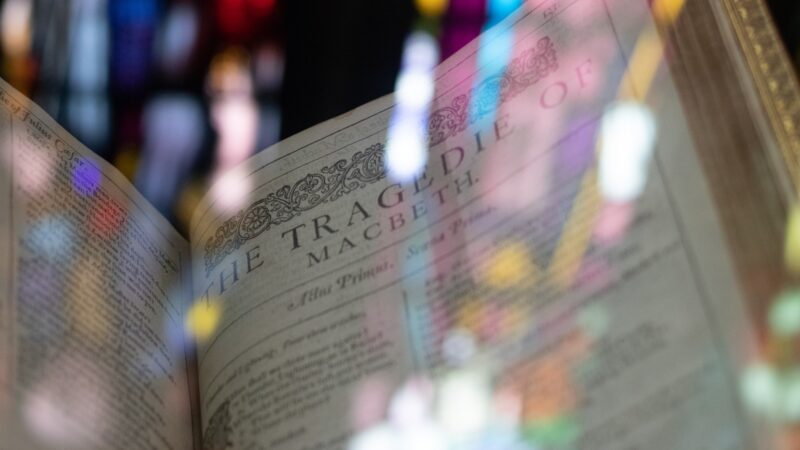
Dark Humor for the Red King: The Drunk Porter in Macbeth

“Knock, knock—who’s there?”

Whenever one of my tutorial students is assigned (or, let’s be honest, barely mentions) Macbeth, I go into a certain and by now well-rehearsed tangent on how Shakespeare’s arguably darkest play contains one of the most peculiar scenes in his canon—and the origin of what is now considered a passe pretext to employ a bad pun, the knock-knock joke. Mentioning that last part usually lands me at least a few minutes of fleeting teenage attention, wherein I talk about everything from Shakespeare, to dark humor, to how Shakespeare’s darkest tragedy produced one of our lightest joke forms.

Of course, the knock-knock joke, as we know it, owes less to Shakespeare than to the innovation of 1930s English radio host Wee Georgie Wood, with his turning the Porter’s words into his catch phrase of “knock, knock, who’s there?” By the middle of the Great Depression, when the average Joe and Jane were presumably in need of an easy laugh, the joke form was sufficiently popular in the US that a Columbus, OH, theater’s contest for the best knock-knock jokes was “literally swamped” with entries (I’m sure the $1 cash prize didn’t hurt the contest’s popularity). The popularity of the supposedly low-humor knock, knock joke amidst the depression (both economic and psychological) may not owe anything directly to Shakespeare, but I do think it relates back to the original Porter scene, which is the main subject of this article.

My purpose here is not to provide a definitive reading of the Porter’s monologue, nor to ultimately solve the puzzle of what, exactly, the scene is doing in the play; better scholarship is available for those interested than the motes I will, nonetheless, offer here. My aim is to consider what Shakespeare’s following arguably the least justified regicide in his canon with a comical drunk can tell us about humor’s role in helping people navigate tragedy. And, if it sheds light on why knock, knock jokes (or other seemingly low, tactless, or dark forms of humor) may grow especially popular in uncertain times, so much the better.

“Here’s a knocking indeed!”

Macbeth Act 2 Scene 3                                                      

[Knocking within. Enter a Porter.]                                                            

PORTER     Here’s a knocking indeed! If a man were

porter of hell gate, he should have old turning the

key.

The lone on-stage partaker in the carousing at King Duncan’s visit to Inverness, the drunken Porter is one of the play’s few examples of plebians not directly connected with the nobility. However, unlike Hamlet’s Rosencrantz and Guildenstern, the Porter remains, like a latter day Falstaff, insulated against the intrigue that surrounds him by drink, imagination, and low jokes.

Brought onstage by the knocking of MacDuff and Lennox (as if in ironic answer to Macbeth’s present wish that Duncan might wake), the Porter shows that, like Macbeth, he has a very active imagination. In fact, since Coleridge’s dismissal and omission of the scene as an inauthentic interpolation, many 20th-century critical readings have safely secured it back in its rightful place by pointing out, among other things, the Porter’s not merely contrasting but paralleling his master. Presumably rudely awakened and hungover, he fancies himself the porter of Hell and in the employ of a devil. Of course, the supreme irony throughout the scene involves his ignorance of how close to the truth his fantasy comes.

(Knock.) Knock, knock, knock! Who’s there, i’

th’ name of Beelzebub? Here’s a farmer that hanged

himself on th’ expectation of plenty. Come in time!                       5

Have napkins enough about you; here you’ll sweat for ’t.

The Porter imagines admitting three denizens, each of whom, scholars have noted, can stand as a metaphor for Macbeth and his actions. The first imagined entrant is a farmer who, having hoarded grain in expectation of a shortage, hangs himself at the price drop produced by a surplus. As the play, if not the tragic genre, itself, is about the ends not aligning with expectation, the image of the farmer of course foreshadows the results of Macbeth’s betting too much on the Weird Sisters’ presentiments. Although in the end it is Lady Macbeth who commits suicide, Macbeth’s language near the end becomes more fatalistic the more vulnerable he gets, with his final fight with the prophesied MacDuff amounting to arguable suicide (to see an excellent rendition of the swap of Macbeth and Lady Macbeth’s psychologies by play’s end, see Joel Coen’s The Tragedy of Macbeth—and my review of it). Adding to the irony of the scene is the fact that, according to Christopher Jackson, Shakespeare, himself, was an investor in and hoarder of grain against shortages. One wonders how many times he had thought of the image before writing this scene—and if he smirked while employing it. 

(Knock.) Knock, knock! Who’s there, in th’

other devil’s name? Faith, here’s an equivocator

that could swear in both the scales against either

scale, who committed treason enough for God’s                           10

sake yet could not equivocate to heaven. O, come in,

equivocator.

Next in the Porter’s fantasy is an equivocator, one whose ambiguous use of language can help him with earthly scales but not heavenly. Historicist critics point to this moment as an allusion to the Jesuit father Henry Garnet, executed in 1605 for his participation in the Gunpowder Plot (to which 1606’s Macbeth can be read as a reaction). In his trial, Garnet was criticized for equivocating to keep from revealing details of the plot without explicitly lying; he was subsequently hanged, drawn, and quartered in May 1606.

While said reference is informative, if nothing else, about Shakespeare’s possible view of the Gunpowder Plot (unsurprising to anyone who knows what happens to regicides in his canon), one’s reading should not stop there. The Porter’s landing an equivocator in Hell points, again, to the play’s titular character. It should be remembered that before he commits the play’s central tragic act, Macbeth goes through a rigorous process of thought to spur himself to the deed, often playing on or completely omitting language—that is, equivocating—to justify the assassination (which, as a word, is first used in English in his “If it were done when ‘tis done” speech in I.7; not carrying the weight it does today, the coinage was an example of Macbeth distancing himself from the reality of the murder).

Furthermore, the Porter’s focus on equivocators here and later in the scene (he displays some comic equivocation of his own on the virtues and dangers of drink, unknowingly stalling MacDuff and Lennox long enough for Macbeth and Lady M. to cover up Duncan’s murder) foreshadows Macbeth’s beginning “To doubt the equivocation” of the Weird Sisters’ prophecy about Birnam Wood’s coming to Dunsinane (V.5). Indeed, the infernal dangers of ambiguous language (or of trusting one’s initial interpretation thereof) constitute one of the play’s primary themes. Among other things, Macbeth’s pointing this out establishes a further parallel between the Porter and himself.

(Knock.) Knock, knock, knock! Who’s

there? Faith, here’s an English tailor come hither for

stealing out of a French hose. Come in, tailor. Here

you may roast your goose.

The last of the Porter’s imagined wards has landed in Hell for cheating English courtiers while providing them with French fashion; whether he played on his customers ignorance of how much the new fancies cost or whether Shakespeare—err, the Porter—is making a joke about French fashion being worthy of eternal damnation, I’ll decline to decide. Perhaps both readings (or one I’m missing entirely) are meant, offering sympathetic humor to both courtiers who have been gulled with exaggerated prices and to the commons who might enjoy a good skewering of the foppish trends of their betters. The dual metaphor of the roasted goose—referring both to a tailor’s hot iron called a “goose” and to the idiom “his goose is cooked”—continues the play’s theme regarding the dangers of trying to succeed through proscribed means, besides adding to the dramatic irony of the Porter’s describing his own boss’s trajectory.

(Knock.) Knock, knock!                              15

Never at quiet.—What are you?—But this place is

too cold for hell. I’ll devil-porter it no further. I had

thought to have let in some of all professions that go

the primrose way to th’ everlasting bonfire. (Knock.)

Anon, anon!

The Porter, like Macbeth, seems to have an imagination as limitless as it is abysmal—such that he could presumably find a place in it for individuals of all professions. Also like his master, he fantasizes about a position higher (or, rather, lower) than he currently holds. That he stops not for lack of imagination but for the prosaic physical discomfort of being cold contrasts with how Macbeth eventually gives up all comforts in trying to achieve the crown. However, even here he parallels Macbeth, as both are ultimately unable to keep reality—whether the cold or the vengeance of the prophesied MacDuff—from interrupting their fantasies.

And yet, that the Porter identifies Inverness, itself, as too cold to sufficiently imagine Hell is, itself, a possible nod to the, under James I, verboten Catholic-Thomistic-Aligherian view of Hell’s lowest levels as being the frozen lake of traitors. However, Shakespeare skates past the Protestant censors, for it is not Hell the Porter is describing, but Scotland, and at its center at the very moment preceding this scene is not Satan, or the traitors Judas, Brutus, or Cassius, but Macbeth—who is, of course, all of these.

“…it provokes and unprovokes…”

 But why does the Playwright link the worst regicide in his canon to a comic scene? Of course, as I mention above, plot-wise the Porter stalls the discovery of the play’s central crime. Furthermore, thematically the Porter both contrasts and mirrors Macbeth, which in different eras has been interpreted as alternatively demonizing the latter by the monologue’s subject and humanizing him by stressing a congruence with the common man.

The impropriety of the scene—joking about souls lately gone to Hell, when the unshriven Duncan, himself, has just entered the afterlife—highlights the very tension from which the Jacobean audience may have needed relief. As has been pointed out, an assassination plot against James I and Parliament had just the year before been foiled. Moreover, set in a medieval context where the death of a monarch had cosmic repercussions, the choice to distance the focus from the play’s main action may have been meant to increase the suspense—here, not merely the suspense before an expected surprise, but also the chaotic metaphysical suspension between monarchs—rather than comically relieve it. And this is assuming the comic relief does not fail due to its utter tactlessness, or to a high number of Malvolios in the audience determined to see the scene as an interruption of the play’s sombre pathos.

And yet, even being outraged by dark humor accomplishes the humor’s possible goal of helping one navigate a tragedy. For that is what I believe this scene—and most dark humor—is meant to accomplish: facilitate the audience’s psychological survival of the author’s darkest tragedy. Both inappropriate laughter and rage at impropriety—and even confusion about the scene’s strangeness—are preferable to the despair that leads eventually to Macbeth’s nihilism and Lady Macbeth’s suicide.

The Porter is not a good guy; indeed, his humor, like Falstaff’s, inheres in his being disreputable. Similarly, the scene is not openly funny, nor does it offer any kind of saccharine “everything will be alright” triteness. I, myself, am not satisfied to read it the way the play at large has conventionally been interpreted, as an implicit promise that divine justice will prevail and Macbeth will get his comeuppance like the farmer, equivocator, and tailor do; there are too many questions about Scotland’s future left unsatisfied by play’s end to settle on such a reading, just as there are arguably as many parallels between Macbeth and the play’s hero MacDuff as between Macbeth and the Porter. Rather, the scene’s salutary power paradoxically lies in its pushing the horror of Duncan’s murder even farther—by joking about souls lately knocking at Hell’s gate, with the Porter standing in as a kind of anti-St. Peter at the Pearly Gates. In so doing, the Porter scene lampoons the Macbeths’ expectation that they can somehow cheat fate, and his scene, more than the one before it, foreshadows the trend of the rest of the play.

As with the subtext of other examples of ironic humor, the Porter is not mocking the sympathetic Duncan, but implicitly commiserating with him and other victims of fate, fortune, or perfidy. By following Macbeth’s crime with a drunken Porter utterly disconnected from it who, nonetheless, perfectly names and exagerrates the themes involved, Shakespeare subsumes the play’s tragic act into the absurd, at least for a moment—and a moment is all that’s needed. By pointing out the reality of the play’s horror while safely containing it within a hyperbolically ironic, almost Chaucerian, tableaux, Shakespeare sets the standard for how well-placed instances of low and dark humor—from knock-knock jokes to self-deprication to suicide memes—can help contextualize tragedy, depression, and trauma in manageable ways.

One might balk (quite rightly) at the idea of telling a joke right after a tragedy like the assassination of a beloved king, considering it too soon and not the time for humor, but Shakespeare? Apparently he thought that was exactly when to employ humor—especially of a certain darker yet therapeutic type. It’s taken a few centuries, but scientific studies, so far as they go, have caught up with and confirmed Shakespeare’s using such humor as a way to help his audiences regulate their emotions in his plays’ more dreadful moments. Far be it from us to censure what the Playwright thought within the pale—and how dare we dismiss even the humble knock, knock joke as anything but profound and, sometimes, just what we need.


Photo Credit.

The Marvelisation of Ukraine

The discussion has never been stupider.

The relative infrequency in which western audiences are exposed to war means that every time a conflict breaks out, enormous advances occur not just in technology or strategy, but in culture too. Whilst the First World War showed the power of industrialisation, the Second showed the potential of modern media to be harnessed as propaganda and the Gulf War demonstrated the importance of emergent 24hr news coverage.

Those who have followed the war in Ukraine through Twitter may have noticed a similar cultural shift. Russia, whose information warfare capabilities have been for so long held up as an aspirational standard for other nations, appears to be losing the battle online. Even well-paid RT journalists who were quite happy to continue shilling through the poisonings in London and Salisbury, the Russian downing of an airliner and the annexation of both Donbass and Crimea are now resigning – shocked to find unfriendly propaganda being produced by their own organisation.

The news is not that the Russians have, in PR terms, been internationally out-maneuvered. They are the aggressor (and a much more powerful one at that), they’re non-Western and non-democratic. The government does not respect liberal values – or human life. There was never much support or sympathy for Putin or his regime overseas and many are taking the side of Zelensky. Rather, the noticeable shift has been in the way that Ukraine has been discussed online and in how support for Ukraine is being expressed. What we are witnessing is not so much the lionisation of Ukraine as the Marvelisation.

In order to make sense of complex foreign events, people have always had to distort and simplify in order to find a frame of reference they understand. It’s why so many of our baby-boomer politicians end up talking about Munich and appeasement. The horrors of Nazism are the defining moral event of our modern age, to which our revulsion is universal. With such a point established, it is easy for people to rely on it to establish the defined evil of the opposition position, mawkishly conjuring images of them taking the noble and justly defiant stand of David Low: ‘Very well, alone.’

The frame of reference for Boomers is the Second World War. But for the terminally online generation, it is Marvel films. Post-invasion, Marvel’s The Winter Soldier began to trend as the conflict was compared to the film. The number of people replying ‘Yo, Thanos fr?’ to this obvious meme tweet is deeply troubling – the fact it had to be taken to a fact checker even more so. People are campaigning for Jeremy Renner to be cast as Volodymyr Zelensky. There is a dangerously high number of tweets achieving near apocalyptic-levels of cringe by depicting the Ukrainian leader as ‘Captain Ukraine.’ But why would anyone compare a real-life conflict with a superhero film? The people committing these atrocities against intellect are desperately seeking a cultural reference to fit into a narrative of good vs evil, and sadly the narratives with which they are most familiar are Marvel ones.

The use of both Marvel and the Second World War as rhetorical devices have much in common. For groups with relatively little understanding of international relations, of diplomacy or history, both offer a reference point that is almost universally understood. Marvel’s films achieve titanic viewing figures, and we must not forget that boomers grew up in a world where the Second World War was still a common subject for films and programmes. That means, at least, that there is a common understanding, and ensures that everyone is roughly on the same page.

The clear-cut ‘good guy vs bad guy’ narrative of Marvel films, much like the universal revulsion to the crimes of the Nazis, also provides an easily defined good vs. evil narrative, of just war, deo et victricibus armis. Once you identify yourself and your chosen side with Winston Churchill – or Ironman – you have taken position on the moral high ground. It is a way to dismiss the position of your opponents and establish your own as self-evident without worrying too much about the niceties of debate. There is no room for subtle nuance, for allowing that perhaps there has been a categoric failure of western foreign policy in the build up to Ukraine, or that appeasement was a sensible, logical policy borne from Chamberlain’s calculation that the longer war could be delayed, the better Britain’s chances, as James Levy argued. Relying on the black-and-white nature of Marvel or the Second World War means a debate has no room for nuance – indeed, this is rather the point. There is no room for Kissinger’s constructive ambiguity – the extent of the understanding is limited to them BAD, we GOOD.

The use of Munich as a parallel for everything in international relations should be derided. There are some cases in which it is a genuinely useful historic parallel; but in the main, it is a poor example that betrays a lack of understanding. Prior to the invasion, for instance, Tobias Ellwood MP called for a ‘Churchillian approach’ to the crisis. What Ellwood meant was that his course of action would have been Churchill’s – brave, daring, bold. Any other potential action was Chamberlain’s – servile, cowardly, fit only for the effeminate nursings of the seraglio. Given that Churchill was perfectly prepared to assign Eastern Europe as a sphere of Russian influence in the Percentages Agreement, Ellwood’s call was deeply historically inaccurate, but it did at least serve to remind us that he has both the heart of a lion and the brain of a sheep.

The use of Marvel as a parallel for anything in international relations should also be derided. Every mention of a character from a superhero film in discourse this important should be greeted the way my girlfriend greets me when I get home from work – with thinly veiled contempt. They are a way to infantilise a complex situation. Watching films, as with all visual media, requires perception rather than conception. Marvel films don’t require understanding, insight or intelligence – the good will eventually win out, as it always does. Gasp as the superhero defeats the bad guy just in time to save the world for the 4,927th time running.

Marvelisation is deeply crass, as crude and unrefined as the oil western nations are still dependent on Putin for. But it is not solely driven by a lack of empathy. The main driving factor is more simple. It is content platforms doing what they do best; producing content. There is a gaping chasm in the timeline, and it must be filled with content. Ukraine is more than a war; it’s a chance to go viral, to close a real, discernible gap in the race for retweets.

A war set to displace and kill thousands seems an odd place to seek new content from. But it is not a new phenomenon. In The Gulf War Did Not Take Place, Jean Baudrillard posited that the slick media presentations, such as Norman Schwarzkopf’s ‘Mother of All Press Conferences’ and constant media coverage from the new 24-hour news channels made it essentially impossible to identify what actually happened. Since the Gulf War, the internet has only accelerated this process of conflict becoming content. War has become a hyperreal simulacrum, indistinguishable from other forms of visual media. War is to be consumed. As Zelensky films himself walking around Kiev, the Twitter hive-mind of Marvel audiences immediately turns to Jeremy Renner because they are almost totally unable to distinguish the real world of war, of which they have no experience,  from that of Marvel, which they are deeply familiar. For them, watching Ukraine unfold is no different to watching a new show. For Ukrainians, it is a grim daily reality. 


Photo Credit.

Putin’s War: A Tale of Soviet Romanticism and Western Ignorance | Daniel Hawker 

With Russian troops having begun a full-scale invasion of neighbouring Ukraine, President Joe Biden was recently asked by a journalist “Do you think you may have underestimated Putin?” In response to the question, the supposed ‘most powerful man in the world’ offered merely a smirk and proceeded to sit in silence whilst his team rushed to stop the video recording. This was inevitably due to the honest answer being yes – the warning signs have been evident for decades. Let us first consider the historical basis for the invasion.

Vladimir Putin’s position as a Soviet romantic has come to be a defining aspect of his political image. In his 2005 state of the nation address, he notably referred to the 1991 collapse of the USSR as “the greatest geopolitical catastrophe of the century”, an event which left “tens of millions of our fellow citizens and countrymen … beyond the fringes of Russian territory”. It is this Slavophilic perspective that is paramount in understanding the motives and aims of Russian foreign policy in Eastern Europe. With the fall of the USSR came, according to Russian nationalists, the mass displacement of Soviet citizens outside of the Motherland. Millions of Slavic people, all of whom shared a rich cultural history, now living within the borders of independent states, stripped of their collective identity. At this time, young Vladimir Putin was working for the Mayor of Leningrad, and this moment came to shape his ideology and vision for Russia’s future (and the future of former-Soviet satellite states).

Ukraine however, has always occupied a special place within Russian romantic nationalism. The Russian Federation actually has its origins in modern-day Ukraine – specifically the Kievan Rus’ federation (consisting of East Slavic, Baltic and Finnic peoples), which existed from the 9th to the 13th century. Linguistic and cultural roots remain strong, with most Ukrainians also speaking Russian, especially in the eastern and southern parts of the country. Whilst a region of the Russian Empire (and later the USSR), Ukraine was a crucial region for agriculture due to its soil, which is exceptionally well-suited to the farming of crops.

Given this intertwined history, a key tenant of Putin’s romantic mindset is the idea that Russians and Ukrainians are one people, and must therefore exist within the same state. This view was most recently revealed in a 2021 article written by the president, titled ‘On the Historical Unity of Russians and Ukrainians’, in which he affirmed that “true sovereignty of Ukraine is possible only in partnership with Russia”. Stella Ghervas, a professor of Russian history at Newcastle University, has explained that “the borders of the Russian Empire in 1914 remain a point of reference from the Kremlin up to this day”.

However, it seems that the West has chosen not only to ignore how ideologically desperate Putin is to reclaim Ukraine, but also how brutally willing he has been to utilise hard power to achieve his expansionist aims. 2008 saw artillery attacks by pro-Russian separatists (backed by Putin) in the South Ossetia region of Georgia; 2014 brought us the infamous annexation of the Crimean Peninsula, and 2021 saw a mass-movement of Russian troops and military equipment to the Ukrainian border, raising concerns over a potential invasion. These examples should have clearly demonstrated to Western powers the lack of respect Vladimir Putin has for national sovereignty, and that once his mind becomes fixated on regaining lost Soviet territory, he can’t be easily dissuaded. With this in mind, the invasion of Ukraine should be viewed as the inevitable and long-awaited finale to Putin’s expansionist concerto.

The response to the latest developments is hardly surprising: economic sanctions appear to be a firm favourite amongst Western leaders; Boris Johnson has sanctioned five Kremlin-friendly oligarchs and aims to target “all the major manufacturers that support Putin’s war machine”, whilst Joe Biden has levied penalties against major Russian industries and frozen the bank assets of the regime’s major figures. An international effort has also been undertaken, with the UK, US, EU and Canada agreeing to cut off a number of Russian banks from SWIFT, the international payment system. However, such sanctions, especially those against individuals, have received pushback. Following Crimea in 2014, the late and greatly-missed philosopher Sir Roger Scruton published a piece in which laid out how believing that sanctions against oligarchs “will make the faintest difference to Russia’s expansionist foreign policy is an illusion of staggering naivety” – having faced the threat of increased sanctions since then, Russia has built up foreign currency reserves of $630bn (akin to ⅓ of their economy).

In terms of military responses, the general consensus is that Western troops won’t be deployed, and there is a simple logic to it – Western populations have no real hankering for a war: two recent YouGov polls revealed 55% of Britons and 55% of Americans oppose sending their own troops to fight in Ukraine (for the United States, last year’s disastrous withdrawal from Afghanistan undoubtedly turned the public off of war for a while). However, NATO troops have been deployed to Eastern Europe, and we’ve also sent 1,000 soldiers to Hungary, Slovakia, Romania and Poland, in preparation for the inevitable outpouring of innocent and scared Ukrainian families.

 Whilst the objectives of the Putin regime and the long-term naivety of the Western order are the two primary factors, the West’s role in bringing this situation about must also be acknowledged, for the sake of honest discussion. In the early 1990s, Boris Yeltsin expressed his desire for Russia to one day join NATO; Putin echoed this in 2000 when Bill Clinton visited Moscow. Despite Russia at these times being a fledgling democracy, they were turned down by the alliance – provided the opportunity to start anew and help the Russian people, the West refused to bring Russia into the international fold.

Further evidence of the West’s culpability is the expansion of NATO’s borders. Although an arrangement with murky origins, the generally-understood version is that the US Secretary of State James Baker, told Mikhail Gorbachev that NATO expansion was ‘not on the agenda’. Regardless, the welcoming of former Eastern Bloc states into the alliance (Romania, Bulgaria, Latvia, Lithuania, Estonia, Slovakia and Slovenia in 2004, and Albania and Croatia in 2009) has only served to worsen relations between Putin and the West – despite the availability of open dialogue for decades, we’ve consistently chosen mistrust when dealing with Russia.

Whilst the West may be shocked that Putin actually went ahead with a military invasion, it can’t seriously claim to have been surprised; the president’s intentions regarding Eastern Europe and Ukraine especially have been nefariously evident for at least a decade, in which time we’ve fooled ourselves, downplaying the risk Russia posed. We must endeavour to remember however, the most tragic consequences of this entire situation: the many thousands of innocent Ukrainian civilians who’ve lost their lives, their homes and their feeling of safety within their own borders. For Russia, sanctions will hurt their citizens, all whilst their understanding of the situation is distorted through propagandistic state media. This really is a horrific situation, and one that has occurred because of Putin’s worldview and Western leaders’ inability to take Russia seriously as a threat.


Photo Credit.

It’s time to consign plaques to history | Robert Poll 

When the government launched its ‘Retain and Explain’ policy in January 2021, those of us who value our heritage and see through the attacks on it greeted it with cautious optimism. Sadly, the unveiling of a new plaque in Shrewsbury about Clive of India has proved that caution well placed.

For the policy helped close one battleground over removal, only to open up another much bigger one over history itself. History has always been open to interpretation and reinterpretation, but never, until now, has one single version been declared the ‘correct’ one. We have entered a dangerous new era for the study of history, where debate is increasingly controlled, its terms of reference defined by one group with one particular agenda.

Plaques were touted as a compromise, but handing editorial control of history to those who want to rewrite it is not so much a compromise as an act of unconditional surrender. Turning a monument into an anti-monument is a much more powerful victory than simply removing it. The Chairman of the Edinburgh’s ‘Slavery and Colonialism’ review is upfront about not wanting to remove statues, preferring instead to project his own version of history onto them. And it very much is his version of history. The review has descended into chaos and threats of legal action from academics who have been excluded and dismissed as a ‘racist gang’. These include Professor Sir Tom Devine, Professor Jonathan Hearn and Professor Angela McCarthy. The cry of ‘racist’ – long used to shut down criticism and debate – has now permeated academia as those with the ‘right’ views sense the opportunity to control public discourse (and then to reap the financial rewards through appointments, book and media deals).

So far, we have seen plaques unveiled for three prominent historical figures – Henry Dundas in Edinburgh, Cecil Rhodes in Oxford, and now Clive – each one proving an exercise in unadulterated propaganda. I don’t intend to conduct a point-by-point rebuttal here, as defending reputations is not my primary objective. But it’s clear that the vital distinction between fact and opinion has been blurred. It is not a ‘fact’ that Clive “inflicted famine, poverty and other atrocities” on India, any more than it’s a fact that Rhodes’ activities “led to great loss of life” or that Dundas was responsible for the enslavement of half a million Africans.

It’s all too easy to paint a lazy caricature of Clive as a colonial bogeyman. Much harder to understand him in context as a man who overcame his own mental health issues to achieve astounding feats against a decadent and corrupt regime abroad and a hostile establishment at home resentful of his class and success. Instead, today’s agenda-driven historians have sided with that very same spiteful establishment. Not exactly progressive.

The plaque has proved a blunt tool for a delicate job. Aside from the problem of who writes them, there is the insurmountable one of space. Biographies of these figures run to hundreds of pages each and there is simply no way to boil these down to a hundred words with any semblance of nuance or credibility. The obnoxious ‘QR code’ may side-step the space issue, but still concedes the need to provide an official interpretation where no such need exists. With their limited resources, councils need to reprioritise running local services instead of assuming responsibility for history lessons.

And this is not even to broach the aesthetic argument against these blights on our public realm that deface our statues as surely as any graffiti. If the Edinburgh review gets its way, Scotland’s historic capital will become a forest of plaques, with a lecture and guilt-trip on every corner.

Plaques have had their chance to prove they can deliver balanced history and have conspicuously failed. These three fiascos should be more than enough to spell the end of the plaque as a serious tool of historical debate and of the ‘Explain’ part of Retain and Explain. Just as the government and Historic England has adopted a default position of objecting to any application to remove a statue, now is the time for them to do likewise and consign the plaque to history.


Photo Credit.

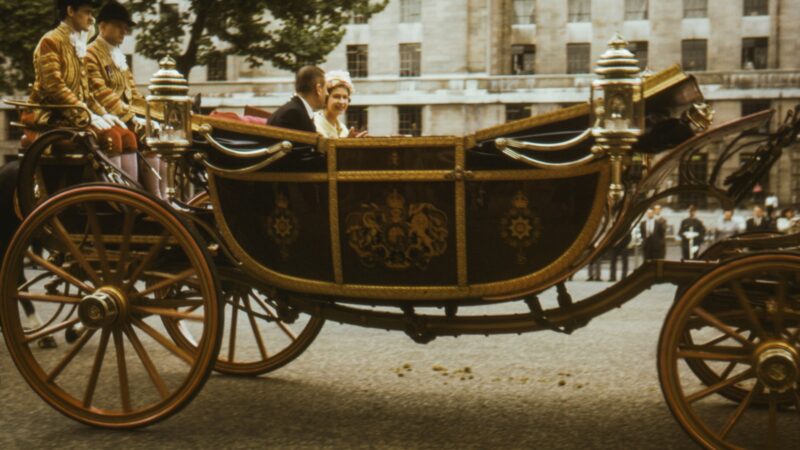
Against Republicanism | Aidan Scott 

Many Conservatives have noticed a worrying trend in polling recently. YouGov suggests that support for the Monarchy is falling, especially among younger people. For the first time in British history 19-24 year olds apparently support having an elected head of state instead of a hereditary one. When combined with His Highness the Prince of Wales’s constantly mediocre approval ratings, a grim future seems to loom ahead of us. Many of my colleagues have dismissed these signs as unimportant in the grand scheme of things. Perhaps they are right, but I cannot help but be worried, and my worry has driven me to write this article in defence of Monarchy against the evil that haunts modern Britain: Republicanism.

In Britain, and I do not intend to comment on any other nation in this article, we have been ruled by Kings, Queens, and occasionally Emperors and Empresses, since written records began. Because of this it seems fair to regard Monarchy, in one form or another, as the native political system of the British peoples. Whilst our Monarchs have often been foriegn, the Throne has always been a native institution, never forced on us. The same cannot be said of Parliament, a Norman-French perversion of the Anglo-Saxon Witan. The only period where every part of Britain was not ruled by a Monarch was during Oliver Cromwell’s brief stint as Lord Protector during the interregnum, where he established himself as a hereditary Absolutist ruler, a King in all but name and legitimacy. As we all know, this unprecedented period was so terrible that after Cromwell’s death Charles Stuart, son of the previous King who Parliament murdered, was asked to come home from France and be Crowned King Charles II. The only time in history where Monarchy was abolished lasted a few short decades, and ended with Monarchy’s restoration. 

I believe one of the most important reasons to defend Monarchy in Britain is because it is one of the few fully domestic institutions left. Indeed, it is the domestic institution, it acts as an immaterial liferope stretching back thousands of years, on one end it is held by our ancestors, and on the other end it is held by us today. Whilst in the past we may have had more ropes strung between us, none were as important as the Throne, and all others have been cut in the name of reform and progress. If we choose to let go we lose our last real connection to our forefathers, forcing us to drift aimlessly into the future like a raft untethered from a larger ship. Some would argue, of course, that just because a system is native does not necessarily lead to its being good and worth protecting. I admit that this is true in some cases; to the Aztecs human sacrifice was native, and so too was widow-burning native to the Indians. However, a system being native almost always acts as a reason in favour of its preservation, as it is these unique elements that make each nation recognisable against one another, or connects lands far apart which share common heritage. The Throne simultaneously differentiates us from our neighbours, whilst also ties us together with our friends in Australia, Canada, New Zealand, and many other nations who share the Queen as their Head of State. Until Monarchy is proven completely rotten it must stay, for our ancestors sake as much as ours.

Many have already written on the economic benefits the Monarchy brings for Britain. I find these arguments boring and unconvincing. For example, they often imply that we should support abolition if the Monarchy cost more than it brought in, an idea I find abhorrent. Instead an argument I find far more convincing, and one I hope Republicans will struggle to argue against, is the fact that the Monarchy acts as a foundation for every law in the country. Britain is well known for our unwritten “constitution”. Instead of writing a single document to clarify everything from rights to how Parliament is to sit we simply use the laws that our fathers, grandfathers, great grandfathers and so on wrote to settle these issues. If we find these laws no longer suit us, we pass new ones that supersede and replace them. I love this system. It grants us both flexibility and structure. Even if at times it can be confusing, it is uniquely ours. However, unlike in America where their constitution essentially derives its authority from itself, our beautiful tangled mess of a constitution is built on the firm foundation of the Monarchy. It is the only institution that was not founded by some law, rather each law gains its force and legitimacy from the Monarch themself. When one keeps this in mind, it seems impossible for Abolition to occur without also requiring huge constitutional reform. Trying to get rid of the Monarchy without upsetting our delicate Constitutional arrangement, like trying to remove a house’s foundations without causing the whole thing to collapse. It would not be enough to pass an amendment removing any mention of the Monarch from every law ever passed, the powers of the Monarch would have to be given to someone, and who does the general public trust with such immense power; Boris Johnson? Keir Starmer? The House of Commons? None of these people have proven themselves to be as prudent or farsighted as Her Majesty the Queen or any of her predecessors and none are worthy of the powers of State. Do you trust anyone to rewrite the entire British Constitution and not make a mess of it, or worse edit it in a way that benefits their party and their interests? You clearly shouldn’t, and the safest way to ensure they don’t is to fight to protect the Monarchy at all costs.

There are many points that I have failed to make in this article. Whether because I found them overdone or unconvincing, I have not written any argument that cannot in part explain my own personal devotion to our greatest institution, or why I will fight for its continuation until I draw my last breath. Such arguments can be found elsewhere, and perhaps I will write a more general ‘Monarchist Manifesto’ at a later date. I only hope to have contributed a few somewhat unique points in this extremely important debate.

 God save the Queen.


Photo Credit.

Scroll to top